Setting an extension ladder at the right angle
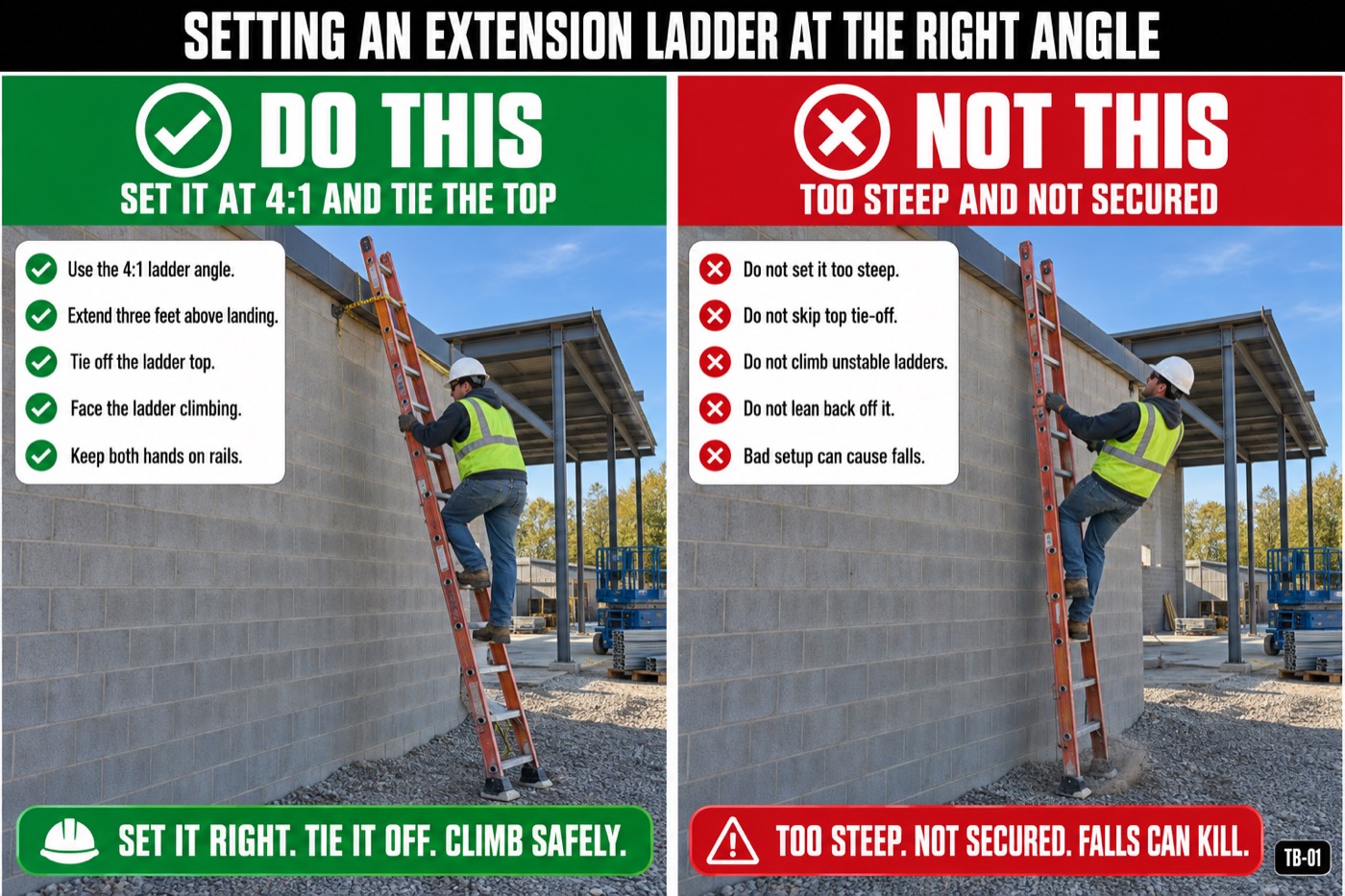
Everybody here has set a ladder a thousand times. The one that hurts you will be set exactly the way the other nine hundred were.
The points
- Set the base one foot out for every four feet of working length. On a 16-foot climb, that's four feet from the wall.
- Extend the ladder at least three feet above the landing so there is something to hold while stepping off.
- Tie off the top, or have someone foot the ladder until it is secured.
- Face the ladder and keep three points of contact. Carry tools on a belt, not in your hand.
- Check the rails and rungs before you climb. A bent or cracked ladder comes out of service, not back on the truck.
Why it goes wrong
The one-to-four ratio is not a preference, it is the angle at which the ladder's own weight and yours push down through the rails instead of out through the feet. Set it too shallow and the base slides out from under you the moment you are past the middle. Set it too steep and it tips backward, which is worse, because you go over with it and there is nothing to grab.
The three feet above the landing exists for the transition. Stepping off a ladder is the point where your weight leaves the rungs, and if there is no rail above the roof line there is nothing to hold while it happens. People compensate by grabbing the gutter or the roof edge, neither of which was built to hold a person.
Tying the top off is what keeps the ladder from moving sideways during that same transition. Friction at two small feet is all that holds an untied ladder in place, and the sideways push of somebody stepping across is exactly the force that overcomes it. If it cannot be tied yet, somebody foots it until it can.
The ground matters as much as the angle. Soft dirt, gravel, a sheet of plywood over mud, a step that is half on and half off a curb - the ladder was fine when you set it and the base sinks an inch on one side while you are at the top.
Questions for the crew
- What are we climbing today, and how long is the ladder we are using for it?
- What is under the feet of that ladder?
- Has anyone here had a ladder move on them? What did it do?
To close
Look at the base of the ladder you are about to climb. If it is not one out for four up, fix it before you go up.
To hold this talk with your crew
1
Read it aloud. Five minutes, before the work starts.
2
Ask the questions. A crew that talks is a crew that remembers.
3
Have them sign on their own phones, and the record is sealed.