The crew below: a module off the eave
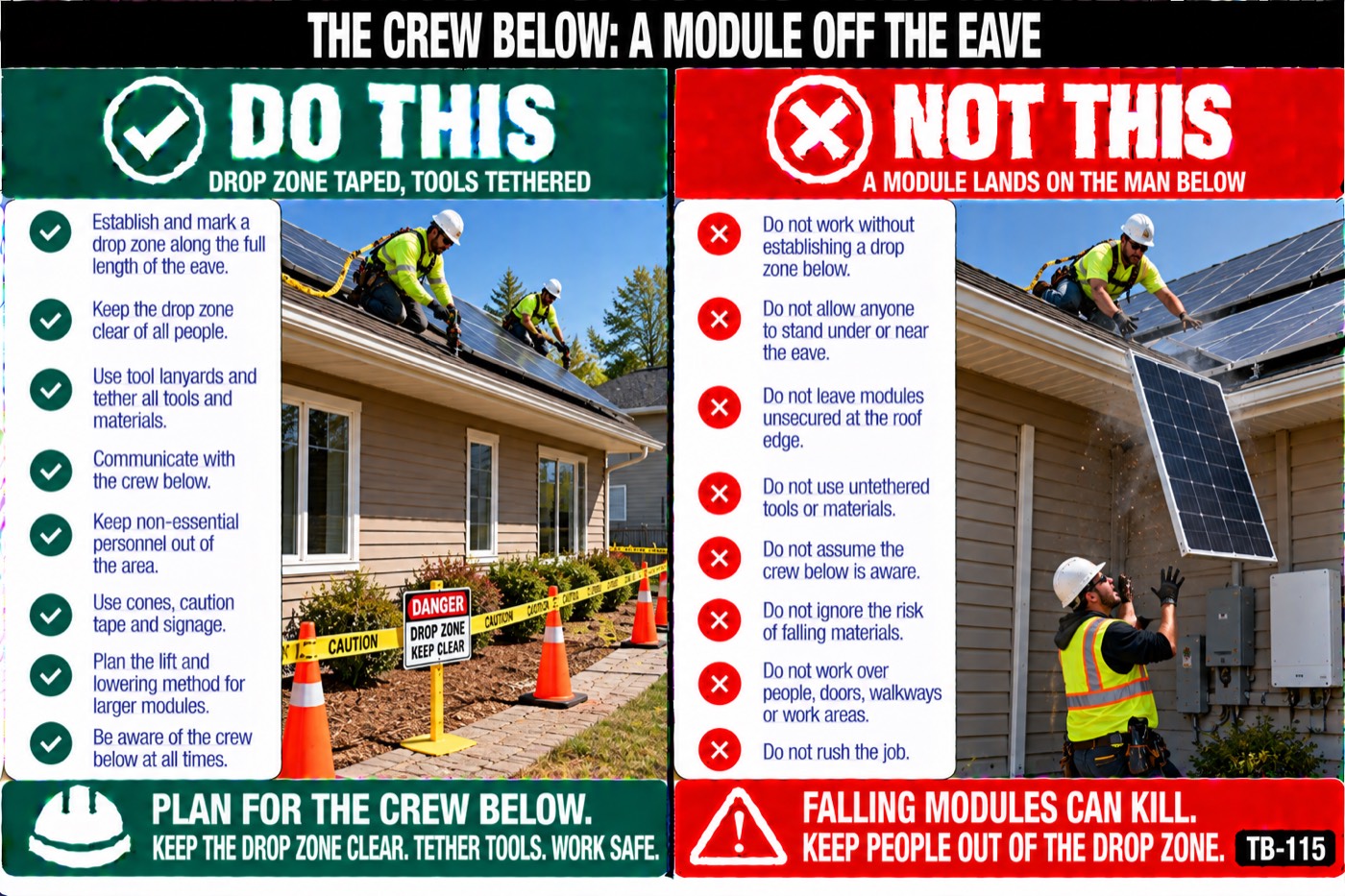
A 50 pound module dropped from a 12 foot eave hits the ground at about 19 miles an hour. A 3 pound impact driver from the same height cracks a hard hat. The electrician at the inverter is standing right under the eave.
The points
- A dropped clamp, a rail cutoff, a driver or a whole module lands on whoever is below: the inverter person, the homeowner walking to the car, a kid in the yard. Head injuries from falling objects are as fatal as falls.
- When people are exposed to falling objects, the rule says hard hats plus one of three things: toeboards or screens at the edge, a canopy, or a barricaded drop zone nobody enters. On a house it is the barricade.
- The drop zone runs the full length of the eave being worked and out at least as far as the roof is high. Tape it, cone it, and tell the homeowner before the first tool goes up.
- Every hand tool on the roof is on a lanyard to a belt or an anchor point. Drivers, wrenches, meters. Nothing sits loose on a module or a rail.
- Nobody works on the ground inside the drop zone while work is happening above, and the inverter and disconnect work waits for the roof to pause or moves out from under the eave.
Why it goes wrong
The rule covers protection from falling objects directly: when an employee is exposed, the employer has each employee wear a hard hat and also does one of the following: erects toeboards, screens or guardrails to stop objects going over the edge; erects a canopy and keeps material back from the edge; or barricades the area below, prohibits entry, and keeps material back from the edge. On a residential PV job the barricade is the practical choice, and it only works if people stay out.
Energy scales with height. A 3 pound driver from 12 feet arrives with about 36 foot-pounds; from 25 feet, 75. A hard hat is designed to absorb a blow in the range of the smaller number, not the larger, and it does nothing for a blow to the shoulder or the face. A 50 pound module from 12 feet delivers 600 foot-pounds; there is no head protection for that.
The person most often under the eave is on your own crew. The inverter mounts on the wall below the array, the disconnect next to it, and the conduit runs down the same wall. The roof crew and the electrical crew have to agree when each is working, or the electrical work goes on the wall around the corner from the array until the roof is done.
Tool lanyards are cheap and they work. A coiled lanyard from the belt to the driver means the driver you drop swings at your knees instead of falling 12 feet. Meters and torque wrenches get a lanyard too. Anything that cannot be tethered, like a box of clamps, goes in a bucket that is itself tied to the rail.
Rail cutoffs and module packaging are the debris that goes over the edge unnoticed. Cardboard corners and plastic film catch the wind and take the loose clamps sitting on them along for the ride. Cut rail into a bucket, bag the packaging as each module comes out, and lower it, do not throw it. Throwing debris off a roof into a barricaded zone is still throwing debris at whoever wandered into it.
The common mistake is a drop zone at the ladder only. Work moves along the eave as rows go on, and the barricade does not follow. Set the tape for the whole eave at the start, and check where people on the ground are each time the roof crew moves rows. Homeowners and neighbors do not know what a barricade means unless someone tells them.
Questions for the crew
- Who is going to be on the ground under this array today, and where exactly?
- How far out does the drop zone need to be on this side, and what is marking it?
- Which tools are going up without a lanyard, and what are we doing about that?
To close
The drop zone is taped the full length of the eave before the first tool goes up, every tool is tethered, and nobody works under the roof crew.
To hold this talk with your crew
1
Read it aloud. Five minutes, before the work starts.
2
Ask the questions. A crew that talks is a crew that remembers.
3
Have them sign on their own phones, and the record is sealed.