Slopes and rights of way: footing, poison oak and ticks
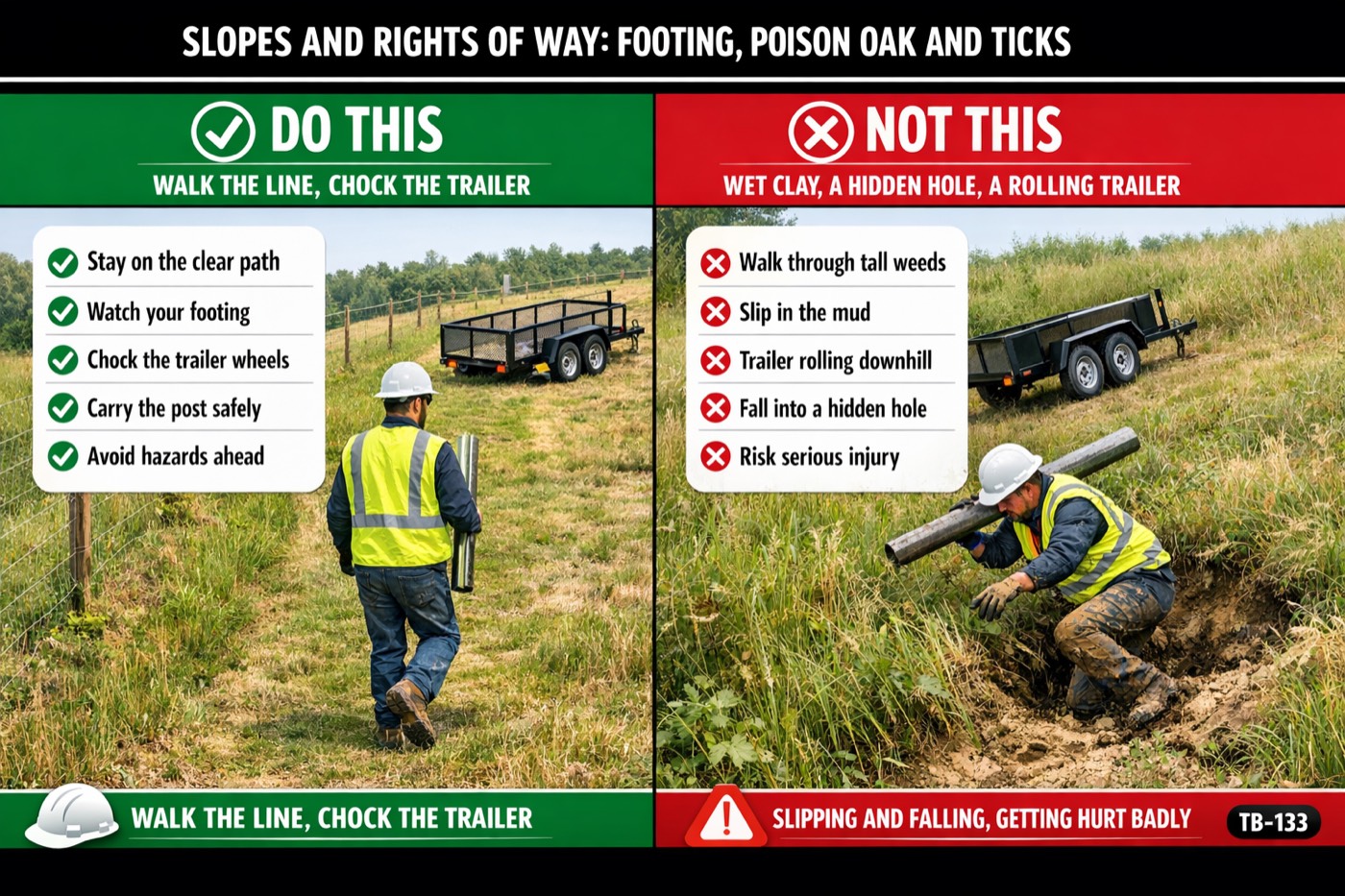
Fence goes where the property line goes, and the property line does not care that it runs down a 30-degree bank into a ditch full of poison oak.
The points
- The falls on a fence job are not from height, they are from footing: a boot on wet clay on a ditch bank with a post on your shoulder, a knee in a hole the grass hid, and the trailer that rolls when it is unhitched on the grade.
- Walk the line before the tools come out. Know where the holes, the culverts, the old wire and the drop-offs are, and cut the grass on the line if you cannot see the ground.
- Park and unhitch on level ground, and if there is none, chock both trailer wheels on the downhill side before the pin comes out, and set the truck's brake with the wheels turned into the bank.
- Poison oak and ivy: the oil transfers from the plant, from your gloves, from the auger handle, from the dog. Long sleeves, wash your arms with cold water and soap within 15 minutes of contact, and wash the tools, because the oil stays active on a handle for a year.
- Ticks are a daily thing in tall grass. Pants tucked, repellent on the boots, a check at the truck at the end of the day, and a bull's-eye rash or a fever in the next few weeks is a doctor visit, not a wait.
Why it goes wrong
The mechanism is a foot that slides on wet clay or slick grass while you are carrying a load, so there is no free hand to catch yourself and the post lands on you. Face the slope, side-step with a load, wear lugged boots, and carry posts on the uphill shoulder so a fall throws the post away from you, not under you. A ditch bank is an excavation wall: do not work under a bank over 5 feet high that is undercut or freshly cut.
A trailer with a load of posts weighs 3,000 pounds or more, and unhitched on a 5 percent grade with no chocks it rolls, the jack foot folds, and the tongue comes down on the leg of whoever is between the truck and the trailer. Chock before the pin comes out, both wheels, downhill side. Backing a trailer along a right of way gets a spotter, and the spotter is never between the truck and the trailer.
Pipeline and power rights of way have markers, and the pipeline marker is not where the pipe is; it is near it. Fencing across a gas transmission right of way needs the pipeline company's sign-off, and augering there without an 811 ticket breaks state dig law. The locates talk covers the marks; this is about the fact that a right of way is somebody else's ground with something buried in it.
Urushiol, the oil in poison oak, ivy and sumac, causes a rash in about 85 percent of people from an amount smaller than a pinhead. It binds to skin in 10 to 30 minutes, so washing after that removes the surface oil but the reaction is already set. It stays active on a dry glove or tool handle for a year or more, which is how the rash comes back in February. Never burn cleared brush with poison oak in it: the smoke carries the oil into the lungs.
Ticks carry Lyme disease, Rocky Mountain spotted fever and others, and a deer tick usually has to be attached 24 to 36 hours to pass Lyme, which is why the end-of-day check works. Pull it straight out with fine tweezers, not a match or grease. Permethrin on pants and boots lasts several washes. 29 CFR 1926.21 requires that anyone exposed to harmful plants or animals is told the hazard, how to avoid it, and the first aid, and that is this talk.
Questions for the crew
- Where on this line is the worst footing, and how are the posts and the auger getting to it?
- Where is the trailer going to sit today, and what holds it there?
- Who on this crew reacts hard to poison oak, and where is the wash water and soap on the truck?
To close
Today we walk the line before the auger starts, the trailer is chocked before the pin comes out, and everybody checks for ticks at the truck before they get in.
To hold this talk with your crew
1
Read it aloud. Five minutes, before the work starts.
2
Ask the questions. A crew that talks is a crew that remembers.
3
Have them sign on their own phones, and the record is sealed.