The tile box on the stairs and the roll in the doorway
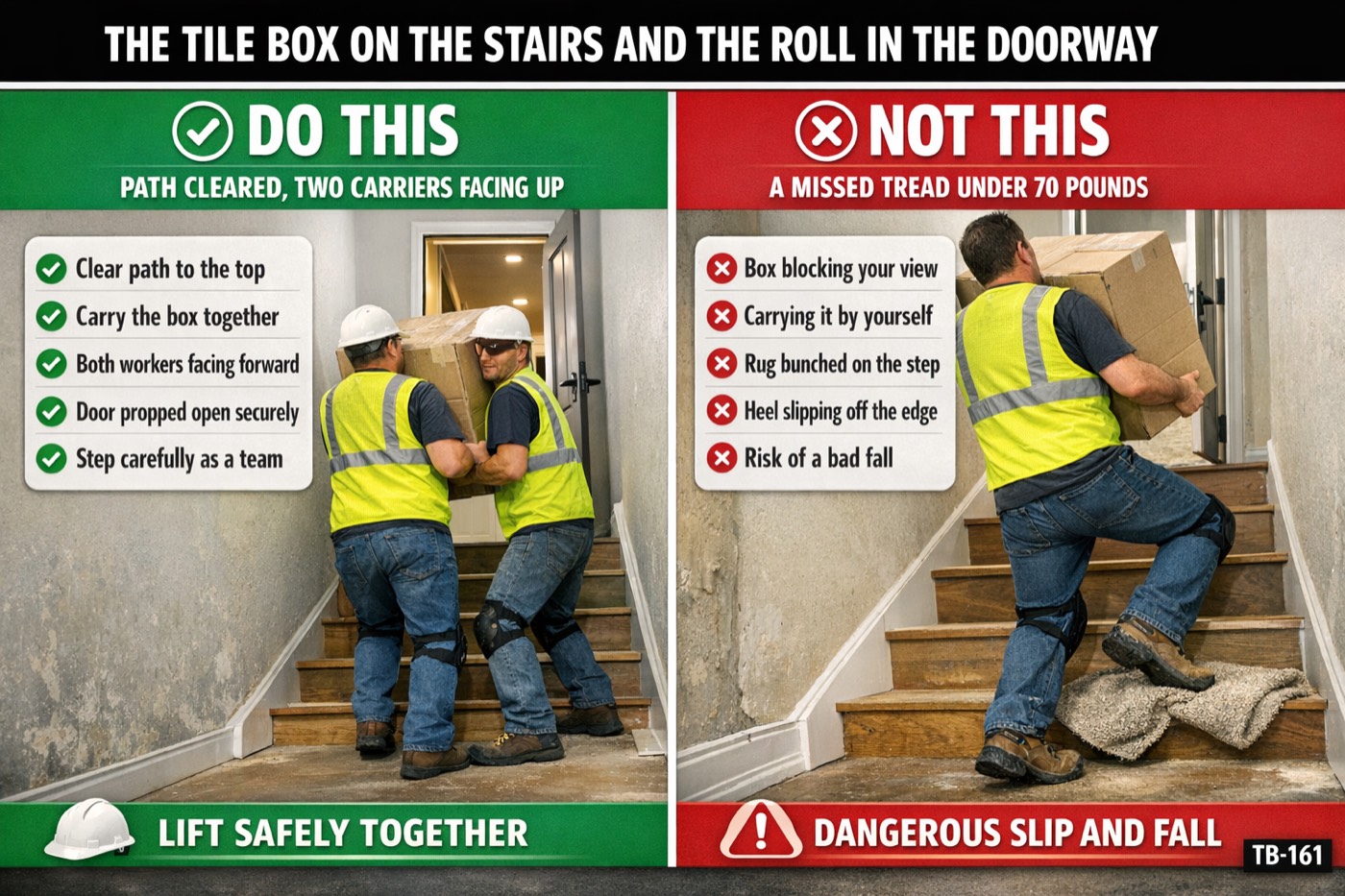
A 12-by-50 roll of carpet weighs about 250 pounds, and the person on the downhill end of the stairs is carrying most of it while looking at a wall of carpet instead of the step.
The points
- On stairs, the lower carrier takes most of the weight and cannot see their feet. A missed tread with 70 pounds of tile in your arms is a fall backward down the flight with the box landing on you.
- The path is walked and cleared before the first load moves: rugs up, cords out, doors chocked open, the dog in a bedroom, the kids' toys off the stairs. The rule says passageways stay clear for the safe movement of material and people.
- Boxes over 50 pounds go up on a stair-climbing hand truck or between two people, with the lower person facing up the stairs and both hands on the load. Nobody carries a box and holds the rail at the same time, so the stairs get a person who can see.
- Rolls go through doorways end first, tipped, with the lead person calling the turn. The back person never pushes a roll the front person has not called clear.
- Material stacked on a landing or a hallway is stacked so it cannot slide, and never on the stairs themselves. A stack of tile boxes on a stair tread is a stack that goes down when someone brushes it.
Why it goes wrong
Stairs multiply the load. A carry that is fine on the flat becomes a lift at every step, with the load shifting forward on the way up and back on the way down, and the person at the bottom of a two-person carry holds most of it because of the angle. A 250-pound roll on a staircase puts 150 pounds or more on the downhill carrier, who is walking backward or looking into the roll. That is the person who falls, and the roll follows.
The rule at 1926.250 is written about storage, and its plain lines apply here: aisles and passageways are kept clear so material and people move safely, and stored material is stacked, blocked or interlocked so it cannot slide or fall. In a house that means the route from the truck to the room is walked first by someone who is not carrying anything, and every stack you make on a landing, in a hall or by a door is squared and stable before you turn your back on it.
Before the first load, fix the path. Throw rugs and runners come up; a rug on a hardwood floor under a person carrying a box is a slip with no way to catch yourself. Extension cords come out of the route or get taped down flat across it. Every door on the route gets chocked open, because a door that swings closed on a roll traps the front carrier. The customer's dog goes behind a closed door, not because the dog is mean but because 60 pounds of dog around the ankles of someone carrying 70 pounds of tile is a fall. Ask about the kids, the cat, the wet spot in the entry.
Tile boxes are 50 to 80 pounds each and they come by the dozen. The stair-climbing hand truck exists for exactly this and costs less than a back. Two people on a box means the lower person on the stairs faces uphill and takes the weight, the upper person steers, and the two agree on which step to stop at before they start. Nobody carries a box in one arm so the other can hold the rail; a box needs both hands, so the stairs need to be a place you can walk without the rail, which means they are dry, clear and lit.
A roll of carpet or sheet vinyl is long, heavy and blind. It goes through a doorway end first, tipped so the lead can see past it, with the lead person calling every turn and every step. A roll that is pushed while the front is stuck against a jamb bends the roll and pins the front carrier's hands. Through a house, plan the route for the roll before you cut it; sometimes it is cut in the truck to the room size plus 6 inches and carried in pieces. Sheet vinyl cracks when bent cold and is heavier than it looks.
Staging is part of the carry. Stack boxes on a flat floor, no more than about waist high, squared so the pile is stable, away from the stair edge and the door swing. Never on a tread or a landing that is the route. Put the stack where the last box gets used, not by the front door where every one has to be walked again. Unload the truck at tailgate height into a hand truck; lifting 70 pounds from the ground beside the truck is the lift that hurts.
Questions for the crew
- Who is walking the route from the truck to the room before the first load, and what is in the way?
- What is the heaviest thing coming up these stairs today, and how many people and what equipment are on it?
- Where is the dog, and where are the kids, while the doors are chocked open?
To close
Today nothing moves from the truck until the path is cleared, the doors are chocked and the dog is behind one of them.
To hold this talk with your crew
1
Read it aloud. Five minutes, before the work starts.
2
Ask the questions. A crew that talks is a crew that remembers.
3
Have them sign on their own phones, and the record is sealed.