The attic hatch: the ladder, the light and the can light
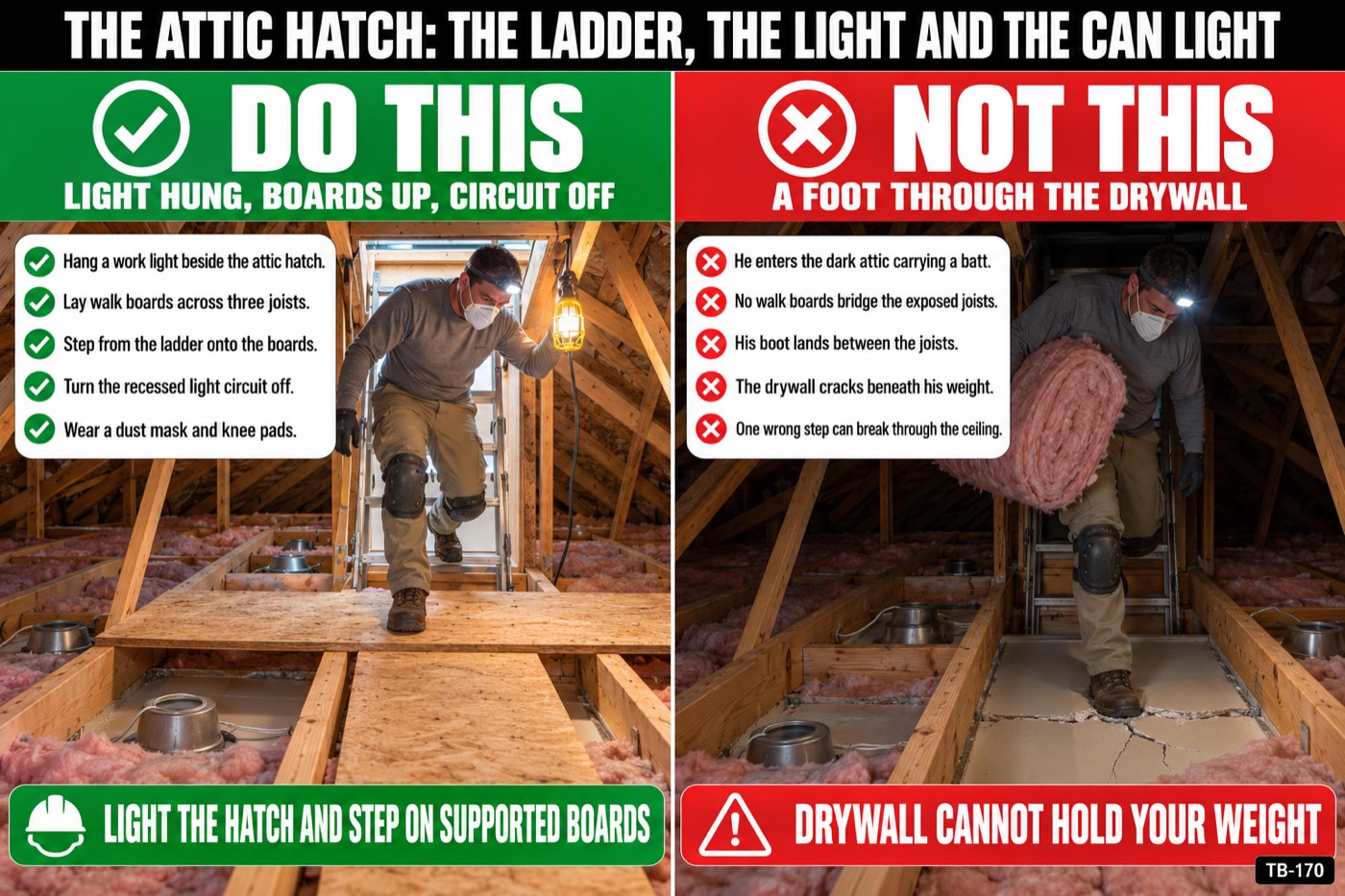
A drywall ceiling holds about as much as a sheet of cardboard. Between the joists there is nothing but half an inch of gypsum and an eight-foot drop to the floor.
The points
- A fall through a ceiling is eight to ten feet onto whatever is below, usually with a joist in the ribs on the way. The hatch is where most of them start, getting in with your hands full and getting out backwards in the dark.
- The ladder at the hatch stands on a level floor, not on the closet shelf or a bucket. An extension ladder needs to extend 3 feet above the landing, and where the hatch is too small for that, the ladder is tied off and someone foots it.
- Light first. A headlamp on you and a work light hung at the hatch before your knees leave the ladder, because the step you cannot see is the one between the joists.
- Walk boards go in ahead of you: two pieces of 3/4 plywood, 2 feet by 4 feet, leapfrogged, each spanning at least three joists. Nothing goes up or down the ladder in your hands; it goes up on a rope.
- Recessed can lights are 150 to 200 °F on the housing with the lamp on, and the fixture is not a step. Kill the lighting circuit for that ceiling before you go in, and keep insulation the required clearance from any can that is not IC rated.
Why it goes wrong
29 CFR 1926.1053 wants a portable ladder used for access to extend at least 3 feet above the landing, or, where that is not possible, tied at the top to something rigid with a grab to hold while you get on and off. A 22-by-30 hatch in a closet ceiling rarely allows the 3 feet, so the ladder gets tied and somebody foots it. A stepladder's top cap and the shelf above the closet rod are not landings.
Pull-down attic stairs are rated for 250 to 350 pounds, hinges, springs and all, and they are old. Look at the hinge bolts and the plywood treads before you trust them with you plus a bag of insulation, and never climb them with the bag; it goes up on a rope after you.
Five foot-candles is the minimum for work areas, and a phone flashlight in your teeth is not it. A headlamp on you, a battery lantern hung at the hatch, and a second light 20 feet in. Insulation is one color in the dark, and the trough between joists looks exactly like a joist with a bad light.
Walk boards are 3/4-inch plywood, 2 feet by 4 feet, two of them, leapfrogged so each spans at least three joists. The hatch frame itself is 1x trim on drywall and holds nothing; the first board lands on the joists past it. Drywall between joists holds about 40 pounds before it cracks, and that is a knee.
A recessed can light housing runs 150 to 200 °F with the lamp on, and a non-IC can needs 3 inches of clearance from insulation on every side or it overheats. You kneel on it and burn through the coverall; you bury it and it cycles on its thermal cutoff until the cutoff fails. The lighting circuit for that ceiling goes off at the panel before you go up, and non-IC cans get a dam.
The common mistake is on the way out. You back toward the hatch on hands and knees, in the dark, and your foot searches for the ladder rung. If the ladder moved, or nobody is footing it, the search ends between the joists. Coming out is called down to whoever is at the hatch, and they have a hand on the ladder.
Questions for the crew
- What is the ladder at this hatch, does it reach, and who is footing it?
- Who is carrying the boards and the light up, and how?
- What is in this ceiling, and is the lighting circuit off?
To close
Nobody's knees leave the ladder today until the light is hung, the boards are up and the ceiling circuit is off.
To hold this talk with your crew
1
Read it aloud. Five minutes, before the work starts.
2
Ask the questions. A crew that talks is a crew that remembers.
3
Have them sign on their own phones, and the record is sealed.