Other trades in a foamed house: the live can and the torch
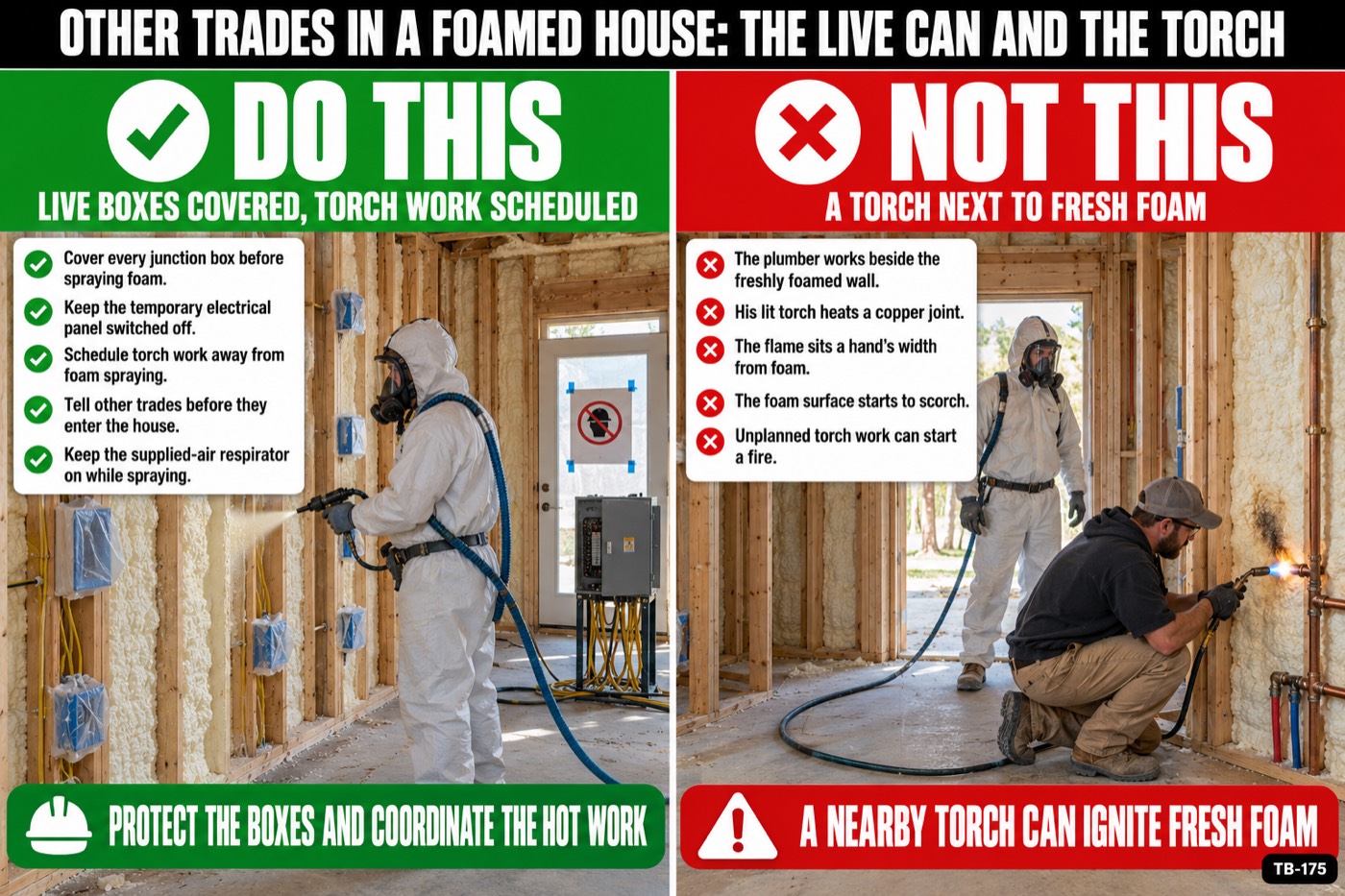
The electrician left at 3 and the temp panel is live. The plumber is coming at 7 tomorrow with a torch, and the drywall crew wants the house at 8. Somebody has to say out loud what order that happens in.
The points
- Three trades in a closed house is how somebody sprays over a live open box, a torch meets fresh foam, or a drywaller breathes an hour of isocyanate because nobody told him. Each is a separate accident with the same cause: nobody ran the schedule out loud.
- Before you start, ask the GC or the electrician what is energized. Boxes and cans in the spray area get covered, live circuits in the zone get turned off, and you do not foam over an open junction box, a live splice, or the back of a non-IC can.
- No open flame, grinder or heat gun in a room with exposed foam. If the plumber needs to sweat a joint on a foamed wall, it happens before the foam or after the barrier is up, and the two of you settle that today, not when the torch is already lit.
- The reentry time is a sign on the door with a date and a time, and the GC gets a text with the same. The drywall crew does not walk into 24 hours of off-gassing because their schedule said Tuesday.
- Other trades in the house while you spray means they are in the same air system. Either they are out of the building, or the zone is sealed and exhausted and they are on the clean side with the HVAC off.
Why it goes wrong
29 CFR 1926.416 says the employer finds out, by asking, looking or testing, whether any energized circuit is where the work can touch it, before work begins, and tells the crew where it is. In a house at rough-in, that means the temp panel, the circuits the electrician already landed, and the boxes that are hot for the GC's lights. Ask, and get the answer from the person who wired it, not from a helper's guess.
Foam over an open junction box hides a splice that the code requires to stay accessible, and foam packed against the back of a non-IC can or a bathroom fan motor buries a heat source that is designed to cool by air. Both come out at inspection at your cost, and the can is a fire in the meantime. Boxes get covered and marked, and non-IC cans and fan housings get a dam before the gun comes in.
The plumber's torch and the HVAC crew's brazing rig are hot work, and fresh foam or exposed foam board is fuel. 29 CFR 1926.352 is the fire rule for hot work; the schedule is how you meet it. The sequence is: hot work done, then foam, then barrier, then anyone's torch again. When the plumber says one more joint, the answer is a date, not a shrug.
Everyone in a closed house shares its air. During spraying and for the reentry window, the other trades are out, or they are on the clean side of a sealed and exhausted zone with the HVAC off. The ventilation talk covers the setup; this talk is about telling them. A drywall hanger with no respirator in the next room is an exposure you caused.
The GC's schedule and yours are two different documents until somebody makes them one. Before the rig is unloaded, confirm with the GC who is on site today and tomorrow, what is live, and when the house is clear; then the reentry sign goes on the front door with the finish time and the clear time, in English and Spanish, and the same numbers go to the GC by text so there is a record.
The common mistake is assuming the other crew reads what you wrote. The sign in English on a job where the drywall crew speaks Spanish, or the text to a GC who does not forward it. Both languages on the sign, and a phone number for whoever is running the spray, so the person at the door can ask before they walk in.
Questions for the crew
- What is live in this house right now, and who told you?
- Who else is scheduled here today and tomorrow, and have they been told the reentry time?
- Where does the sign go, and in what languages?
To close
Before the first pass today, we know what is live, who is coming, and the sign is on the door in both languages.
To hold this talk with your crew
1
Read it aloud. Five minutes, before the work starts.
2
Ask the questions. A crew that talks is a crew that remembers.
3
Have them sign on their own phones, and the record is sealed.