The brake and the snips: every cut edge is a blade
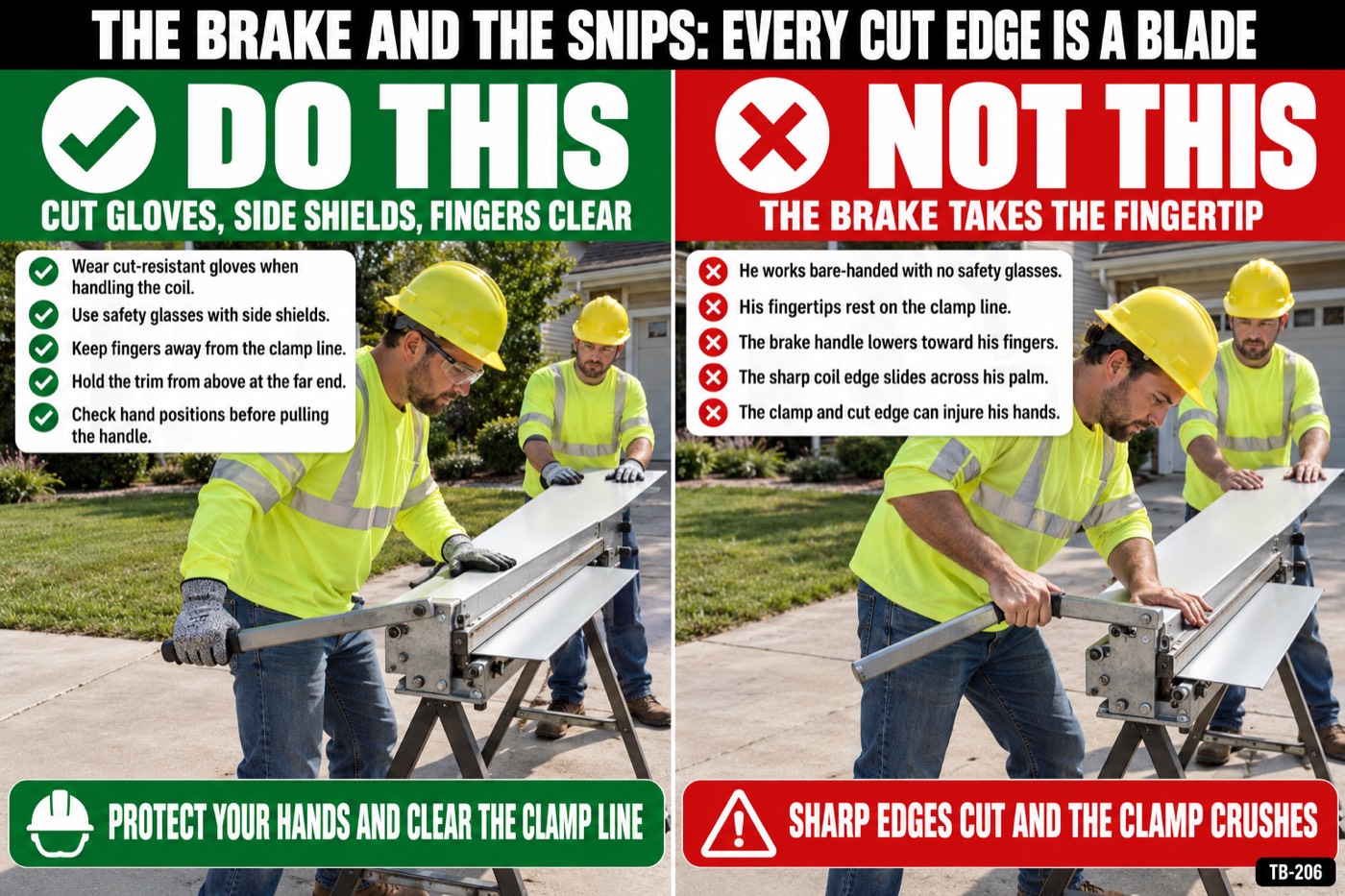
Trim coil is 0.019-inch aluminum, and the edge that comes off the snips is thinner than a razor. Most hand cuts on a siding crew come from the trim, not the tools.
The points
- Sheet metal cuts are long and deep, they hit tendons, and a sliver from the snips under a fingernail gets infected. A pinch in the brake takes the fingertip.
- Cut-resistant gloves rated for sheet metal every time you handle coil, trim or a cut piece. Eye protection with side shields when you cut, because the slugs fly.
- The brake clamps with a bar and a lot of leverage. Fingers stay outside the clamp line before you pull the handle, and the person holding the far end of a 10-foot piece keeps their hand on top of the metal, not under it.
- Snips: cut away from your body and your other hand, let the waste curl away from you, and break off the last inch instead of forcing the jaws closed on it.
- Cut pieces get their sharp edge hemmed or taped before they go up a ladder, and the scrap goes in the bucket, not on the lawn where somebody kneels on it.
Why it goes wrong
A sheared edge on aluminum or steel trim has a burr on one side and a sharp edge on the other. Sliding a bare hand along it to seat a piece is the same motion as running a hand down a knife blade. The cut goes across the fingers or the palm, and on the inside of the wrist it reaches tendons in under a quarter inch.
The PPE rule says protective equipment is provided, used and maintained wherever it is necessary by reason of hazards, and it has to fit. For sheet metal that means a cut-resistant glove in the A4 range or better, snug enough to feel the edge. A leather work glove stops abrasion, not a shear cut. The employer pays for the gloves.
A 10-foot siding brake clamps with a hinged bar that you swing down and lock. The pinch is between the bar and the bed, and between the bending leaf and the bed when you swing it. Both hands on the handle when you clamp and bend; the helper at the far end keeps fingers on the top surface and calls it before the bar comes down.
The brake on a lawn tips. It stands on legs, it is top-heavy with a 10-foot piece of coil in it, and it gets dragged by hand across uneven ground. Legs on pads, level it, and two people move it. A brake falling onto a shin is a break, not a bruise.
Aviation snips throw small slugs and the waste strip springs as it curls. The eye protection rule asks for side shields when there is a hazard from flying objects, and a sliver of aluminum in the eye is exactly that. Use the right snips for the direction of the cut, red for left and green for right, so you are not fighting the curl into your hand.
Steel trim, gutter guards and drip edge are the same edge with more spring. A steel piece that is bent and lets go whips back at your face. Cut it on the ground, not on the ladder, and carry it edge down with the hem toward your body.
Questions for the crew
- Who has cut gloves on right now, and are they sheet metal gloves or leather?
- Where is the brake set up today, and is it level and on something solid?
- Where does the scrap go on this job so nobody kneels on it?
To close
Cut gloves and side shields on before the first snip today, and the brake gets leveled before the first piece goes in.
To hold this talk with your crew
1
Read it aloud. Five minutes, before the work starts.
2
Ask the questions. A crew that talks is a crew that remembers.
3
Have them sign on their own phones, and the record is sealed.