Lifts and scaffolds on a lawn: the ground that gives
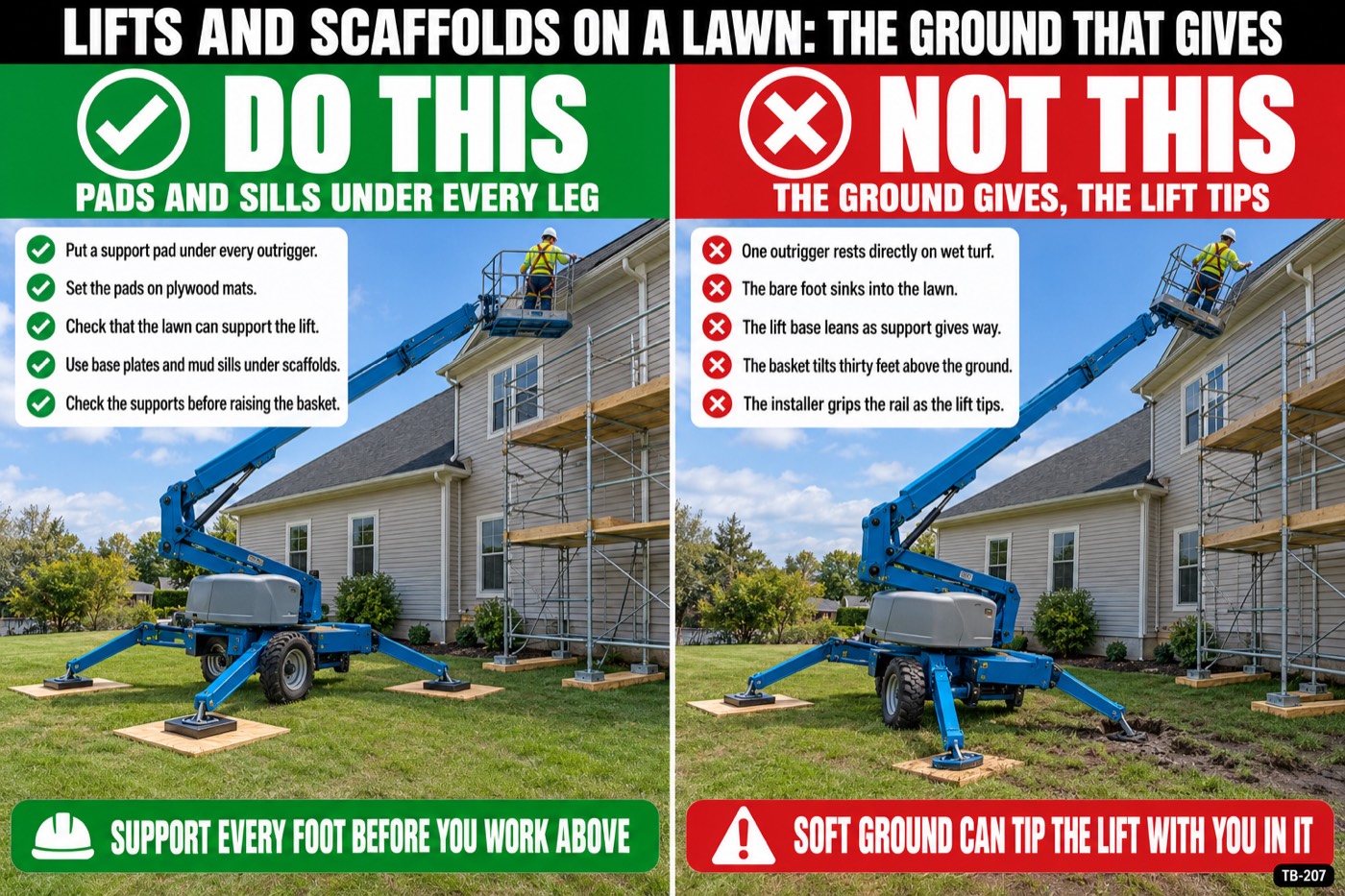
A towable boom lift puts 1,000 pounds or more on each outrigger, and a wet lawn holds about as much as a sponge. The septic tank under it holds less.
The points
- Lifts tip and scaffolds lean when the ground under one leg moves an inch. Somebody at 30 feet finds out first.
- Scaffold footings have to be level, sound, rigid and able to carry the loaded scaffold without settling. Base plates on mud sills on a lawn; bricks, blocks and buckets are not footings.
- Lift outriggers go on pads or a solid surface, brakes set, and wheel chocks on any slope. Ask the homeowner where the septic, the leach field and the sprinkler lines are before the lift comes off the trailer.
- A driveway slopes toward the street, usually 2 to 5 percent. Over one 7-foot frame that is up to 4 inches, so it is screw jacks and a sill, plumbed with a level, not a shim of plywood.
- The competent person looks at the footing and the frames before each shift and after rain, because the ground that held yesterday soaked overnight.
Why it goes wrong
Soil bearing on a lawn after rain can drop under 1,000 pounds per square foot. A 10-by-10 inch outrigger foot is 0.7 square feet, so 1,200 pounds on it is about 1,700 pounds per square foot: it punches in. A 2-by-2 foot pad spreads that to 300 pounds per square foot and it holds. Pads are the difference, and they go under every foot, not just the ones on the soft side.
The aerial lift rule says brakes set, outriggers on pads or a solid surface, and chocks before using a lift on an incline. On a boom lift the platform moves feet for every inch the base moves. Level the base to the bubble, not by eye, and check the outriggers again after the lift has sat an hour, because the pads settle.
Septic tanks, leach lines, dry wells and buried downspout drains are all under the lawn where you want to park. A scissor lift over a septic lid can go through it. Ask, look for the cleanout and the risers, and stay off the leach field with anything heavier than a wheelbarrow.
The scaffold rule says footings level, sound, rigid, and unstable objects shall not be used to support scaffolds. On a lawn that means mud sills, 2x10 or better, long enough to carry two legs, with base plates nailed to them. A frame leg on bare grass sinks an inch in a morning and the whole tower racks.
A driveway slope is a real slope. Screw jacks make up the difference on the low legs, and the frames get plumbed and the cross braces pinned before the second lift goes on. Casters get locked, and a rolling scaffold never rolls on a slope with anyone on it. The 10-foot fall protection line applies on the exterior the same as anywhere.
The rule wants a competent person to inspect scaffolds before each shift and after any occurrence that could affect the structure. Overnight rain is an occurrence. Sprinklers that came on at 5 a.m. are an occurrence. Look at every base plate before the crew climbs.
Questions for the crew
- Where are the septic, the leach field and the sprinkler lines on this lot, and who asked?
- What is under each outrigger and each base plate right now?
- Did it rain or did the sprinklers run since the scaffold went up, and who looked at the footings this morning?
To close
Every lift foot and scaffold leg on this lawn sits on a pad or a sill today, and the footings get looked at before anyone climbs.
To hold this talk with your crew
1
Read it aloud. Five minutes, before the work starts.
2
Ask the questions. A crew that talks is a crew that remembers.
3
Have them sign on their own phones, and the record is sealed.