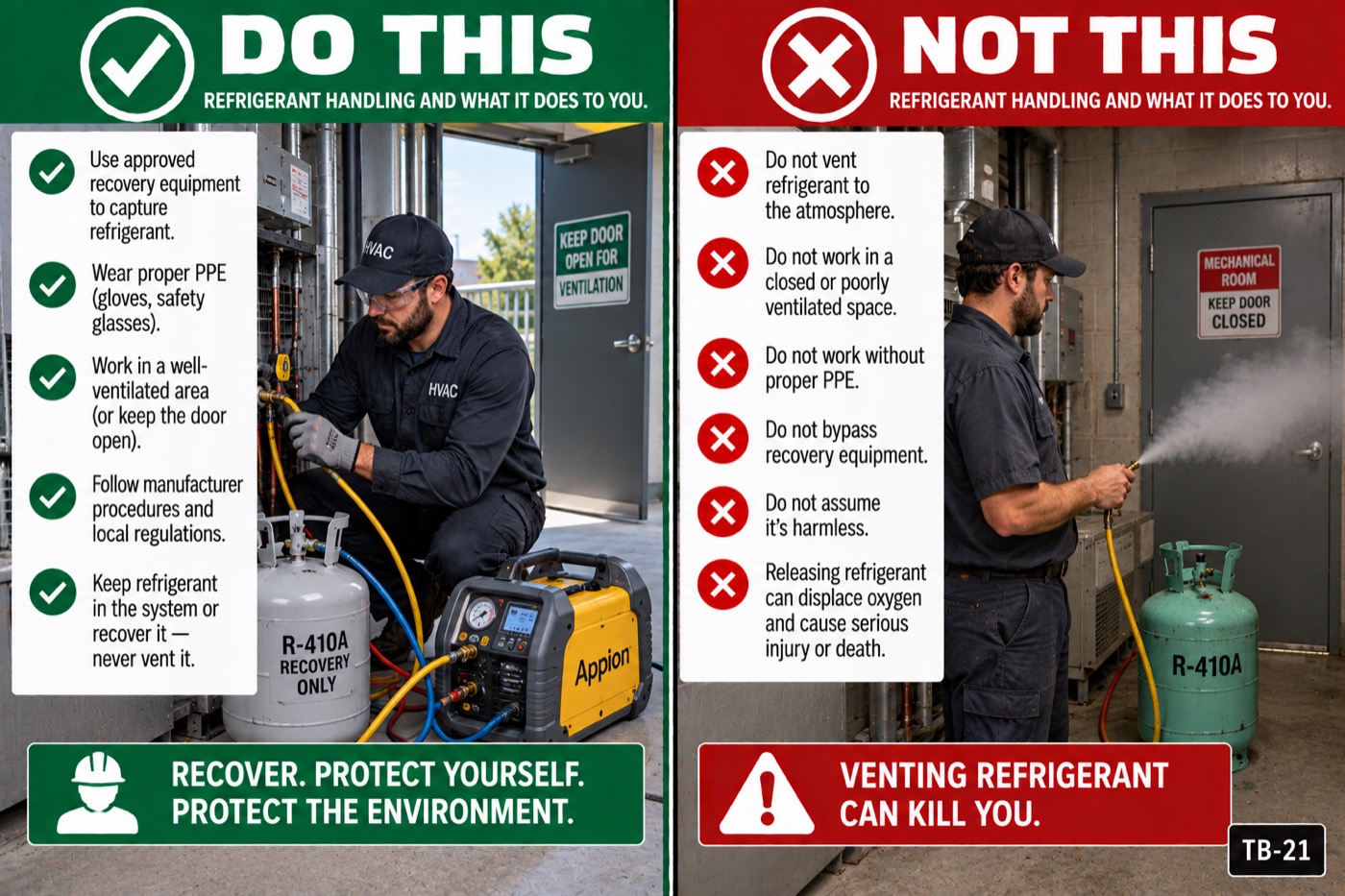
Refrigerant handling and what it does to you
Nitrogen only. If anybody reaches for oxygen or shop air to pressure-test a system today, stop them.
The points
- Refrigerant displaces oxygen in enclosed spaces. In a mechanical room or crawlspace, a leak can make the air unbreathable without any smell.
- Liquid refrigerant on skin causes instant frostbite. Gloves and eye protection every time you break a line.
- Never use oxygen or compressed air to pressure-test a refrigeration system. Nitrogen only.
- Ventilate before you work in any space where refrigerant may have collected. It's heavier than air and pools low.
- Recover, don't vent. Venting most refrigerants is illegal and carries real penalties.
Why it goes wrong
Burning refrigerant produces highly toxic decomposition products, including hydrogen fluoride and phosgene. Brazing on a line that hasn't been fully evacuated is genuinely dangerous, and the symptoms can be delayed for hours.
Oxygen and refrigerant oil together can detonate. This is why nitrogen is the only acceptable pressurizing gas, and why the rule is absolute rather than a preference.
The asphyxiation hazard is the one that catches people in mechanical rooms and crawlspaces. Refrigerant is heavier than air, so it pools in low spots and displaces the oxygen there without any smell or irritation to warn you. A person entering a low space after a leak can be in an oxygen-deficient atmosphere with no sense that anything is wrong.
Liquid refrigerant on skin is an instant frostbite injury, because it boils off at far below freezing and takes the heat out of whatever it lands on. Eyes are worse. That is the entire reason gloves and eye protection go on before a line is broken rather than after something sprays.
The delayed symptoms are what makes the brazing hazard so easy to underestimate. Someone breathes decomposition products, feels a bit of throat irritation, keeps working, and gets seriously ill hours later. Full evacuation before heat is applied is not an efficiency step, it is the control.
Recovery rather than venting is law, not preference, and the penalties are real and can fall on the technician as well as the company.
Questions for the crew
- What refrigerant are we working with today, and where would it collect if it leaked?
- Is the space we're working in actually ventilated, or does it just have a door?
- Where's the recovery equipment and is it working?
To close
Gloves and eye protection before you break a line. Liquid refrigerant does not give you a warning.
To hold this talk with your crew
1
Read it aloud. Five minutes, before the work starts.
2
Ask the questions. A crew that talks is a crew that remembers.
3
Have them sign on their own phones, and the record is sealed.