Wind on the wall: a 4x8 sheet of siding is a sail
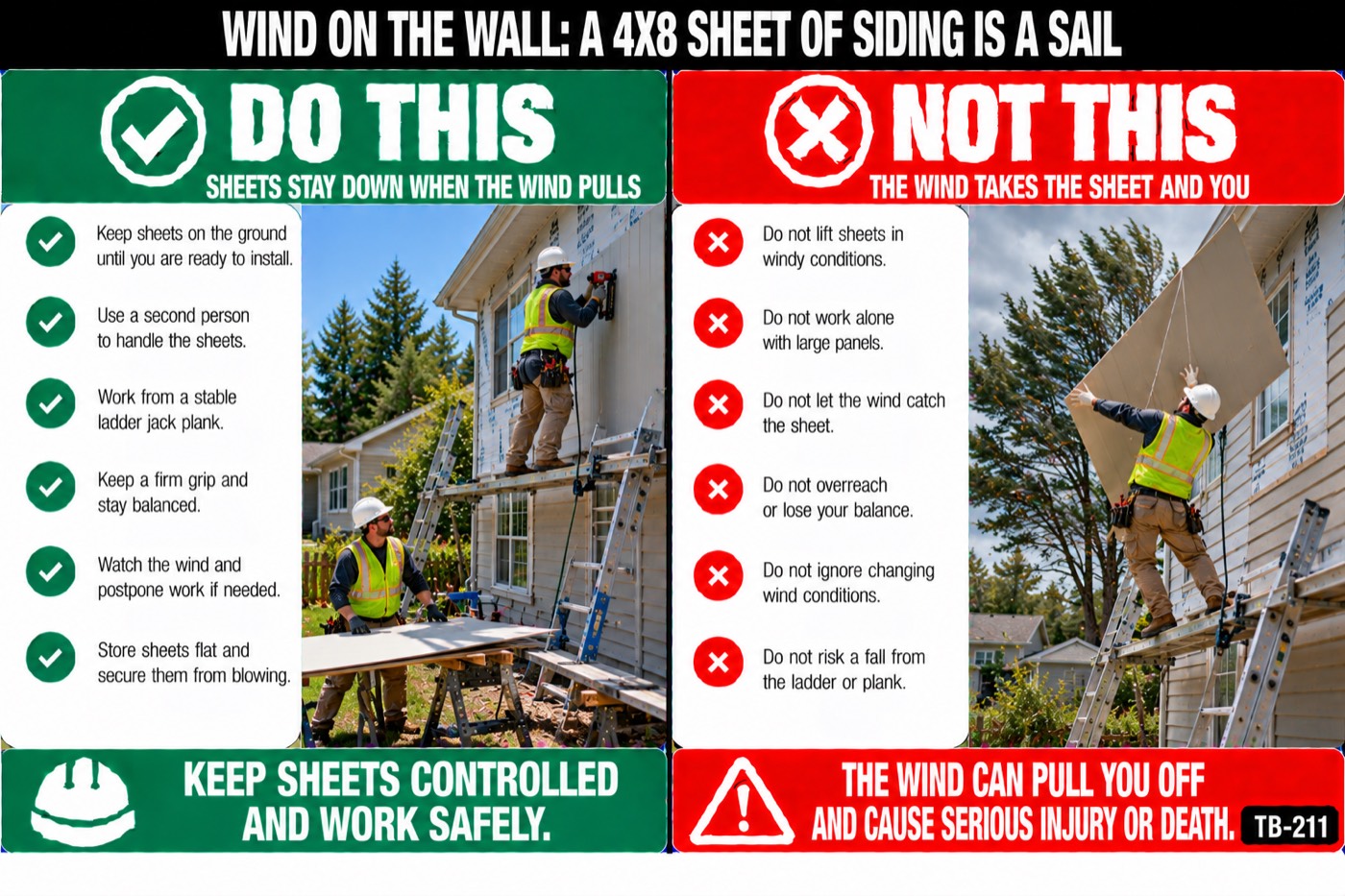
At 30 miles an hour the wind pushes on a 4-by-8 sheet with about 75 pounds. Holding it flat on a plank at 15 feet, you are the thing that gives.
The points
- Wind takes the sheet, the sheet takes you, and the fall is the injury. Ground crews get hit by the sheet that got away, and a wet ladder rung is where the slip starts.
- The rule bans work on scaffolds in storms or high winds unless a competent person has decided it is safe and the crew is tied off or behind wind screens. That includes a ladder jack plank on a wall.
- Panels, sheathing and 12-foot lap boards go up on calm days or in the lee of the house. If the wind is pulling the sheet out of your hands on the ground, it is not going up a ladder.
- Wet rungs, wet planks and wet aluminum. Wipe the rungs, slow down, and no walking a plank with rain on it. Stop when you can feel the plank move under you in a gust.
- Lightning: any thunder at all means everybody off the ladders, the lift down, and into the trucks, and you stay there 30 minutes after the last thunder.
Why it goes wrong
Wind pressure goes with the square of the speed: about 0.0026 pounds per square foot times the speed in miles an hour squared. At 20 mph a 4x8 sheet takes about 33 pounds; at 30 mph about 75; at 40 mph about 130. A gust is what matters, not the average, and the gust on a plank at 15 feet is stronger than the one on the lawn because the house channels it around the corners.
A 12-foot fiber cement lap board is 8 square feet and 20 pounds. At 30 mph it takes almost 20 pounds sideways, at arm's length, at head height, while you are on a ladder. It twists in your hands and your hand comes off the rail. A helper on the ground holding the far end on a pole makes it two people fighting the wind instead of you alone on a ladder.
The scaffold rule is plain: no work on or from a scaffold during storms or high winds unless a competent person has determined it is safe and the people are in personal fall arrest or behind wind screens. A ladder jack plank is a scaffold under that rule. The weather call talk in this library gives the numbers: 30 mph sustained is the stop line, and gusts that move the plank are the stop line before that.
Wet ladders and wet planks: the ladder rule says ladders are kept free of oil, grease and other slipping hazards, and rain on aluminum rungs is a slipping hazard. The same water is on the plank and on the sole of your boot. Wipe the rungs, both hands on the rails, no tools in your hands on the climb, and if the plank is sheet aluminum, it is a skating rink.
Lightning goes for the highest conductor around, and a 28-foot aluminum extension ladder against a two-story house is that conductor. Any thunder at all means off the ladder and the lift, away from the ladder and the gutter machine, into a hard-topped vehicle with the windows up. Thirty minutes after the last thunder before anyone goes back up. A boom lift basket at 40 feet is the worst place on the site.
Loose material is the wind hazard for the ground crew. Sheets leaning against the wall, a stack of lap boards on a plank, the tarp over the coil. A stack of siding that goes over onto a helper or a kid on the sidewalk is the same as a dropped sheet. Stack it flat, weight it, and lay the sheet against the wall at the bottom, not at the top.
Questions for the crew
- What is the wind doing right now, and what is the forecast gust for this afternoon?
- Which side of the house is in the lee today, and can the big sheets go there first?
- Where does everyone go when the first thunder comes, and who counts the 30 minutes?
To close
Sheets stay on the ground today if the wind is pulling them out of your hands, and thunder means off the ladders for 30 minutes.
To hold this talk with your crew
1
Read it aloud. Five minutes, before the work starts.
2
Ask the questions. A crew that talks is a crew that remembers.
3
Have them sign on their own phones, and the record is sealed.