Anchor bolts: the column that fell over
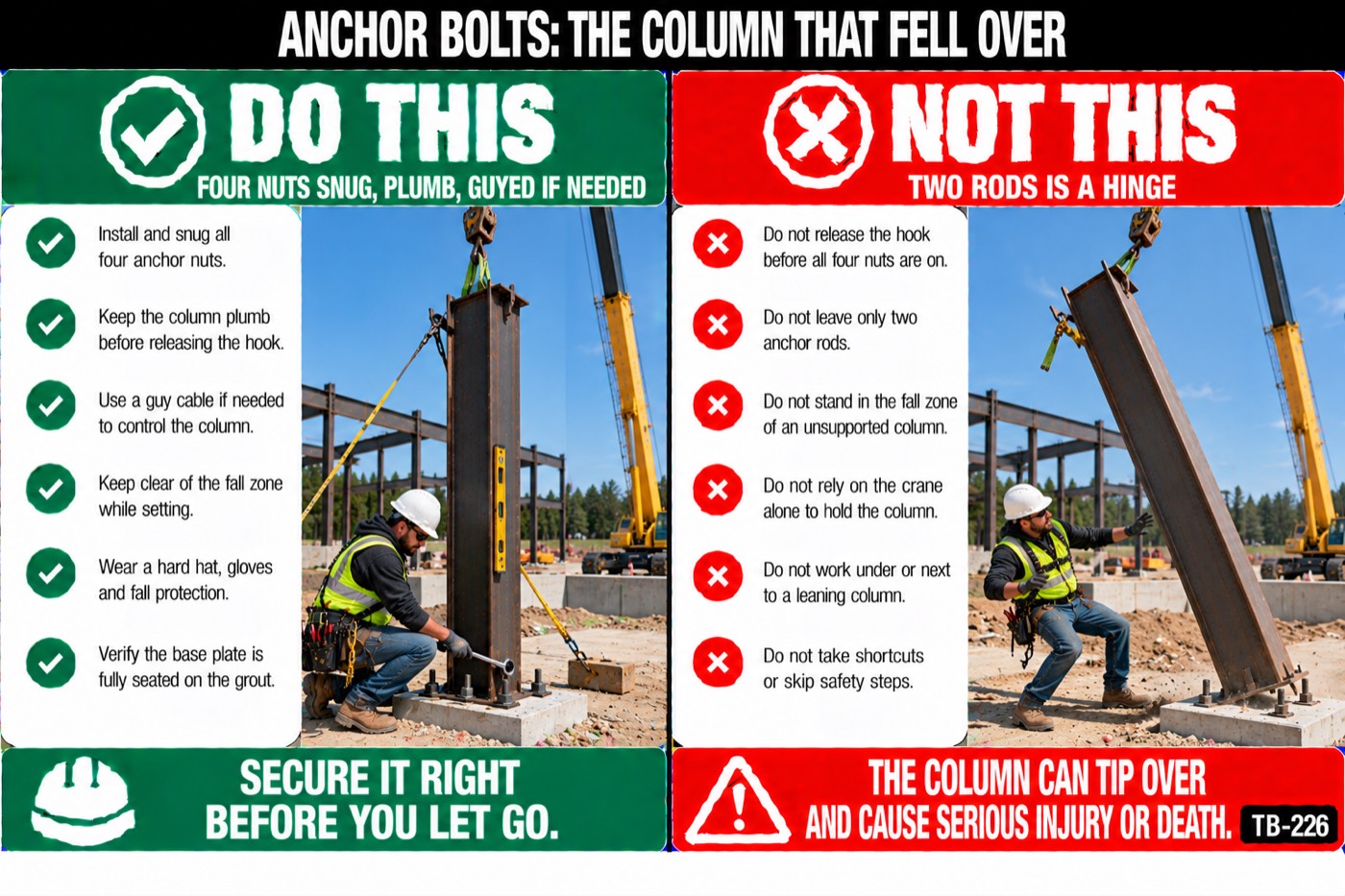
A 30-foot W10 column weighs about 1,500 pounds and stands on a plate the size of a doormat. Take the hook off with two nuts snug and it is a pole balanced on two points.
The points
- Columns fall over during erection, and they fall on the person who just unhooked them or the one standing at the base plumbing it. A column that goes over takes the beam that was hanging on it and whoever was on that beam.
- Every column stands on at least four anchor rods, and the base and rods together have to hold the column with a 300-pound worker hanging 18 inches off its face. Two rods is not a column base, it is a hinge.
- The hook stays on until the nuts are on all four rods and the column is plumb, and a competent person has said whether it needs a guy or a brace. If it does, the guy goes on before the crane lets go.
- Any anchor rod that was bent, cut, heated, moved, or replaced is a modification. The engineer of record approves it, and the controlling contractor tells the erector in writing before the first column goes up. If nobody told you, ask before you set it.
- The concrete under that plate has to be at 75 percent of its design strength, tested, before steel goes on it. A footing poured Friday is not ready Monday because it looks gray.
Why it goes wrong
Four rods is the minimum because a base plate on two rods can rotate about the line between them. A column on four rods at the corners of the plate has to bend a rod to move. The 300-pound eccentric load written into the rule is a worker on a ladder or a climbing hook, 18 inches out from the column face, with nothing else holding the column up. Design for that and the column stands on its own during erection.
Anchor rods get damaged before you ever see them: an excavator bucket, a concrete truck, a laborer who bent one out of the way of a screed. The fix is often a rod heated and bent back, or a hole cored and a new rod epoxied in. Either one changes what the base will hold. The rule puts the approval on the engineer and the notice on the controlling contractor so the erector does not find out with the column in the air.
Leveling nuts and shims set the plate at elevation. A stack of loose shims under one corner with the nuts run down is a column on a wedge. Grout goes in after the column is plumb and bolted, and until it does the rods and nuts carry everything. Do not load a column with beams before the base is finished.
Plumb is set with the column on the hook. Loosen, pull with the come-along or push with the jack, snug the nuts, check both faces with the level or the transit, and only then release. A column two inches out at the top has the beam holes two inches off, and the connector will lever the beam to make it fit. That is the load the base was not designed for.
A competent person decides on guying, and the answer is usually yes for a column standing alone with nothing framed to it, in wind, or with a long unbraced height. A guy is a cable or a rope to a deadman or a footing, tensioned, with a flag on it so nobody walks into it and the loader does not drive over it. Take the guy off when the column is framed in both directions, not when it is in the way.
Order matters. Column, then the beam that ties it to the last column, then the next column. A row of columns standing alone with no beams is a row of poles waiting for a gust. If the beam delivery is late, the columns wait on the trailer.
Questions for the crew
- Has anyone told us in writing that the anchor rods on this job were touched, and do we have the concrete test for these footings?
- Which columns today are going to stand alone for a while, and who is deciding whether they get a guy?
- Who is at the base plumbing the column, and where do they stand when the hook comes off?
To close
Today no column comes off the hook until four nuts are snug, it is plumb, and the guy is on if it needs one.
To hold this talk with your crew
1
Read it aloud. Five minutes, before the work starts.
2
Ask the questions. A crew that talks is a crew that remembers.
3
Have them sign on their own phones, and the record is sealed.