Rigging: the sling, the angle, and who stands clear
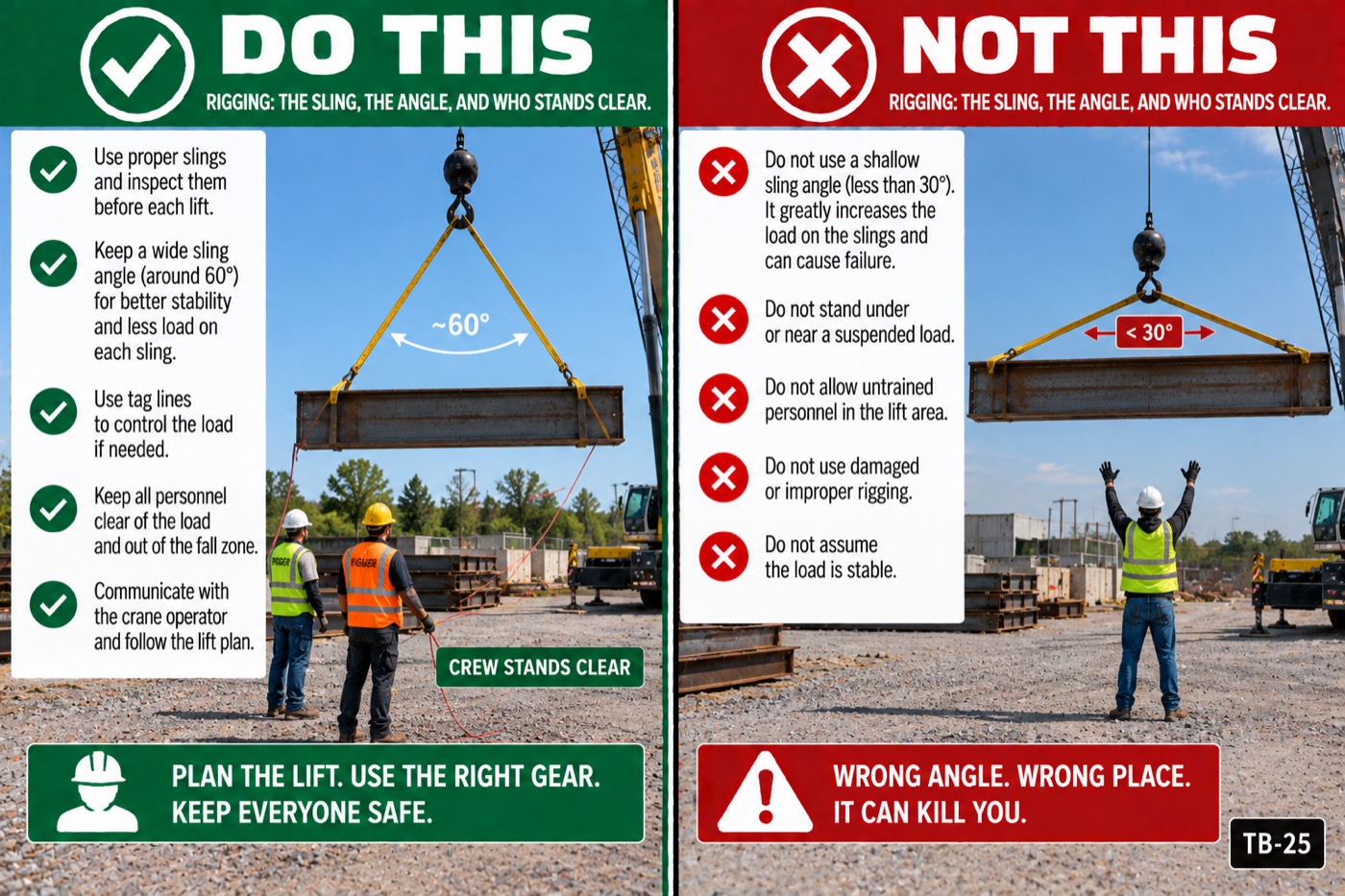
Every one of us has watched a load swing and thought, that is close enough. This is about the day it is not.
The points
- Inspect every sling before the lift. A cut, a crushed strand, a burn or a missing tag takes it out of service. There is no such thing as one more pick.
- Angle destroys capacity. A two-leg sling at thirty degrees carries about half of what the same sling carries pulling straight down.
- Never let the sling body wrap the shackle pin. The pin unscrews itself as the load turns.
- Nobody stands under a suspended load and nobody rides it. Control it from the side with a tag line.
- One signal person and one voice. Anyone on the crew can call a stop; only the signal person calls a move.
Why it goes wrong
Slings fail where they were already damaged. A cut you can see, a strand that has been crushed flat, a burn from a grinder, heat damage that has gone hard and shiny. None of that heals, and none of it gets better under load. The tag exists so somebody can tell what the sling was rated for; a sling with no tag is a sling with no rating.
Angle is the part people carry wrong in their heads. A two-leg sling pulling straight down carries its full rated load. Spread those legs to thirty degrees from horizontal and each leg is now carrying about double what the math suggests, because the geometry is working against you. The load did not change. The sling's margin did.
Then there is where people stand. A load that is suspended is a load that can come down, and the ways it comes down are not slow. Tag lines exist so a person can control a load from outside the line of fire, which is the only place worth standing.
Questions for the crew
- Who is signalling on this lift, and does everyone know who that is?
- When did anyone last actually look at the slings we are about to use?
- Where is the line of fire on this pick, and where will each of us be standing?
To close
One signal person today. Anyone can call a stop, and nobody gets asked why afterward.
To hold this talk with your crew
1
Read it aloud. Five minutes, before the work starts.
2
Ask the questions. A crew that talks is a crew that remembers.
3
Have them sign on their own phones, and the record is sealed.