Cold work: wind, wet, and the person who stops shivering
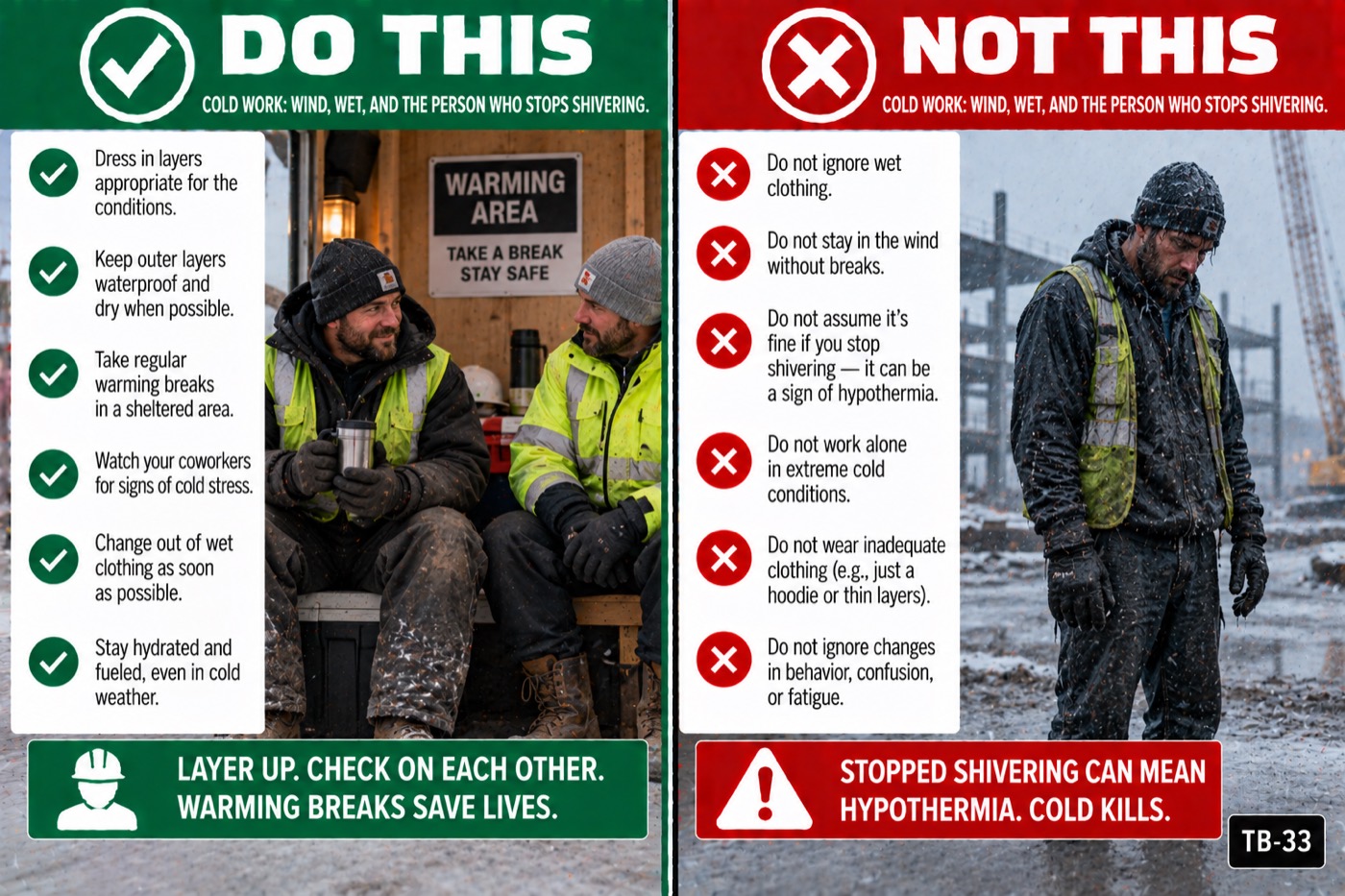
The dangerous cold is not the coldest day. It is forty degrees, wet, with a wind, when nobody thinks to dress for it.
The points
- Wind matters more than the thermometer. Forty degrees, wet and windy pulls heat out of a person faster than twenty and still.
- Layers, not one thick coat. Wet cotton against skin takes heat away; wool and synthetics keep working when damp.
- Shivering that stops is not improvement. Confusion, slurred speech and stumbling are hypothermia, and that person comes off the job now.
- Watch fingers, ears and toes for white waxy skin. Rewarm slowly and never rub the area.
- Warm drinks and a warm place to take a break. Coffee and cigarettes both work against you out there.
Why it goes wrong
Wind and water pull heat out of a body far faster than still air does. That is why forty degrees, wet and windy, is more dangerous in practice than twenty and calm - people dress for the number on the thermometer rather than for the conditions they are standing in.
Cotton is the specific problem. Once wet, it holds water against the skin and keeps pulling heat out for the rest of the shift. Wool and synthetics keep some insulating value when damp, which is why layers matter more than one thick coat: layers let you shed heat before you sweat, and sweat is what soaks the layer nearest your skin.
The warning signs run in the wrong direction. Shivering is the body working, so shivering that stops is not improvement - it means the body has lost the fight. Confusion, slurred speech, stumbling and poor judgment are hypothermia, and the person showing them will usually tell you they are fine.
For fingers, ears and toes, look for skin that has gone white and waxy. Rewarm slowly and do not rub it: rubbing damages tissue that is already frozen.
Questions for the crew
- What is the wind doing today, and who is working in it longest?
- Who is wearing cotton against their skin right now?
- Where is the warm break area, and does everyone know they can use it?
To close
Watch each other today. If someone stops making sense or stops shivering, they come off the job right then.
To hold this talk with your crew
1
Read it aloud. Five minutes, before the work starts.
2
Ask the questions. A crew that talks is a crew that remembers.
3
Have them sign on their own phones, and the record is sealed.