Working through a heat wave without losing someone
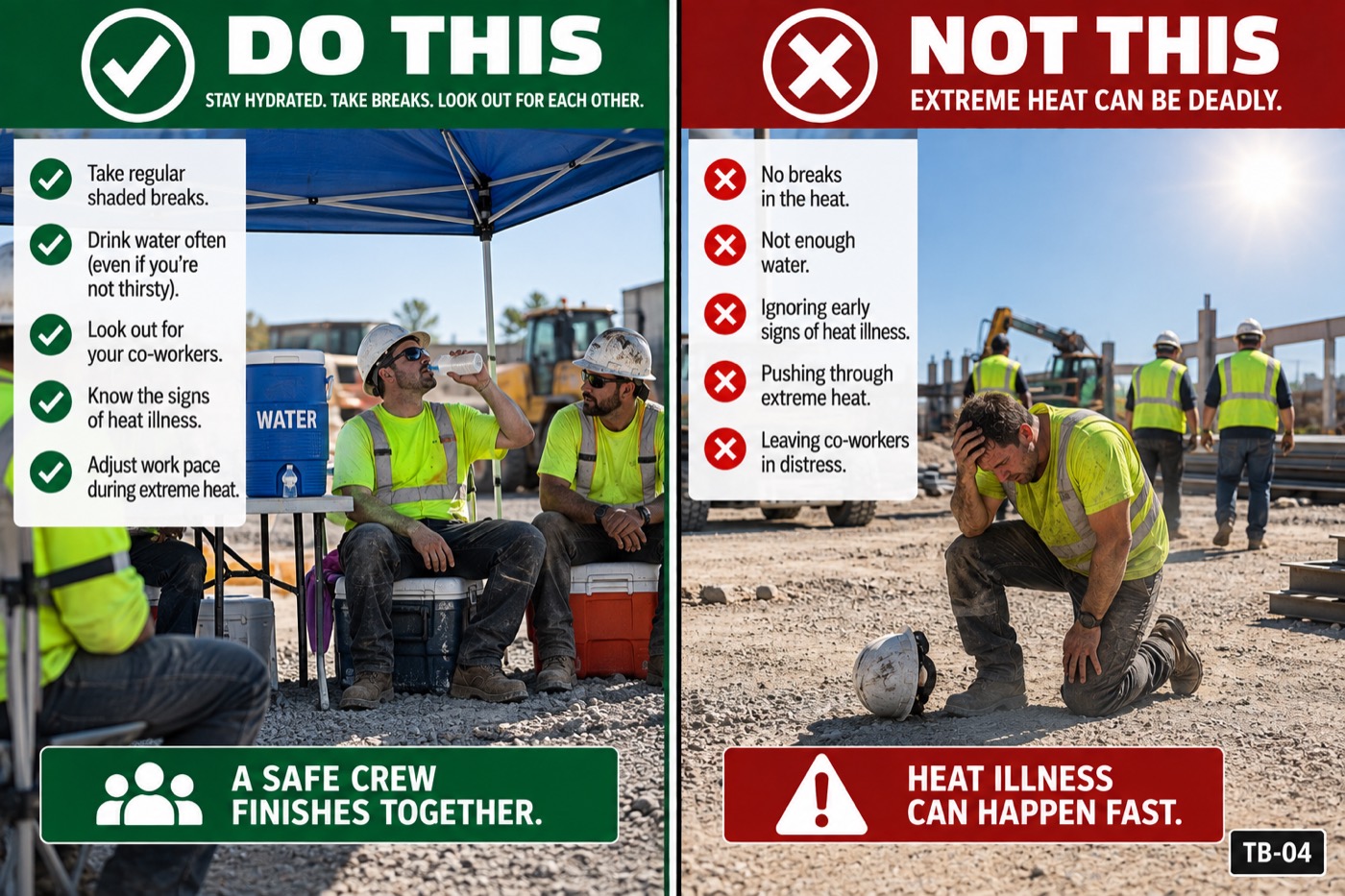
The person who goes down in the heat is usually the newest one, and usually on their first or second day.
The points
- Thirst is a late signal. Drink on a schedule, roughly a cup every twenty minutes in real heat.
- New hires and people back from vacation are the highest risk. Build their hours up over the first week.
- Confusion, stumbling, or someone who stops sweating is an emergency. Call 911, move them to shade, and start cooling them immediately.
- Nobody works alone in extreme heat. Pair up and check on each other.
- Shade and water go where the work is, not back at the trailer.
Why it goes wrong
Acclimatization is the single biggest factor and the one most often ignored. A body needs about a week of graduated exposure to adapt to working in heat, and until it does, the same work in the same conditions is far more dangerous. That is why the fatalities cluster in the first days on the job: new hires, people back from vacation, and anyone returning after a stretch of cool weather.
Thirst lags dehydration badly. By the time you feel thirsty you are already down enough fluid to affect how you think and how well your body sheds heat, which is why the recommendation is a schedule rather than an urge - roughly a cup every twenty minutes in real heat, whether or not you want it.
Heat exhaustion and heat stroke are not the same illness at two intensities. Heat exhaustion is heavy sweating, weakness, nausea, clammy skin, and it responds to shade, fluid and rest. Heat stroke is the body's cooling system failing outright: confusion, slurred speech, stumbling, sometimes hot dry skin, sometimes still sweating. It kills quickly and it damages the brain and kidneys in survivors.
The reason confusion is on the list is that it removes the person's ability to save themselves. Someone in heat stroke will tell you they are fine and try to keep working. The decision to pull them out has to belong to whoever notices, not to them.
Cool first, and cool aggressively - shade, clothing off, cold water over them, ice at the neck, armpits and groin - while somebody else calls 911. Minutes of cooling in the first few minutes matter more than anything that happens at the hospital.
Questions for the crew
- Who here is new, or just back from time off?
- Where is the water and the shade, and is it close enough that people will actually use it?
- Who is paired with who today?
To close
Pair up today. Know who is checking on you, and check on them.
To hold this talk with your crew
1
Read it aloud. Five minutes, before the work starts.
2
Ask the questions. A crew that talks is a crew that remembers.
3
Have them sign on their own phones, and the record is sealed.