Ground nests, stings and the epinephrine in the truck
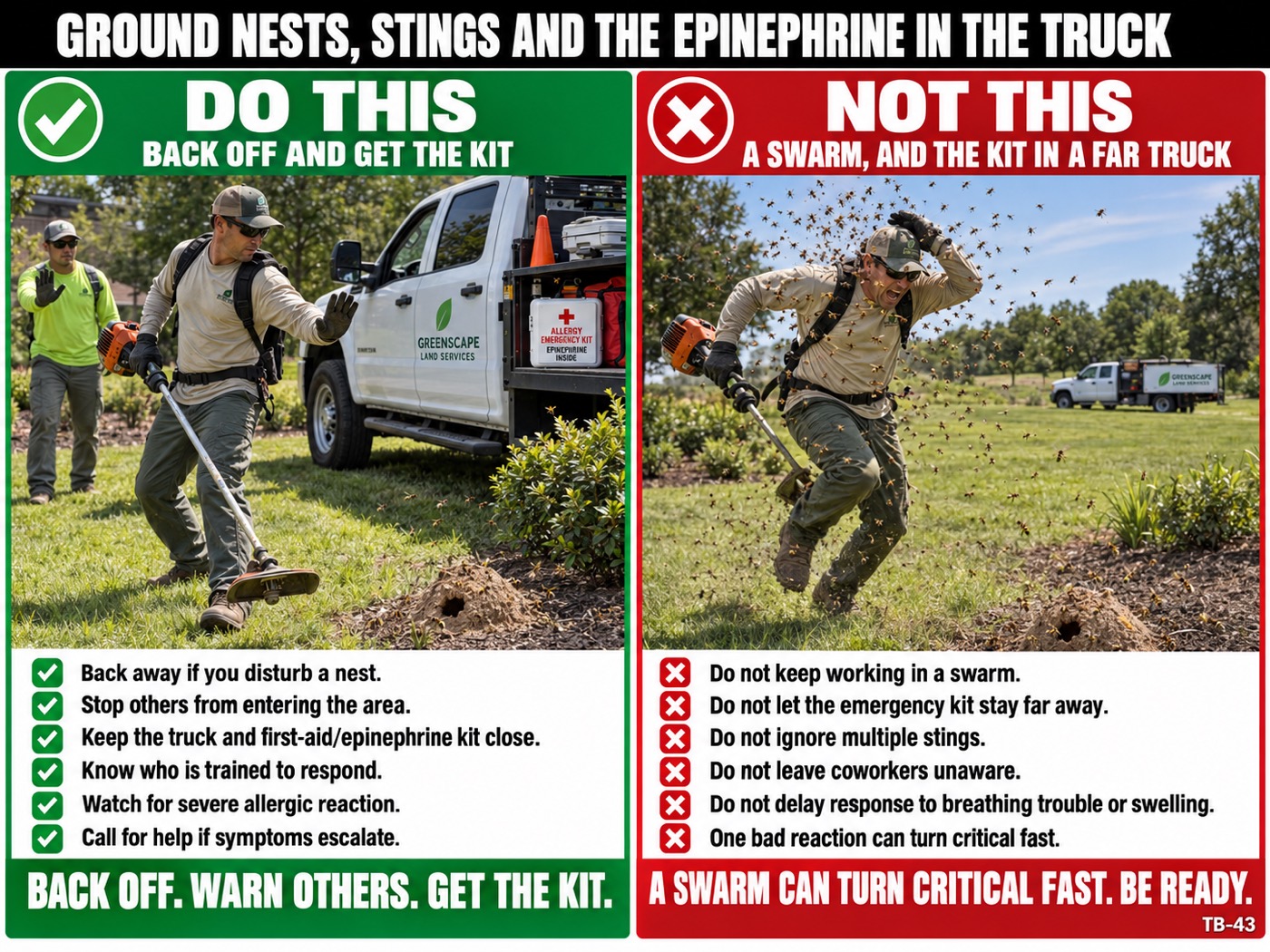
The nest that gets somebody is the one in the ground that nobody saw until the trimmer went over it.
The points
- Ground nests are the ones that get people. A mower or trimmer over a nest brings the whole colony up at once.
- Walk the area before you clear brush. Thirty seconds of looking beats twenty stings.
- Anyone with a known sting allergy carries their epinephrine on them, not in the truck, and the crew knows where it is.
- Trouble breathing, swelling of the face or throat, or a rash spreading from the sting is a 911 call, not a wait and see.
- For ticks: light clothing, pants into socks, and a check at the end of the day. Pull straight out with tweezers, close to the skin.
Why it goes wrong
Ground-nesting yellow jackets and hornets are the ones that put people in an ambulance, and the mechanism is different from a single sting. A mower or a trimmer over a nest does not disturb one insect, it brings the whole colony up at once, and they pursue. Someone running while being stung, on uneven ground, near equipment, gets hurt twice.
Thirty seconds of walking the area before you start clearing brush is what catches it - you are looking for steady traffic in and out of one point on the ground, which is obvious once you are looking for it and invisible if you are not.
Allergy is where this stops being a nuisance. A person with a known sting allergy can go from a sting to a closed airway in minutes, so the epinephrine has to be on the person, not in the truck at the other end of the property, and at least one other person has to know where it is and how it works. An auto-injector is straightforward, but not while somebody is trying to find it in a glovebox.
The signs that mean call 911 rather than wait are trouble breathing, swelling of the face, lips or throat, dizziness, or a rash spreading away from the sting site. Epinephrine buys time; it is not a substitute for the ambulance, and a second reaction can follow the first.
Ticks are the slower version of the same subject. Light clothing so you can see them, pants tucked into socks, and a check at the end of the day. If one is attached, pull straight out with tweezers as close to the skin as you can get, and note the date.
Questions for the crew
- Who here has a sting allergy, and where is their epinephrine right now?
- What brush or ground are we clearing today, and has anyone walked it?
- If someone reacts badly out here, what is the plan?
To close
If you carry an epi-pen, it goes in your pocket today, and tell the person next to you.
To hold this talk with your crew
1
Read it aloud. Five minutes, before the work starts.
2
Ask the questions. A crew that talks is a crew that remembers.
3
Have them sign on their own phones, and the record is sealed.