Fall protection above six feet
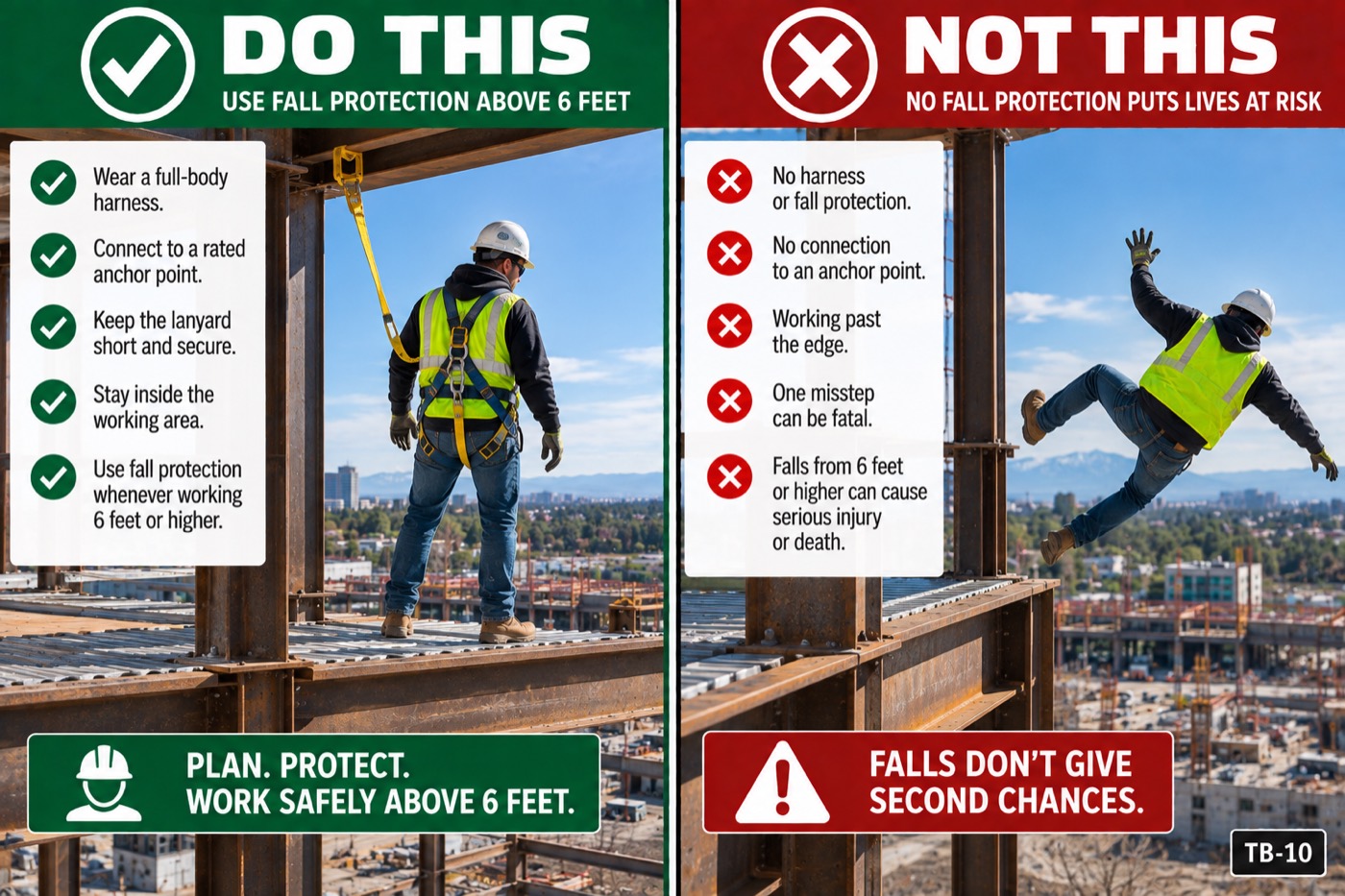
If somebody falls today and ends up hanging in their harness, what do we do in the next fifteen minutes? That is the question, not whether we tied off.
The points
- Falls are the leading cause of death in construction, and six feet is the trigger height for most construction work.
- Guardrails, safety nets, or a personal fall arrest system. Pick one, use it every time.
- Inspect your harness before each use: cuts, frays, burns, chemical damage, bent hardware.
- Anchor points must hold 5,000 pounds per person, or be designed by a qualified person with a safety factor of two.
- Calculate your fall distance before you clip on. A six-foot lanyard in a twelve-foot space still puts you on the ground.
Why it goes wrong
A fall arrest system that stops you two feet above the deck has done its job. One that stops you two feet below it has not. Free fall distance, deceleration distance, harness stretch, and the height of the worker all add up, and people get this wrong constantly.
Suspension trauma is the part nobody plans for. A worker hanging in a harness can lose consciousness in as little as fifteen minutes. If someone falls and is left hanging, that is a rescue emergency, not a wait-for-the-ambulance situation. Know your rescue plan before anyone goes up.
The reason hanging is dangerous is not the harness squeezing. It is that the leg straps stop blood returning from the legs, so it pools there and stops circulating. The person can be conscious and talking and still be in serious trouble, and the damage continues after they are brought down, which is why they get medical attention even if they seem fine.
The 5,000 pound anchor figure surprises people who think of it as holding a body weight. It is not holding weight, it is stopping a fall, and the forces in that fraction of a second are enormous. That is why a bit of structure that will obviously hold a man standing on it is not automatically an anchor point, and why the alternative in the rule is an engineered anchor with a safety factor of two.
Harness inspection is quick and gets skipped because harnesses almost never fail. Look for cuts, frays, burns, chemical staining, and hardware that is bent or does not lock. Anything you find takes the harness out of service permanently - a webbing failure is not the kind of thing you get a second opinion on.
Questions for the crew
- What's our rescue plan if someone falls and is left hanging right now?
- Where are the anchor points on this job, and who checked them?
- Has anyone here ever inspected a harness and taken it out of service? What did you find?
To close
Before anyone goes up today, tell me the anchor point and tell me how we get them down.
To hold this talk with your crew
1
Read it aloud. Five minutes, before the work starts.
2
Ask the questions. A crew that talks is a crew that remembers.
3
Have them sign on their own phones, and the record is sealed.