Trenching: the wall that killed someone
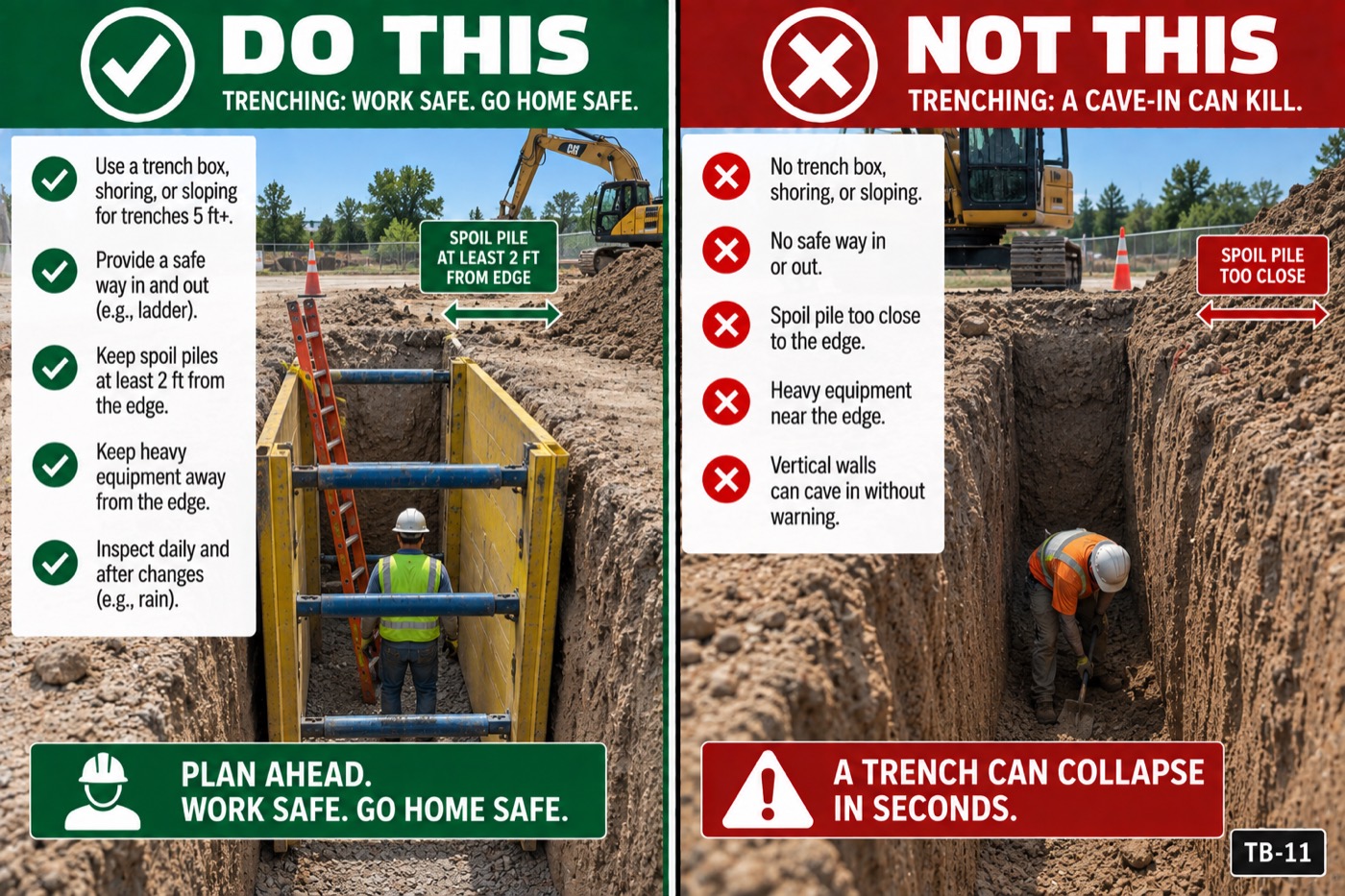
A cubic yard of dirt weighs about what a small car weighs. That is what is standing next to whoever is down in that trench.
The points
- A cubic yard of soil weighs about 3,000 pounds. A collapse doesn't crush you so much as it stops you breathing.
- Any trench five feet deep or more needs a protective system: sloping, shoring, or a trench box.
- Trenches twenty feet or deeper need a system designed by a registered professional engineer.
- Spoil piles stay at least two feet back from the edge. Better is further.
- A ladder, ramp, or steps within twenty-five feet of every worker in a trench four feet deep or more.
Why it goes wrong
A competent person must inspect the excavation daily, before each shift, and after every rain. That person needs the authority to shut the work down, not just the knowledge to spot a problem.
Cave-ins usually happen without warning. Previously disturbed soil, standing water, vibration from nearby equipment, and rain all change what the walls will do. Soil that held yesterday tells you nothing about today.
Never enter an unprotected trench to rescue someone. Secondary collapses kill would-be rescuers regularly, and you become a second body for the same crew to recover.
What kills in a cave-in is usually not crushing injury. It is that the weight of soil against the chest makes it impossible to expand the ribcage, so the person cannot breathe even with their head clear and people talking to them. That is why this is measured in minutes, and why a partial burial to the waist is still a life-threatening emergency.
Excavation is one of the few areas where the rule names a depth and a specialist. Five feet triggers a protective system - sloping, shoring or a box. Twenty feet requires a system designed by a registered professional engineer. Neither number bends for a job that will only take an hour.
Spoil piles belong at least two feet back, and further is better, for two reasons: the pile's weight bearing down near the edge is exactly the load the wall was not designed to carry, and loose material rolls back in on whoever is below.
Questions for the crew
- Who is the competent person on this excavation, and when did they last inspect it?
- What's the soil like here, and has it been disturbed before?
- If someone was buried right now, what would you actually do?
To close
Nobody goes in that trench today until the competent person has looked at it this shift.
To hold this talk with your crew
1
Read it aloud. Five minutes, before the work starts.
2
Ask the questions. A crew that talks is a crew that remembers.
3
Have them sign on their own phones, and the record is sealed.