Ground-mount: locates, the trench and the hammer
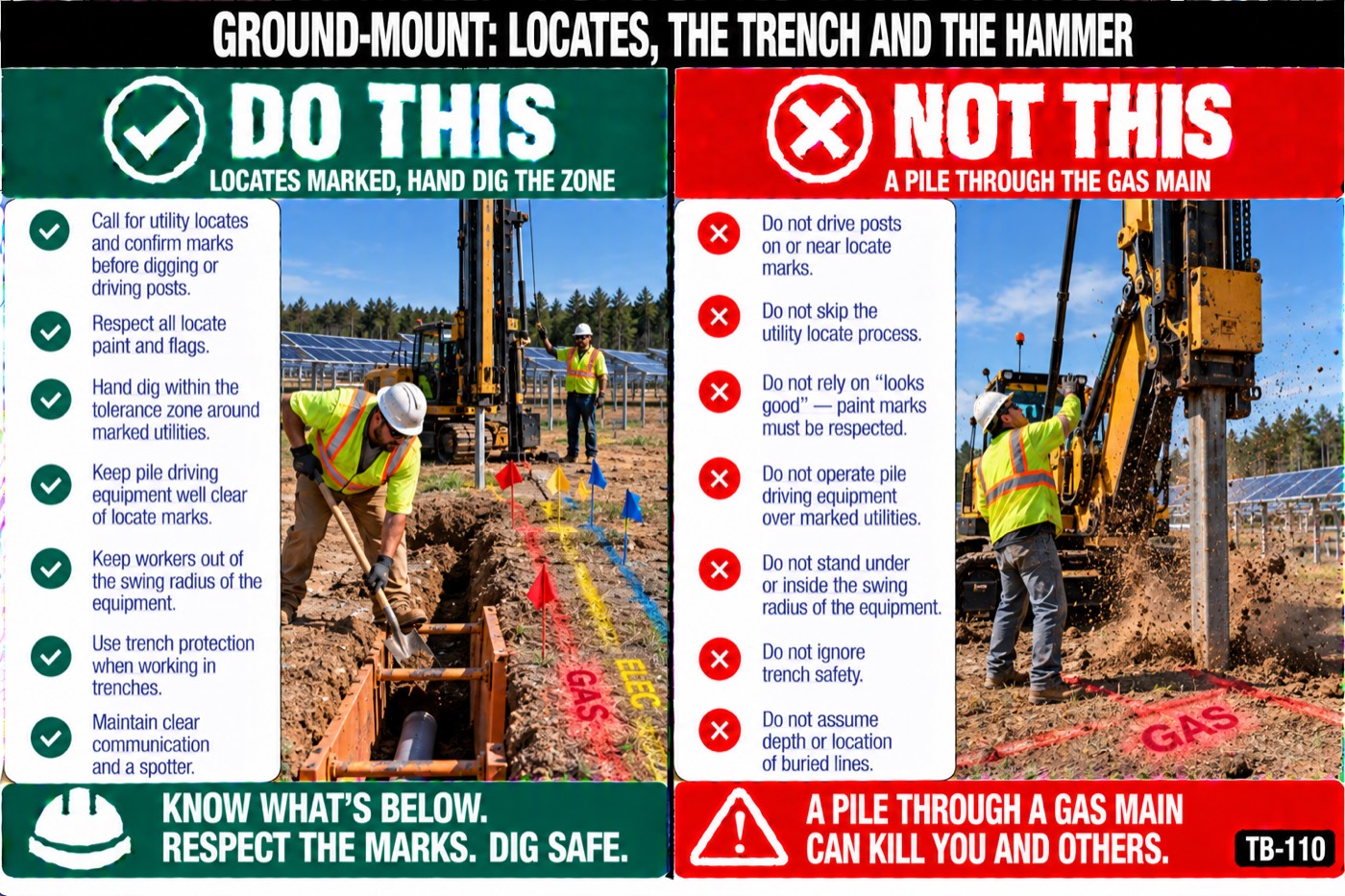
A post driver puts a steel pile 6 feet into the ground with a hydraulic hammer. If a gas main is in the way, it puts the pile through that too.
The points
- Driving a pile into a gas line or a primary electric cable is a fire or an electrocution at the base of the machine. A worker in an unshored 5 foot conduit trench is a burial.
- Nothing goes in the ground until locates are done and marked, and inside the tolerance zone, usually 18 to 24 inches either side of the paint, you dig by hand or vacuum, not with a driver or a bucket.
- A conduit trench 5 feet deep or more gets sloped, shored or boxed before anyone goes in, and spoil stays at least 2 feet back from the edge at any depth.
- The pile driver's mast swings and the hammer drops. Nobody stands within the swing or under the mast, and only the designated spotter gives signals to the operator.
- Hydraulic hoses run 2,000 to 3,000 PSI. A pinhole leak injects oil through skin; feel for leaks with cardboard, never a hand, and stand clear of any hose under load.
Why it goes wrong
The rule says the estimated location of underground installations is determined before opening an excavation, the owners are contacted to mark them, and as you approach the marks the exact location is found by safe means. Paint is an estimate. Solar field layouts put hundreds of piles on a grid, and the grid does not move for a gas line; the pile does. Check every pile location against the marks, not just the perimeter.
Pile drivers on solar fields are tracked machines with a mast that leans, rotates and drops a hydraulic hammer weighing several hundred pounds. The rule for pile driving equipment keeps everyone clear while piling is hoisted into the leads, allows signals only from the designated signaler, and requires safety chains on hose connections so a parted coupling cannot thrash. The person holding the pile plumb is the one in the swing; use a gauge or a stand, not a hand.
Refusal is when the pile stops going in. On rock or a buried object, the hammer keeps hitting a pile that is not moving, and the energy goes into the mast, the pile top, and whatever the pile is sitting on. Stop at refusal and find out why; a pile that stopped at 30 inches on a site that pot-holed clean is sitting on something you did not know about.
Trenches for DC and AC runs on a ground mount are long and often go deeper than the 18 to 24 inches of cover the electrical code asks for once they cross a grade change. Any part of a trench 5 feet deep needs a protective system, and a competent person inspects it each shift and after rain. Trenches on farmland are in soil that was plowed for decades. Disturbed soil can never be type A, so treat it as type B at best, and type C if it is wet, sandy or seeping.
Hydraulic injection injuries look like a pinprick and are an amputation by the next day. Oil at 2,000 PSI penetrates skin from a few inches away and spreads through the tissue. Anyone with a suspected injection goes to a hospital immediately and says the words hydraulic injection, because emergency rooms miss it.
The common mistake is assuming a bare field has nothing in it. Irrigation mains, farm electric to a well pump, a pipeline easement, drain tile, and an old fuel line to a barn are all in bare fields. Call the locate, walk the field for markers and valve boxes, and ask the landowner what they know.
Questions for the crew
- What did the locate find on this field, and where are the marks relative to the pile grid?
- Who is the spotter for the driver today, and where does everyone else stand?
- How deep is the trench going, what is the soil, and who inspected it this morning?
To close
No pile goes in the ground today outside the locate marks, and nobody stands in the mast swing or in an unprotected trench.
To hold this talk with your crew
1
Read it aloud. Five minutes, before the work starts.
2
Ask the questions. A crew that talks is a crew that remembers.
3
Have them sign on their own phones, and the record is sealed.