Hot mix at 300 °F: the burn through your boot
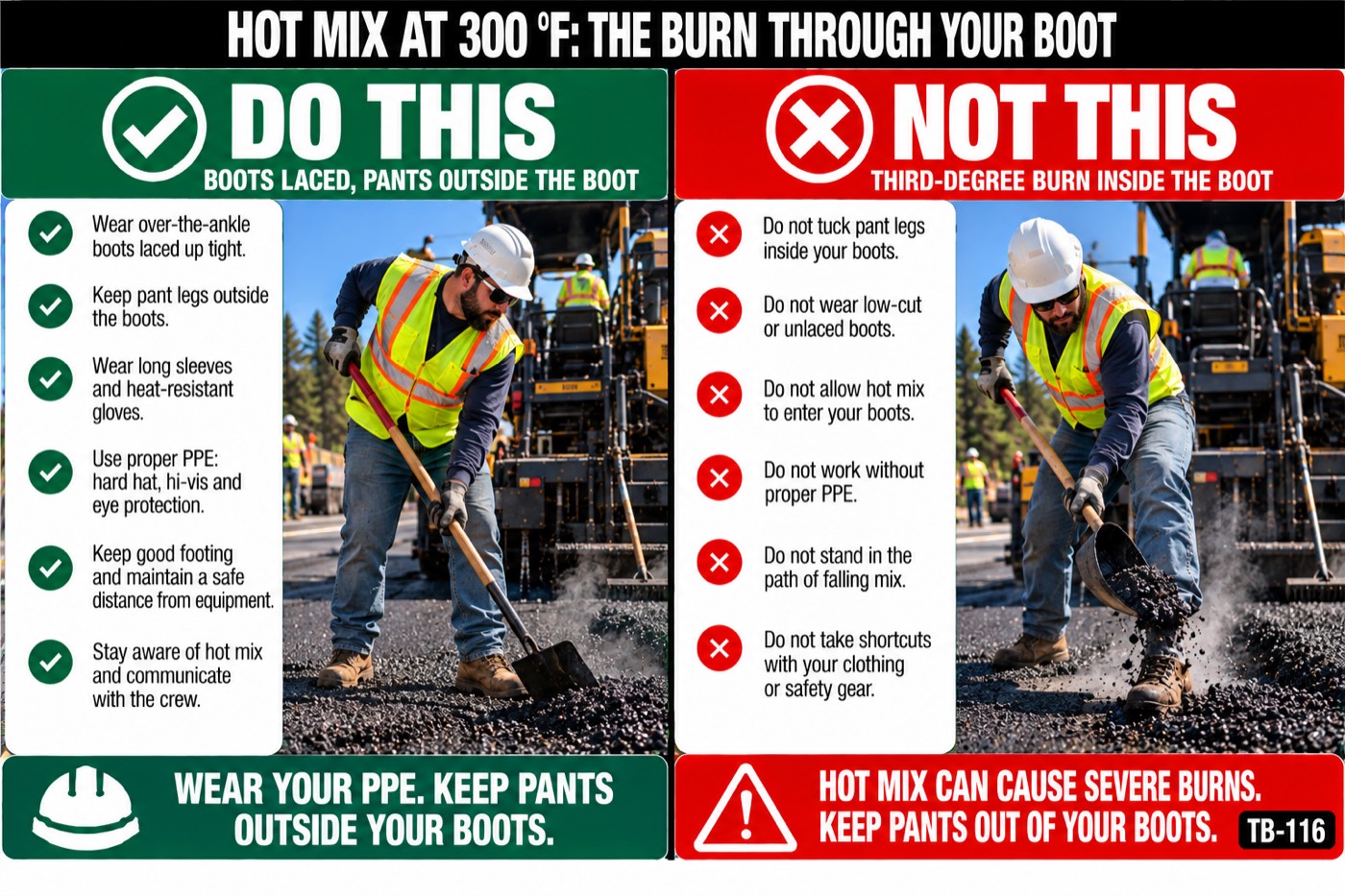
The mix in that truck is between 275 and 325 °F. Water boils at 212. Skin takes a full-thickness burn from 300-degree asphalt in under a second, and the asphalt keeps burning after it lands because it does not run off.
The points
- A shovel of hot mix down a boot is a third-degree burn to the ankle and foot, and the boot holds it against the skin while you try to get the boot off. People lose skin grafts and months over that one step.
- Hot mix at 275 to 325 °F does not behave like hot water. It sticks, it holds heat, and it keeps cooking the tissue under it until it is cooled down.
- First minute: get to water and flood the burn with cool running water for at least 20 minutes. Not ice, not a jug of hot cooler water, not a rag. Cut the boot or the pant leg off around the asphalt if you have to.
- Do not pull, scrape, or peel stuck asphalt off skin. The skin comes with it. Cool it, cover it, and let the hospital remove it with the right solvent.
- Boots over the ankle laced up, long pants outside the boot, gloves, long sleeves, and eye protection at the hopper and the screed. The mix does not care that it is hot out.
Why it goes wrong
At 300 °F, tissue damage starts on contact and reaches full thickness in about a second. Hot water at 160 °F takes about a second to do the same, so hot mix has no margin at all. What makes asphalt worse than hot water is that it does not drain away. A blob of mix stays on the skin at nearly its full temperature and keeps transferring heat until somebody cools it.
The boot burn is the classic paving injury. Mix goes over the top of a low boot, or down a boot with the pant leg tucked in, and the boot becomes an oven. The person then spends a minute hopping and pulling at laces while the burn deepens. Over-the-ankle boots, laced, with the pant leg over the outside, is the whole defense. A pant leg tucked into a boot is a funnel.
Cooling is the treatment. Cool running water for 20 minutes brings the temperature of the asphalt and the tissue under it down and limits how deep the burn goes. Ice makes it worse by damaging skin that is already injured. Water from the cooler is fine. The water truck is fine. A hose on the distributor is fine. Start cooling before anyone calls, and keep cooling while they call.
Never remove asphalt from a burn in the field. It is stuck to skin that is already dead or dying, and pulling it takes the skin off and opens the wound to infection. Emergency rooms remove it with mineral oil, petroleum jelly, or a citrus-based solvent over hours. Cover the cooled burn loosely with a clean dry dressing and get the person to a hospital, not a clinic.
Eyes are the other one. Splatter from the hopper wings folding, from a shovel thrown into the auger chamber, from mix hitting a wet surface and popping. Safety glasses at minimum, a face shield when you are cleaning the hopper or working the screed extensions. A drop of 300-degree asphalt in the eye is a trip to a specialist.
The rule that governs this is the basic PPE section. The employer has to provide and require protective equipment wherever the process can injure through physical contact. Hot mix on skin is that hazard, all day, on every job.
Questions for the crew
- Where is the nearest water that will run for 20 minutes if somebody takes mix down a boot today?
- Who on this crew has boots below the ankle or a pant leg tucked in right now?
- If the screed hand gets splattered in the face, who drives, and which hospital?
To close
Today everyone paves in over-the-ankle boots with the pant leg outside, and a burn gets 20 minutes of running water before anything else.
To hold this talk with your crew
1
Read it aloud. Five minutes, before the work starts.
2
Ask the questions. A crew that talks is a crew that remembers.
3
Have them sign on their own phones, and the record is sealed.