Asphalt fumes: the screed is the worst seat
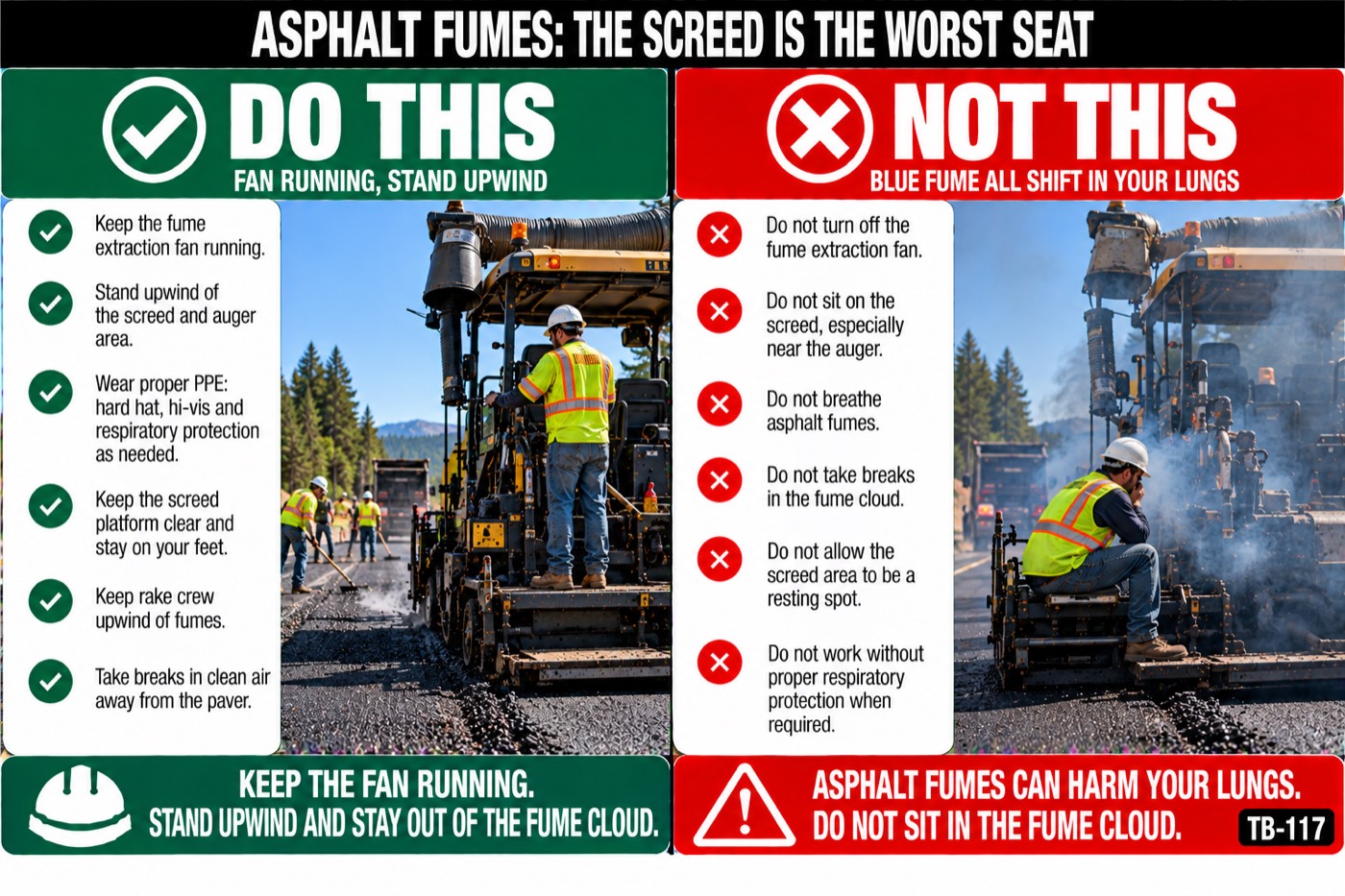
The blue haze coming off the screed is asphalt fume: fine oil mist and the same family of compounds that is in cigarette smoke and diesel soot. The screed operator breathes more of it than anybody on the job, and on a still day, all shift long.
The points
- Asphalt fume at the screed causes burning eyes, a sore throat, headache and nausea the same day, and the polycyclic aromatic hydrocarbons in it are the reason paving is on the lists of jobs tied to lung and skin cancer. Some mix from sour crude also gives off hydrogen sulfide, which is a poison, not an irritant.
- OSHA has no asphalt-specific limit in construction, so 1926.55 covers this through its general contaminant limits and the duty to use engineering controls first. NIOSH recommends keeping asphalt fume under 5 mg/m3 over any 15 minutes and keeping mix temperatures as low as the mix allows.
- The hottest and closest spot is the screed platform and the auger chamber, then the paver operator's seat, then the rake crew. Fume drops fast with distance. Stand upwind of the screed when you are not on it, and do not sit on the screed deck at breaks.
- Ventilation on newer pavers pulls fume from the auger area and vents it above the operator. If the fan is not running or the ducts are plugged, the screed crew is breathing what the fan was supposed to move. Check it at the start of the shift.
- A respirator is called for when the smell is heavy and steady, when the mix is running hot, when there is no wind, on warm mix additives you do not know, and any time hydrogen sulfide is a possibility. An organic vapor cartridge with a particulate prefilter, fit tested, or you stay off the screed.
Why it goes wrong
Asphalt fume is a mix of oil mist and vapor from the lighter fractions of the binder. It contains polycyclic aromatic hydrocarbons, PAHs, in small amounts. The mist lands in the airway and on skin. The short-term effects are what the crew feels by mid-morning: eyes, throat, headache. The long-term concern is why the exposure needs to be managed rather than tolerated.
Temperature drives it. Fume goes up fast as the mix runs hotter than it needs; a common rule of thumb says it doubles for every 20 °F. A plant sending mix at 330 °F because the haul is long, or a crew running the screed heater hot to hide a cold joint, is dosing the screed operator. Ask the plant what the mix design calls for and hold the tank temperature there.
Hydrogen sulfide is the one that is not an irritant. It comes off some asphalt binders from high-sulfur crude, mostly in the headspace of tanker trucks, storage tanks and the paver hopper. The construction limit in 1926.55 is 10 ppm. You smell rotten eggs at a fraction of a part per million, and at around 100 ppm your nose stops reporting it. If the smell is strong at the hopper and then goes away, that is not good news. Get upwind and stop the truck.
The paver's fume extraction, where fitted, is an engineering control and the rule says those come first. It only works with the fan running, the hood in place, and the duct clear of hardened mix. Crews disable it because the fan is loud or in the way. Put it back. Where the paver has none, wind is the control: keep the raking crew and the screed hand upwind of the auger chamber as much as the job allows.
On a respirator: a paper dust mask does nothing for vapor. For asphalt fume the right filter is an organic vapor cartridge with a P95 or P100 prefilter, on a half mask that has been fit tested. If a respirator is required, the whole respirator program in 1926.103 comes with it: medical evaluation, fit test, training. Voluntary use of a half mask still needs the person to be shown how to wear it.
Skin counts as an exposure route for PAHs. Asphalt on the forearms all day, then a wipe with diesel to clean it off, is worse than the fume. Long sleeves, gloves, and a citrus cleaner in the truck instead of diesel.
Questions for the crew
- What temperature is the mix showing up at today, and what did the plant say it should be?
- Which way is the wind at the paver, and who is going to be downwind of the screed this morning?
- Is the fume fan on this paver running, and when did anybody last clear the duct?
To close
Today the screed hand tells me if the smell is heavy or the mix is over spec, and we stop and fix the temperature or the fan before another truck dumps.
To hold this talk with your crew
1
Read it aloud. Five minutes, before the work starts.
2
Ask the questions. A crew that talks is a crew that remembers.
3
Have them sign on their own phones, and the record is sealed.