Struck-by: the hazard you don't see coming
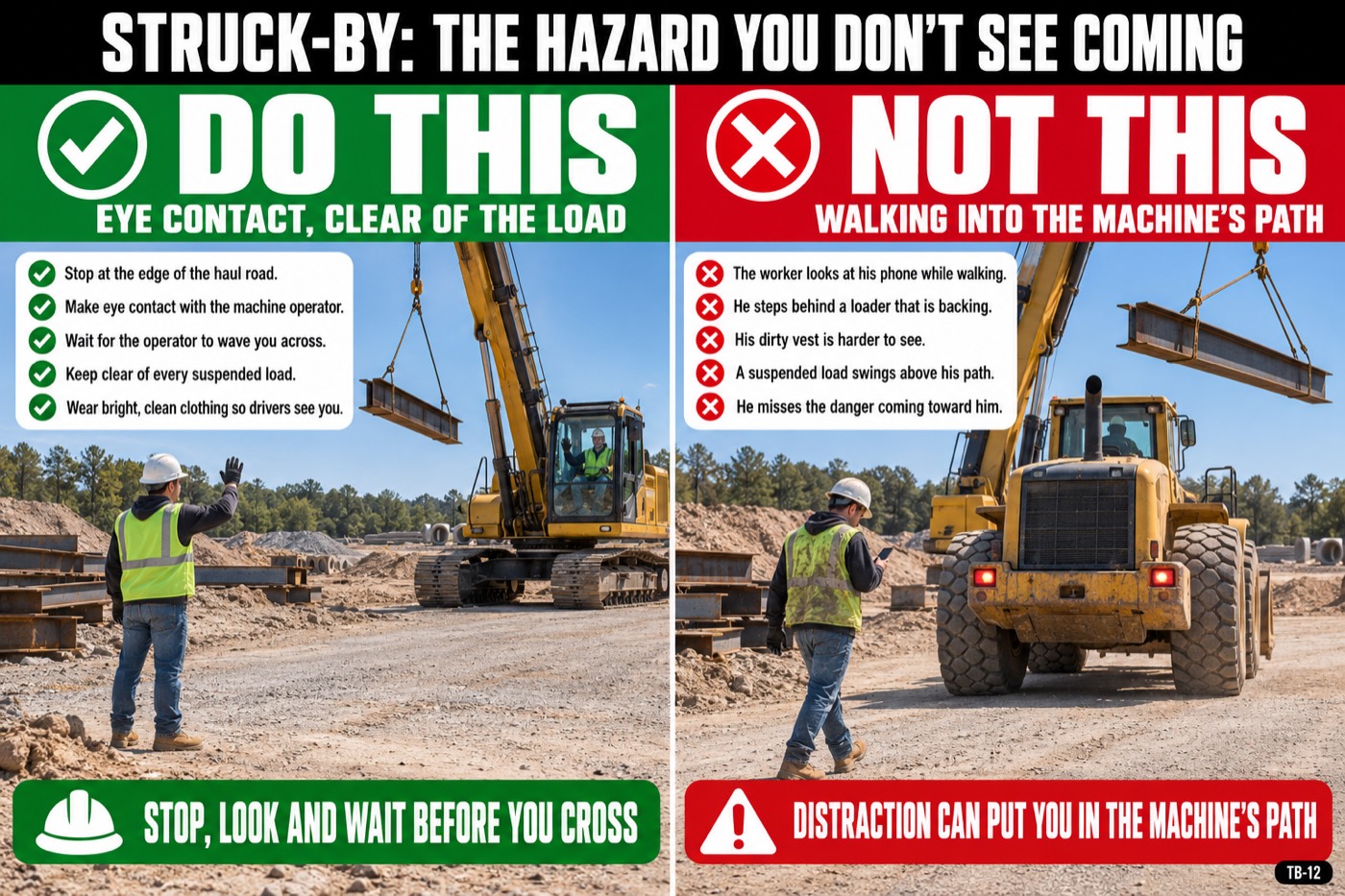
Every one of us is going to walk behind a machine today without thinking about it. That is the whole talk.
The points
- Struck-by is one of construction's leading causes of death, alongside falls, electrocution, and caught-between.
- Wear high-visibility clothing and mean it. Faded, filthy, or torn hi-vis stops working.
- Make eye contact with equipment operators before you cross their path. Assume they haven't seen you.
- Stay out from under suspended loads. Not briefly, not to save a trip. Out.
- Secure your tools and material at height. A dropped wrench from thirty feet is a lethal projectile.
Why it goes wrong
Operators have blind spots you can stand entirely inside. On larger equipment the blind zone behind the machine can be dozens of feet, and mirrors and cameras don't show a person crouched down or a stack of material.
Falling objects account for a significant share of struck-by fatalities. Toe boards, debris nets, and tool tethers exist because gravity is patient.
Eye contact is the rule because it is the only confirmation that transfers information both ways. A wave does not tell you they saw it. Assuming you have been seen is what puts people in the path of a machine that was about to swing, and operators consistently report they never saw the person at all.
A suspended load is a hazard for its whole travel, not just where it might land. Rigging fails, loads shift in the slings, and a swinging load hits people well outside where anyone expected it to come down. There is no version of walking under it that is brief enough.
Hi-vis stops working when it stops being visible. Faded, filthy or torn material loses the reflective properties it was bought for, and against a background of dust and equipment the difference is real. It is not a formality - it is what makes the operator's glance in your direction actually register.
Questions for the crew
- Where do people and equipment cross paths on this site?
- What's above us right now, and is it secured?
- How do you signal an operator here, and does everyone know the same signals?
To close
Get the operator's eyes before you cross. If you did not see them look at you, they did not see you.
To hold this talk with your crew
1
Read it aloud. Five minutes, before the work starts.
2
Ask the questions. A crew that talks is a crew that remembers.
3
Have them sign on their own phones, and the record is sealed.