Plate compactors and jumping jacks: vibration and fumes
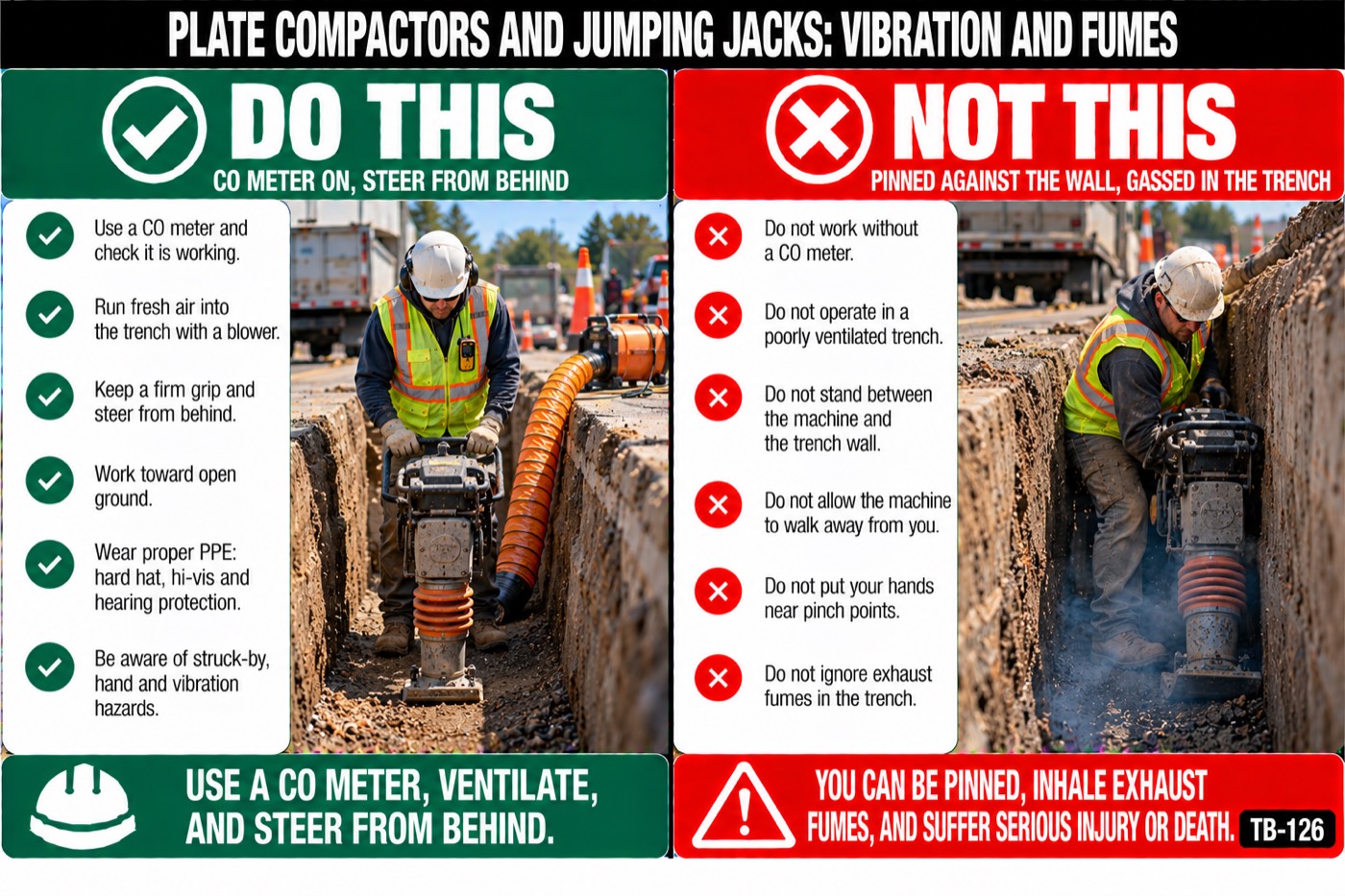
A jumping jack weighs about 150 pounds and hits the ground 700 times a minute. A plate compactor weighs 200 to 500 pounds and walks on its own. Both run a gas engine at your waist, and in a trench the engine's exhaust has nowhere to go but where you are breathing.
The points
- A rammer that gets away walks into a wall or a form and pins the hand holding the handle against it, and the operator running a plate in a 6-foot trench goes down from carbon monoxide with nobody able to see them from the top. The slower injury is white finger from years of vibration through the handles.
- 1926.302 covers fuel-powered tools: stopped for refueling and servicing, and when used in enclosed spaces, the toxic gas limits and PPE rules apply. A trench is an enclosed space for exhaust purposes. A small gas engine can put a trench over the carbon monoxide limit in minutes.
- No gas-engine compactor runs in a trench without a CO meter on the operator or forced air moving through it. If the meter alarms, out of the trench, machine off, and it does not restart until the air is moved.
- Hands on the handle, not on the machine. Nobody stands in front of a plate compactor or between a jumping jack and a wall, form or pipe. The machine goes toward open ground, and the operator steers from behind.
- Vibration: gloves, a firm but not a death grip, rotate operators every 30 minutes on a long job, and any tingling or white fingertips at the end of the shift gets reported. That is the first sign of damage that does not reverse.
Why it goes wrong
A rammer's foot delivers a few thousand pounds of force per blow and the machine advances on its own. In a trench with a pipe, a form or a wall at the end, the operator is walking behind it toward that obstacle. When the foot catches the wall the machine climbs, and the handle drives the operator's hands into whatever is behind. Operate toward open space, stop the machine 2 feet from an obstacle and turn it by hand, and never put a body between the machine and something solid.
Carbon monoxide is the trench killer. A 4-stroke engine at 5 horsepower running in a 4-foot-wide trench builds CO faster than the air above can clear it. CO is colorless and odorless, the first symptom is a headache the operator blames on the noise, and the next is going down. 1926.302(c)(2) applies the air contaminant limits to fuel-powered tools in enclosed spaces, and the limit for CO in 1926.55 is 50 ppm over 8 hours. A meter clipped to the operator is the only way to know.
Refueling is where the fire is. The engine is hot, the fuel is being poured next to it, and the operator is often in a trench with the fumes pooling. 1926.302(c)(1) requires the tool to be stopped for refueling. Let it cool a couple of minutes, fuel it at the top of the trench, wipe the spill, and store the can away from the machine and out of the sun.
Hand-arm vibration syndrome is cumulative and it does not reverse. The nerves and blood vessels in the fingers get damaged by hours of vibration, and the result is numbness, loss of grip, and fingertips that go white and painful in the cold. A jumping jack runs well above the levels where daily exposure has to be limited. Rotation every 30 minutes, anti-vibration handles where the machine has them, gloves for warmth, and a report of any tingling that lasts past the end of the shift.
Plates and rammers lift by their handle or lift point, and they weigh more than two people should carry down a ladder. Use the excavator or a lift point and a sling to get the machine into and out of the trench, with nobody below it. A 500-pound plate coming down a bank on a rope has crushed the leg of the person guiding it.
Noise from these machines is 100 dB or more at the operator's ear; hearing protection is part of the kit. Between the noise and the vibration, the operator in a trench does not hear a warning from the top, which is why the CO meter alarms in the operator's ear and why somebody stays at the top watching.
Questions for the crew
- Which compaction today is in a trench, and where is the CO meter?
- What is at the end of the run where the rammer is working, and how does the operator turn it before that?
- Who is running the jumping jack today, and who takes it from them at the half hour?
To close
Today no gas-engine compactor runs in a trench without a CO meter on the operator, and nobody stands between the machine and anything solid.
To hold this talk with your crew
1
Read it aloud. Five minutes, before the work starts.
2
Ask the questions. A crew that talks is a crew that remembers.
3
Have them sign on their own phones, and the record is sealed.