Mixing post concrete: 80 pounds, a slope and a burn
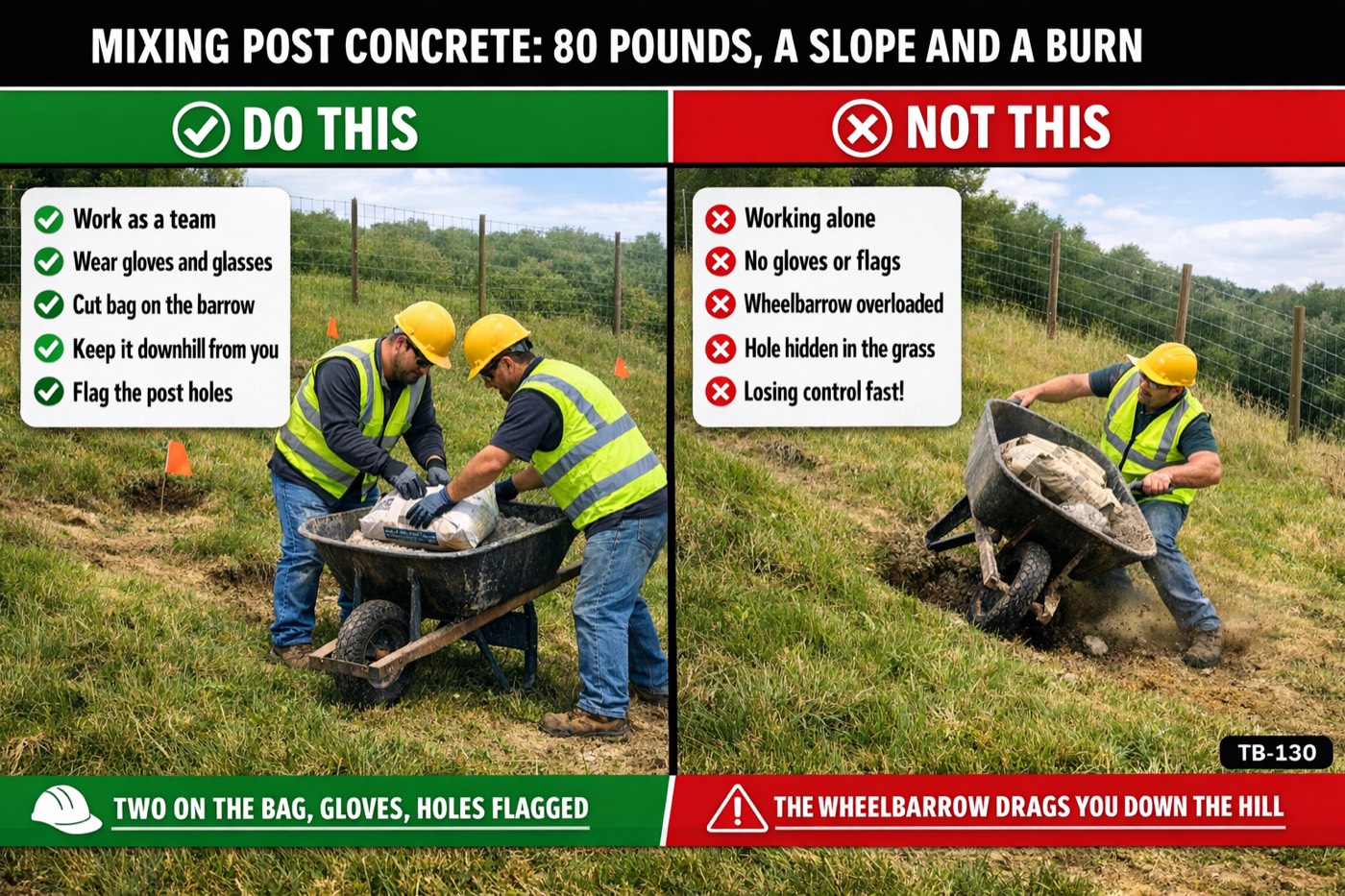
An 80-pound bag of concrete mix is sand and rock with cement in it. A hundred posts is about 250 of those bags, and every one of them gets lifted twice.
The points
- What gets you here is not one heavy lift. It is 250 bags a week from the pallet to the truck to the wheelbarrow, the twist into the hole, and the wheelbarrow that gets away from you on the grade and drags you down the hill under it.
- Two men or a hand truck for the bags, and the bag stays against your body. Cut the bag on the wheelbarrow rim; do not lift it to the shoulder and pour.
- Wet mix is caustic, pH 12 to 13, and it burns without stinging. Long sleeves, waterproof gloves, and glasses while the dry mix is dumped, because the dust in the wind is the same stuff.
- A loaded 6-cubic-foot wheelbarrow is 300 to 400 pounds. On a slope keep the load below you going down, brake with your legs, and never go across a slope where one wheel drops into a hole.
- The hole is 30 inches down and 10 inches across, and the man who steps in it with a bag on his shoulder breaks an ankle. Holes get flagged or covered until the post is in them.
Why it goes wrong
An 80-pound bag held at arm's length puts roughly 800 pounds of compression on the lower discs, because the spine works as a 10-to-1 lever. Bag against the body, bend at the hips and knees, and turn your feet instead of twisting with the load. The NIOSH lifting limit under ideal conditions is 51 pounds; an 80-pound bag is over that for everyone on the crew, so it is two men, a hand truck or the forks on the skid steer.
Cement burns are covered in their own talk; the fencing version is the glove that gets wet inside and stays on for three hours, and the knee that kneels in the slop at the hole. There is no sting, so you find out at dinner. Change wet gloves, do not kneel in the mix, and keep a 5-gallon jug of clean water on the truck for rinsing skin, for at least 15 minutes if it got in the eyes.
Dry mix is crystalline silica, the same dust as cutting concrete. Dumping a bag from shoulder height into a wheelbarrow puts the cloud in your face. Cut the bag low, on the rim, stand upwind, and do not shake the last cup out. A dry pour into the hole is the same dust with less control over where it goes.
A 350-pound wheelbarrow on a single wheel: when the wheel drops into a hole or hits a root the handles jerk out of your hands, and on a downgrade the load pulls you along until it tips. Short steps, load below you, legs as the brake, and stop before the hole instead of tipping into it. Better yet, mix at the hole in a tub or with a mixer so the wheelbarrow never travels the slope.
The 80-pound bag also gets you at the pallet: the top bags are at chest height and the bottom ones are at your ankles, and the last row is the lift that hurts. Restack the pallet to waist height with the forks or the skid steer before you start pulling bags by hand, and rotate who is on the bags.
Questions for the crew
- How many bags are going in today, and how are they getting from the pallet to the holes?
- Where is the water for rinsing skin, and who has dry gloves to change into?
- Which holes are on the slope, and which way does the wheelbarrow go to get to them?
To close
Today every bag gets moved by two men or a wheel, and anybody with wet mix inside a glove stops and rinses before the next hole.
To hold this talk with your crew
1
Read it aloud. Five minutes, before the work starts.
2
Ask the questions. A crew that talks is a crew that remembers.
3
Have them sign on their own phones, and the record is sealed.