Cutting pipe and panels: the disc that comes apart
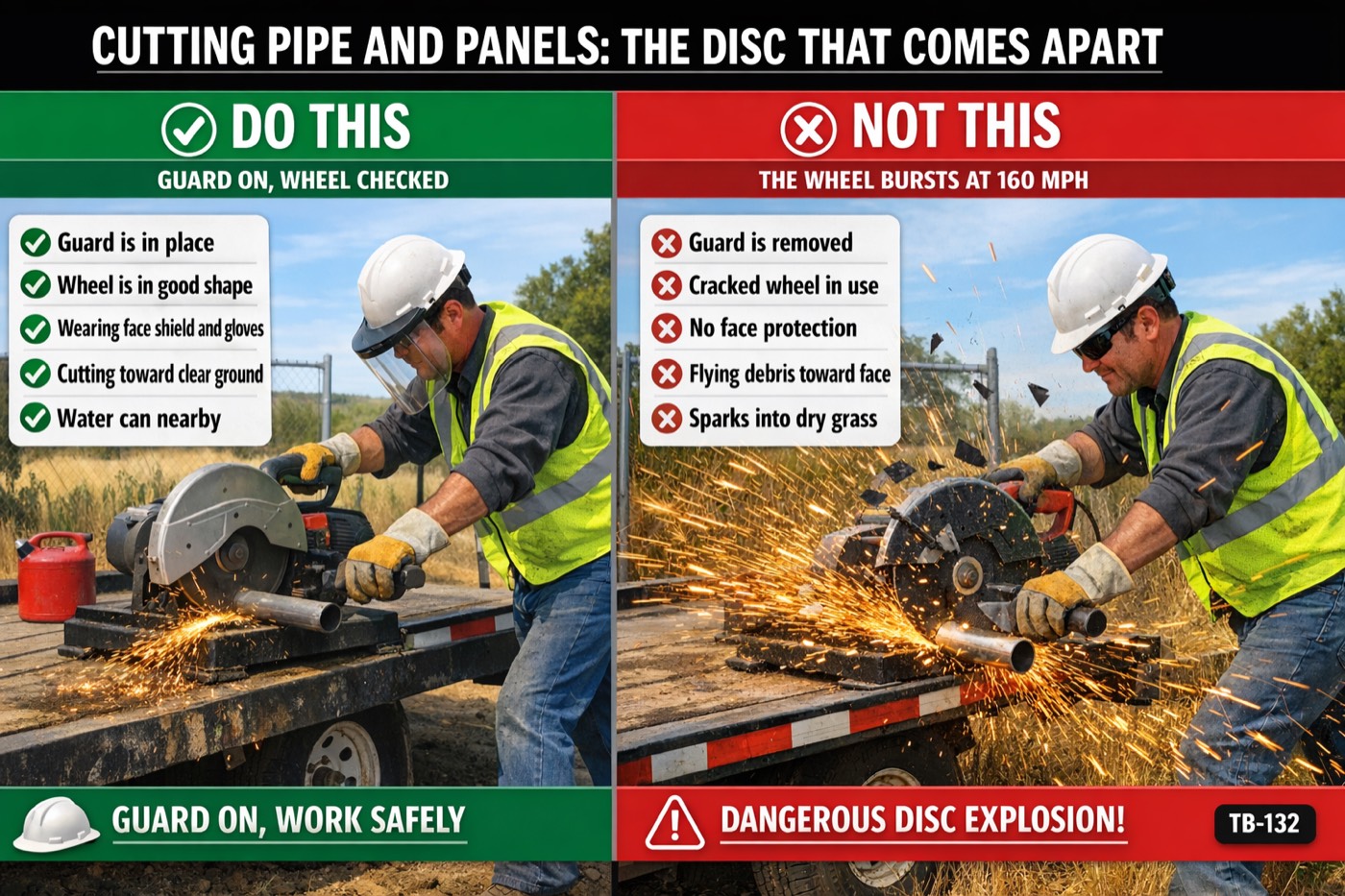
The rim of a 14-inch cut-off wheel is moving at about 160 miles an hour. When a wheel comes apart, the pieces leave at that speed and the guard is the only thing between them and your face.
The points
- A cracked wheel does not warn you; it comes apart at full speed and the pieces go through a face shield, and a grinder with the guard off puts the disc pieces straight into whoever is holding it.
- The guard stays on the chop saw and on the grinder, turned so the wheel is covered on the side toward you. A grinder guard is not there to keep your hand out; it is there to catch the disc when it breaks.
- Look at the wheel before you mount it and before you cut: no chips, no cracks, not dropped, rated at or above the tool's rpm. A wheel with a lower speed rating than the grinder is a wheel waiting to burst.
- Sparks off a cut-off saw travel 20 to 30 feet and are still hot enough to light dry grass. Cut on the trailer, on dirt or on a mat, with water or an extinguisher in reach, and look behind you before you start.
- The cut end of a pipe is over 500 degrees and looks exactly like the other end. Pliers or a glove for the piece you just cut, and the hot ends go in one pile, not in the truck bed with the cords.
Why it goes wrong
A 14-inch wheel at 3,900 rpm has a rim speed around 14,300 feet a minute, about 160 miles an hour, and a 4.5-inch grinder disc at 11,000 rpm is close behind it. The wheel stores that energy and lets it all go if the bond fails. What makes it fail: side-loading a thin cut-off wheel by grinding with it, a wheel that was dropped, a wheel run over its rated rpm, and a resin wheel that has soaked up water or is past the date printed on the ring, usually three years from manufacture.
29 CFR 1926.303 says the exposed part of the wheel is no more than 180 degrees, the guard covers the spindle end, nut and flange, and it is strong enough to hold the pieces when the wheel breaks. That last part is the whole reason for the guard. The common mistake is pulling the guard off a grinder to reach inside a gate frame, and a bare disc that breaks there goes into the stomach of the man holding the tool.
The same section requires every wheel closely inspected and ring-tested before it goes on. Hang the wheel on a finger, tap it lightly with a screwdriver handle at four points, and listen: a clear ring is a sound wheel, a dull thud is a crack. It takes ten seconds. Mount with clean flanges, the blotters in place, and the nut snug, not cranked.
Cutting steel throws molten metal at over 1,000 degrees, and it lands 30 feet away in the dry grass along the right of way, in the pile of cedar sawdust, in the weeds under the trailer. The fire starts 15 minutes after you drive off. Clear or wet everything within 35 feet of the cut, keep water at the saw, and walk the area after the last cut of the day the way a fire watch would.
The cut piece is hot for several minutes and the burn is a palm through a thin glove. On the chop saw, clamp the work; pipe that is held by hand rolls, the wheel grabs and the saw kicks up. On the grinder, the disc that pinches in a cut throws the tool back at your face and can throw the disc off the spindle. Both hands, side handle on, and a cut line the disc cannot bind in.
Galvanized pipe and panels give off zinc fumes when they are cut or welded, and the result is metal fume fever that night: chills, fever, aching. Cut outside and upwind, never in the back of the enclosed trailer. Glasses under the face shield, and hearing protection, because a chop saw on steel runs over 100 decibels.
Questions for the crew
- What is getting cut today, where, and what is behind the cut in the direction the sparks go?
- Is the guard on every grinder in the truck, and who took one off last time and why?
- Where are the wheels stored, and has anybody checked the date and the rpm on them?
To close
Today no wheel goes on without a look and a ring test, and no grinder runs without its guard, on any cut.
To hold this talk with your crew
1
Read it aloud. Five minutes, before the work starts.
2
Ask the questions. A crew that talks is a crew that remembers.
3
Have them sign on their own phones, and the record is sealed.