Floor sanding: the dust bag that smolders at midnight
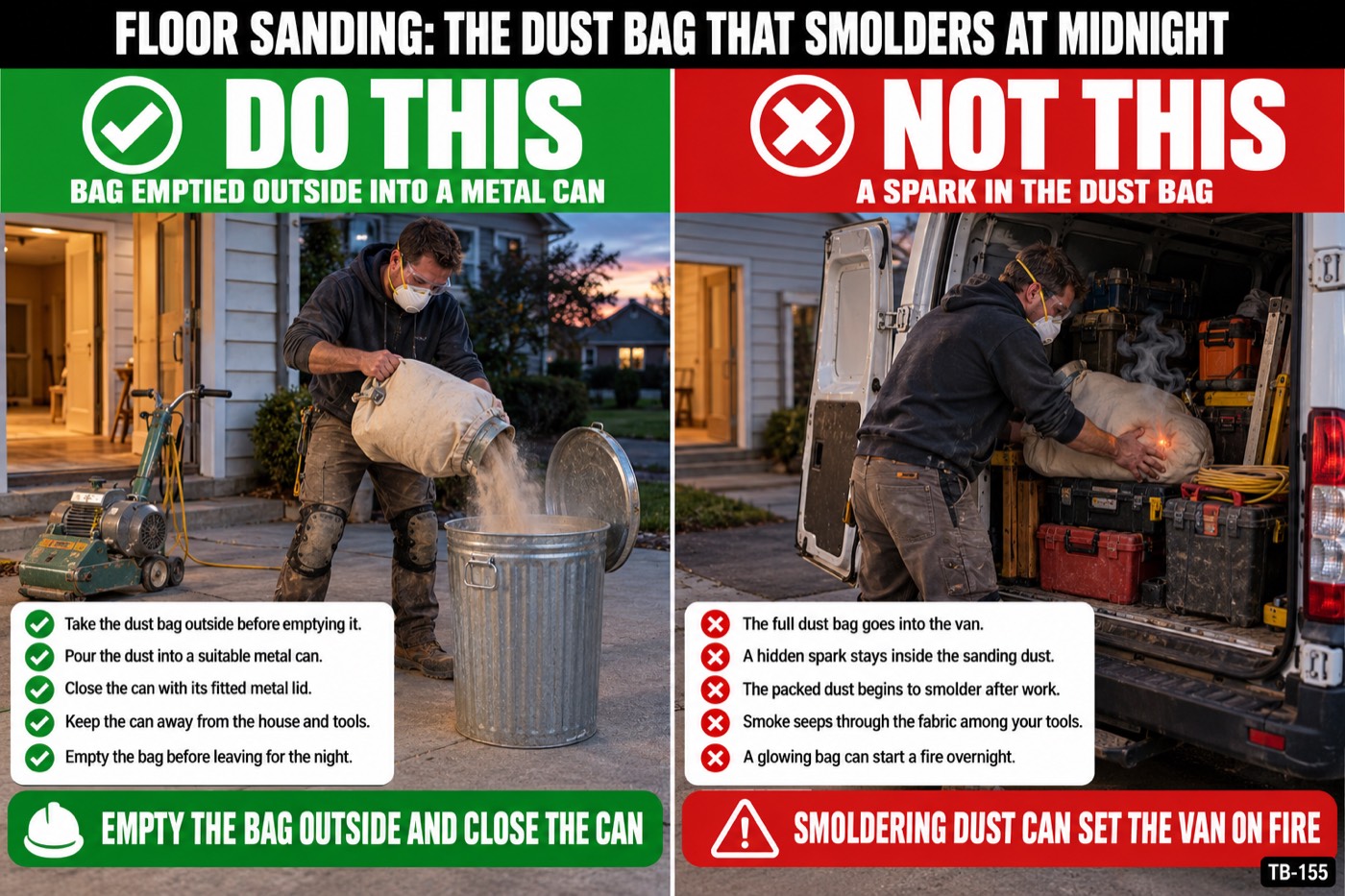
A drum sander hits a nail head, the spark lands in a bag of fine oak dust, and nothing happens for six hours. Then the van, or the customer's garage, is on fire at midnight.
The points
- Fine wood dust in a sander bag is a fuel with a spark already in it. It smolders for hours, and a bag left in the house or the truck overnight is how floor sanding companies lose vans and customers lose garages.
- Every bag is emptied outside before you leave, into a metal can with a lid or spread on the ground away from the building. Not in the kitchen trash, not in the dumpster against the house, not in the van.
- Rags with oil-modified finish or stain heat themselves as they dry. They go flat outside to cure, or into a metal can full of water with the lid on. A pile of rags in a corner is a fire with a timer.
- Set every nail head at least 1/8 inch below the surface before the drum touches the floor. A nail head is a spark, a torn belt and a gouge.
- A drum sander that is stopped with the drum down digs a trench in a second and walks toward the wall on its own. The drum comes up before you stop, and the sander is unplugged before you change paper.
Why it goes wrong
Sanding dust is not sawdust. The drum and the edger produce particles fine enough to stay in the air and to burn like a fuel-air mixture. Inside the bag it is packed loosely with air between every grain, which is the ideal condition for smoldering. A spark from a nail head, a staple, a piece of grit in the paper, or the friction heat of a full bag on a hot machine starts a glow you cannot see, and the bag holds the heat in. Fire investigators trace van and garage fires to sander bags left overnight often enough that it is a known cause.
The rule at 1926.151 requires materials to be stored and handled with regard to their fire characteristics and bans smoking near operations that are a fire hazard. On a sanding job that reads as: empty the bags outside, into a metal container with a lid, away from the building, every time the bag is half full and always before you leave. Dust that is going in a dumpster gets wetted first. The same goes for the vacuum drum on a dust-containment system; the fine dust in that canister is the same fuel.
Finish and stain rags are a separate fire. Oil-modified polyurethane, tung oil, linseed oil and many stains cure by oxidizing, and oxidizing gives off heat. A rag laid flat loses that heat to the air; a wad of rags in a bucket or a trash bag keeps it, and the middle of the pile climbs to ignition in a few hours with no spark at all. Hang or lay every rag flat outside until it is stiff, or drop it in a metal can of water with the lid on. Never in a plastic bag, never in the truck.
Hardwood dust is on the list of known causes of nasal cancer, and oak and other hardwoods are the worst of it. The bag on the machine catches most of the coarse dust and lets the fine dust through. A dust-containment vacuum on the drum and edger, a fitted N95 for the operator and anyone in the room, and the HVAC off with the return covered keep the house from becoming a dust reservoir that the family breathes for a month. Wet-wipe and vacuum; do not sweep it into the air again.
The drum sander is the heaviest tool on the job, well over 100 pounds, driven by a motor on a dedicated circuit. It is meant to be moving whenever the drum is down. Lower the drum while walking forward, raise it before you stop, and never let go of the handle with the drum engaged; a sander that is released walks on its own and pulls its cord along. Change belts and paper with the machine unplugged, not switched off, because the switch has been bumped on by a knee more than once.
Set the nails before you start, every one, at least 1/8 inch below the surface, and pull the staples. A nail head takes the grit off a belt in a stripe, throws a spark into the bag, and can catch and tear the belt off the drum. It also kicks the machine, which is 100-plus pounds jumping sideways with your hands on it. Walk the floor on your knees with a light held low before the first pass; the nail heads show as shadows.
Questions for the crew
- Where are today's dust bags getting emptied, and what are they going into?
- Who is checking this floor for nail heads and staples before the drum goes down?
- Where do the finish rags go tonight, and who is doing it?
To close
Nobody leaves this job today with a dust bag or a finish rag still inside the house or in the van.
To hold this talk with your crew
1
Read it aloud. Five minutes, before the work starts.
2
Ask the questions. A crew that talks is a crew that remembers.
3
Have them sign on their own phones, and the record is sealed.