Two-part finish: isocyanates and the family upstairs
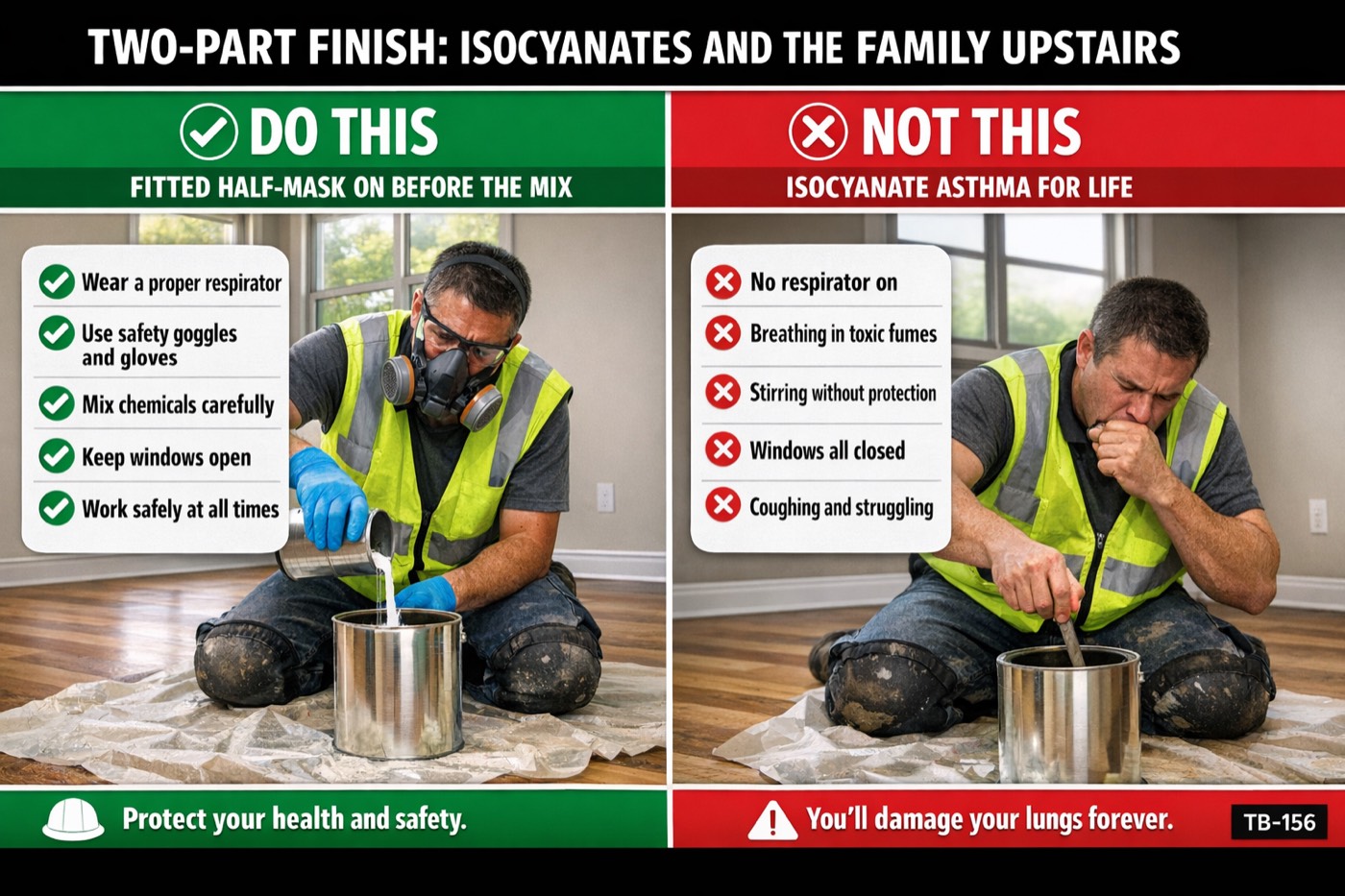
The hardener in a two-part floor finish is an isocyanate. The ceiling limit for it is two hundredths of a part per million, and once it has sensitized you, a whiff for the rest of your life can put you in the emergency room with an asthma attack.
The points
- Isocyanates cause occupational asthma, and sensitization is permanent. The first sign is a chest that tightens at night after a coating day; after that, exposures far below the limit set it off.
- Read the SDS of the part B before you open it. If it names an isocyanate, polyisocyanate or HDI, the respirator is a fitted half-mask with organic vapor cartridges and P100 filters, and it goes on before the cans are mixed, not when you start to smell something.
- A respirator on a job is under a written program: medical evaluation, fit test, training, and a cartridge change schedule. Isocyanates have almost no smell, so the cartridge does not warn you when it is spent.
- Oil-modified and moisture-cure urethanes are also flammable and heavy with solvent. Pilots out, cross ventilation, and the fumes are still there at 10 p.m. after you have gone home.
- The customer's family, the dog, the bird and the fish tank breathe the same air. They are out of the house for the time the product data sheet says, and that number is in writing before you start.
Why it goes wrong
Two-component waterborne polyurethanes are the standard for durable floors now, and their hardener is a polyisocyanate, most often based on HDI. The air contaminant table sets a ceiling of 0.02 parts per million for MDI and TDI, one of the lowest numbers on the whole table, because the body responds to them at concentrations you cannot detect. HDI has no OSHA number at all, and that does not make it safer. You will not smell an exposure that is ten times the ceiling. Moisture-cure urethanes carry the same chemistry with far more solvent, and oil-modified polyurethanes trade the isocyanate for a room full of flammable vapor.
The mechanism is immune sensitization. Isocyanate molecules bind to proteins in the airway and the immune system learns to attack them. That takes weeks to months of exposure, and the early symptoms are easy to miss: a cough after the finish day, wheezing at night, a chest that feels tight on the drive home. Once sensitized, a person reacts to levels hundreds of times below the limit, and the only treatment is never working around the product again. Finish applicators have lost their trade to it.
Engineering controls come first, and on a floor that means a roller or applicator instead of spray, windows open with a fan pushing out, and the HVAC off. Spraying a two-part finish indoors is a supplied-air job, not a cartridge job. For roll and brush application, the respirator that fits the hazard is a half-mask with organic vapor cartridges and P100 prefilters, worn from mixing through the last coat and the cleanup, and taken off outside after the room has cleared.
The rule at 1910.134, which the construction rules adopt word for word, makes the respirator part of a program rather than a thing in the truck. That means a medical evaluation before the first required use, a fit test on the exact make and size once a year, training, and a cartridge change schedule based on the product and the hours, because you cannot rely on smell. A respirator with a beard under the seal has a leak the fit test would have caught. A spent cartridge is a mask that only feels like protection.
Skin counts. Isocyanate on the skin contributes to sensitization, and the solvent in the same can pulls it in. Nitrile gloves, sleeves down, and a change of clothes for the drive home; the finish that dried on your forearms is still off-gassing in the cab. Wash before you eat, and keep the food and the coffee out of the finish room.
The homeowner's side of this is yours to manage. The product data sheet gives a time before the space is occupied, usually 24 to 72 hours, and that number is not shortened because the customer wants to sleep in the bedroom. Pets are more sensitive than people; birds and aquarium fish have been killed by finish fumes in a closed house. Put the re-entry time and the pilot-light status in the text message you send at the end of the day, so nobody walks into it at 10 p.m. with the windows shut.
Questions for the crew
- What is the part B on this job, and what does its SDS say about the respirator?
- Who on this crew has a current fit test on the mask they are wearing today?
- What time is the family coming back into this house, and who told them the number?
To close
Today nobody opens the hardener without the fitted half-mask on, and the re-entry time goes to the customer in writing before the first coat.
To hold this talk with your crew
1
Read it aloud. Five minutes, before the work starts.
2
Ask the questions. A crew that talks is a crew that remembers.
3
Have them sign on their own phones, and the record is sealed.