Working near a roof edge
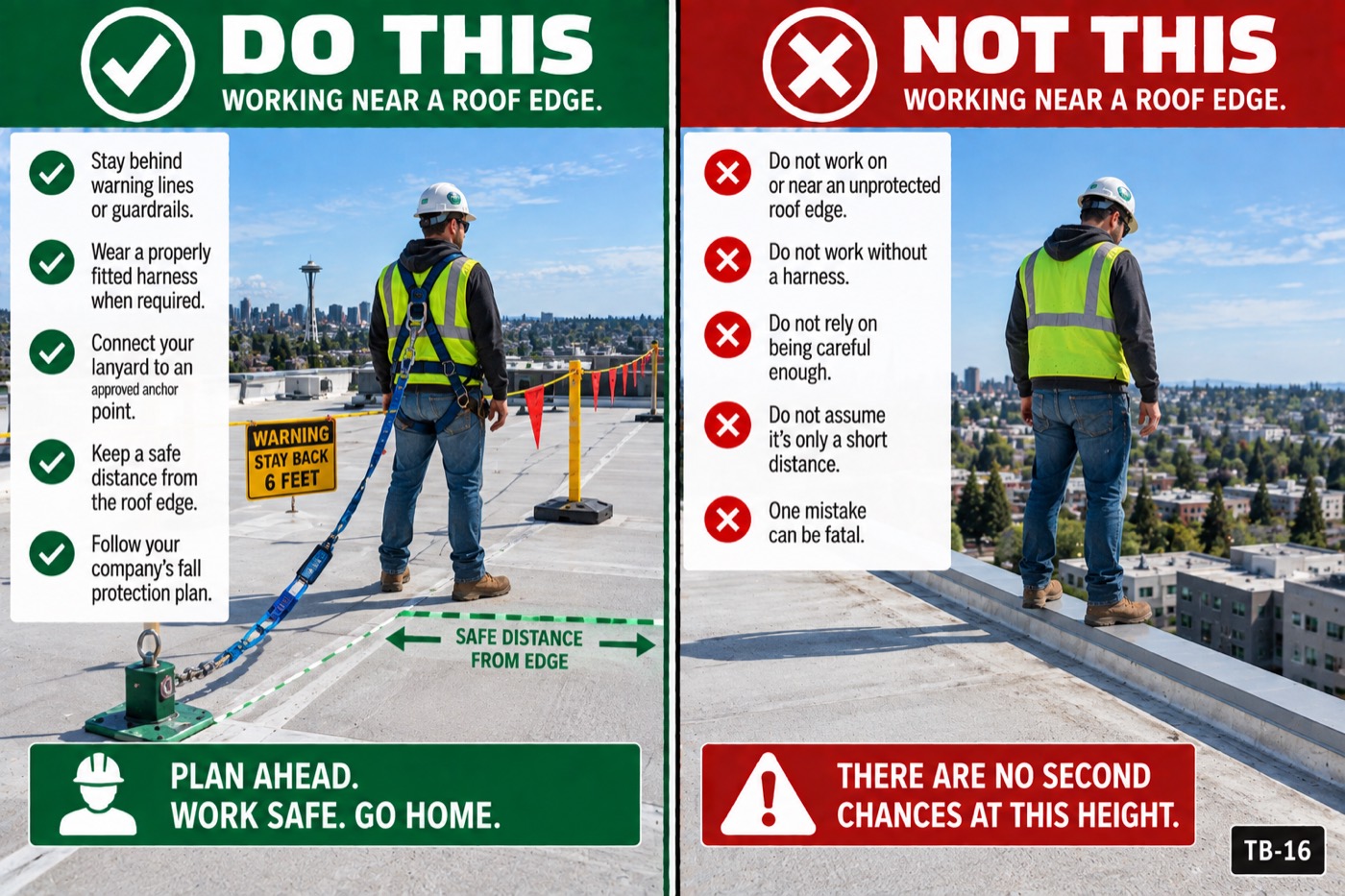
On this roof the edge is not the only thing that will drop you. Half of what is under your feet is the other half of this talk.
The points
- Roofers fall from edges, through skylights, and through decking that looked solid.
- On a low-slope roof, use a guardrail, safety net, personal fall arrest, or a warning line with a monitor.
- Warning lines go at least six feet back from the edge, further on the sides where mechanical equipment operates.
- A safety monitor watches and warns, and does nothing else. Not a working roofer with an extra title.
- Skylights and roof openings get covered, secured, and marked. Covers must hold twice the load that could be on them.
Why it goes wrong
Skylights are the quiet killer in roofing. They look like part of the roof, they're often dirty enough to look solid, and they will not hold a person. Falls through skylights and roof openings kill roofers every year.
Steep-slope roofs, above 4 in 12, require conventional fall protection. The warning line and monitor option is only for low-slope work.
A safety monitor is a person, not a title added to somebody's existing job. The monitor watches the crew, warns them when they get close, and does nothing else - no carrying, no laying material, no running the saw. A working roofer with the monitor title is the same as no monitor at all, and that is the most common way this option gets misused.
The warning line is a boundary you can see from anywhere on the roof, which is what makes it work: it gives an answer to 'how close am I' without anyone having to judge distance. Six feet back minimum, and further on sides where mechanical equipment operates, because a machine does not stop where a person would.
Covers over openings have to hold twice the load that could be on them and be secured against wind and against being kicked aside. Marking matters as much as strength, because the next crew up here did not watch you put it down.
Questions for the crew
- Where are the skylights and openings on this roof, and are they all covered?
- What's the slope here, and does that change what protection we need?
- If our monitor is watching, what else are they doing? Should they be?
To close
Walk it with me before we start and we will mark every opening and every soft spot.
To hold this talk with your crew
1
Read it aloud. Five minutes, before the work starts.
2
Ask the questions. A crew that talks is a crew that remembers.
3
Have them sign on their own phones, and the record is sealed.