Isocyanates in spray foam: sensitized once, for life
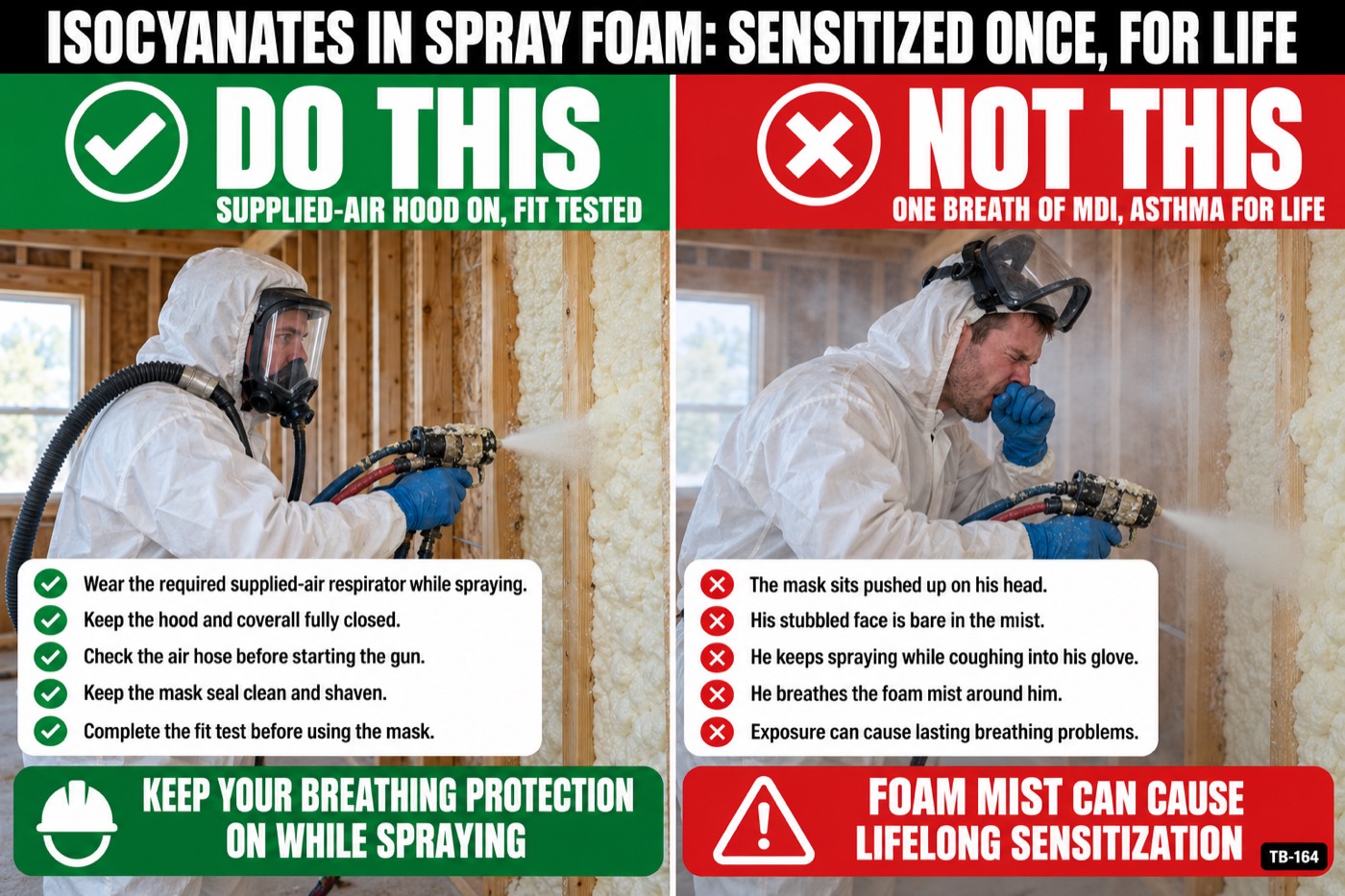
Nobody has ever been cured of isocyanate asthma. Once your body decides MDI is the enemy, a whiff from a can of foam at the hardware store can put you in the ER.
The points
- Isocyanates in the A-side sensitize you. After that, an amount too small to smell triggers an asthma attack, and it is for life: people have died of it, and everyone who gets it is done spraying foam.
- The OSHA ceiling for MDI is 0.02 parts per million, at no time higher. Spraying puts the air around the gun far above that, so the respirator is the rule, not a preference.
- Inside a building, whoever sprays wears a supplied-air respirator with a full facepiece or hood. A half-mask cartridge respirator is for the helper outside the spray zone, and only if the written program allows it.
- A tight-fitting respirator needs a fit test within the last 12 months and a clean-shaven face where it seals. Stubble from this morning breaks the seal.
- The spray zone stays closed until the fumes clear. Trade workers wait at least an hour after the last pass and go in with respirators; the customer waits for the reentry time on the product sheet, usually 24 hours.
Why it goes wrong
Isocyanates bond to the proteins lining your airway. In some people the immune system learns that shape and builds antibodies to it, and from then on any MDI at all, breathed or absorbed through skin, sets off airway inflammation. That is sensitization: it does not wear off, and it does not need a big dose to start.
MDI has a low vapor pressure sitting in the drum, which is why the rig has to heat it to 120 to 140 °F and push it out at over 1,000 PSI. That heat and pressure turn it into fine aerosol and vapor, and that is why the air within a few feet of the gun blows past the 0.02 ppm ceiling every time the trigger is pulled.
Supplied-air means a hose from a compressor or pump delivering Grade D breathing air, with the intake set upwind of the rig exhaust and the overspray. A full-face cartridge respirator with organic vapor cartridges and P100 prefilters is the fallback for helpers and trimming, on a change-out schedule, because MDI has no smell to warn you the cartridge is spent.
The respirator program in 29 CFR 1910.134 is what 1926.103 points to: a medical evaluation before the first use, a fit test before the first use and every 12 months, and a seal check every time you put it on. A beard, a bandana under the seal or a cracked valve each make the mask a decoration.
The early signs are chest tightness or a cough at night after a spray day, wheezing that clears over the weekend and comes back Monday, and a runny nose that only happens at work. That pattern means see a doctor now, while it is still an exposure and not a diagnosis. Pushing through it is how it becomes permanent.
The common mistake is the helper who trims fresh foam or cuts out a bad pass with no respirator because the foam looks cured. It is still reacting for hours, and the hot knife or saw puts it back in the air. Everyone in the zone is on a respirator until the reentry hour is up.
Questions for the crew
- Who is spraying today, what respirator are they on, and when was the fit test?
- Where will the helper be standing while the gun is running, and what is on their face?
- Has anyone here had a cough or chest tightness after a spray day this month?
To close
Nobody in the spray zone today without a fit-tested respirator, and nobody goes back in without one until the hour after the last pass is up.
To hold this talk with your crew
1
Read it aloud. Five minutes, before the work starts.
2
Ask the questions. A crew that talks is a crew that remembers.
3
Have them sign on their own phones, and the record is sealed.