The spray rig: 1,000 PSI, hot hoses and a live drum
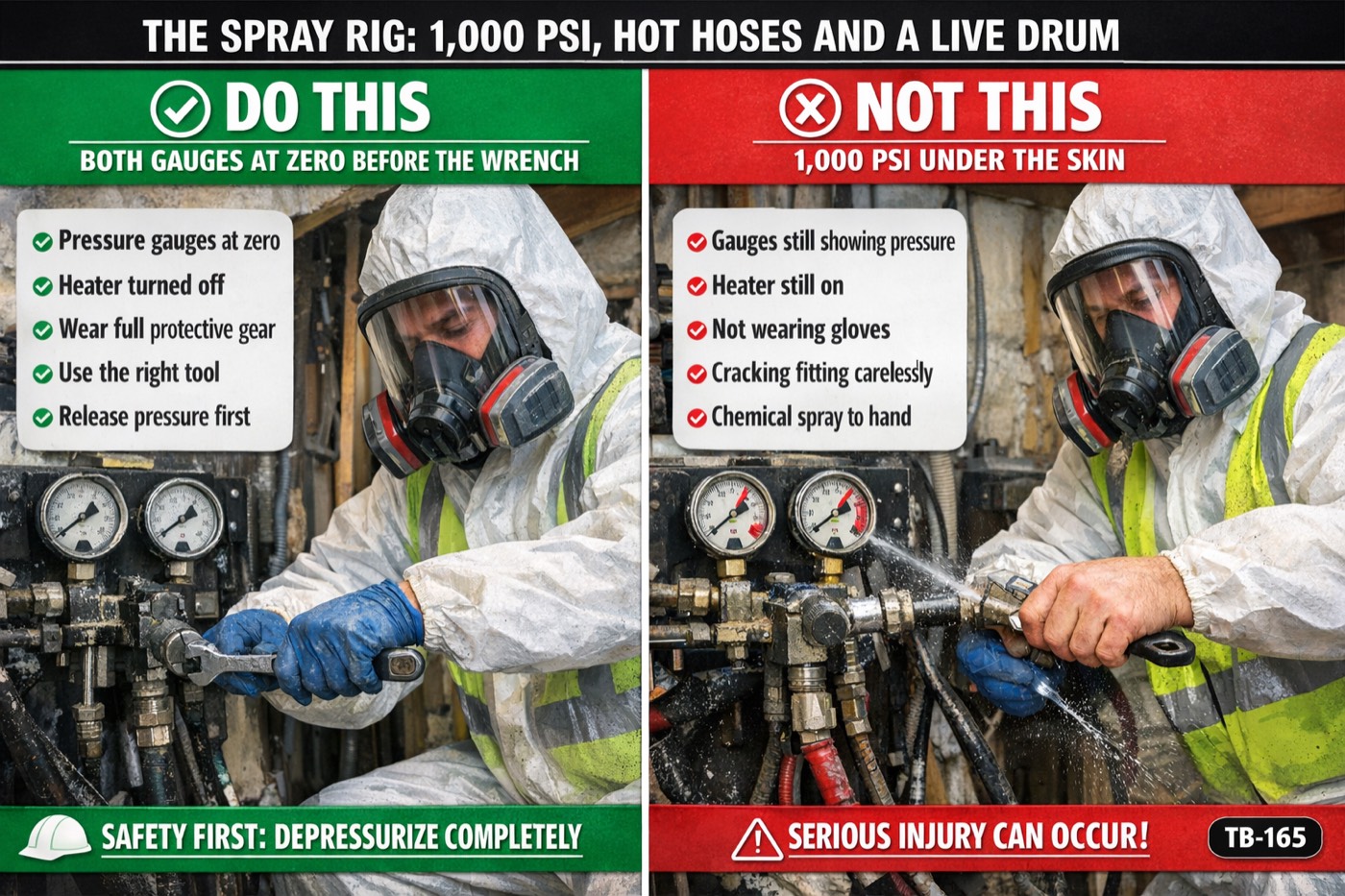
The gun on this rig pushes two liquids together at over 1,000 PSI. That is enough to put chemical under your skin through a glove, and the ER will not see it at first.
The points
- At 1,000 to 1,500 PSI, a leak at the gun or a pinhole in a hose injects A-side or B-side under the skin. It looks like a pinprick and is a surgical emergency within hours.
- Depressurize both sides and switch the heat off before you open the gun, change a screen, or crack a fitting. The pressure gauges read zero before a wrench touches anything.
- The heated hose runs at 120 to 140 °F with an electric heat element inside the jacket. Walk it every morning: cracked jacket, exposed heat tape, a kink or a spot dragged over a slab edge is a hose to tag out.
- Drum changes are where people get chemical on them. Gloves, goggles and the coverall on, the transfer pump stopped, and the drum bung opened slowly, because A-side that has met moisture builds pressure inside the drum.
- Bond and ground the drums, the pump and the rig while you transfer. B-side blowing agents can be flammable and static from a spinning pump is a spark.
Why it goes wrong
An injection injury looks like a pinprick and feels like a bee sting. Under the skin the fluid spreads along the tendon sheaths and the chemical keeps burning tissue, and the swelling cuts off blood to the finger. It needs a hand surgeon within a few hours, and the doctor needs to hear the words high pressure and the chemical name, because a clinic will otherwise clean it and send you home.
The gun never points at a person, loaded or not, and no finger ever goes near a plugged tip. Clear it with the safety on, both sides shut, and the tool made for it. Between passes the gun goes in its holster, not on the plank next to somebody's knee.
The hose is the rig's weak point. It carries heated chemical at 1,000-plus PSI through a jacket with an electric heat element inside, dragged over slab edges, ladder rungs and truck bumpers. The rule in 29 CFR 1926.302 is that the manufacturer's safe operating pressure for hoses and fittings is never exceeded; the practice is a hand run down the whole length every morning and the damaged section replaced, not taped.
A-side reacts with water and makes carbon dioxide. A drum that took in humid air through an open bung, or a drum somebody sealed after rain got in, is building pressure and can spray when the bung comes off. Open bungs slowly, face turned away, with the desiccant dryer on the vent; a full 55-gallon drum of MDI weighs around 550 pounds and moves on a dolly with two people, never rolled by hand across a trailer floor.
Some B-side blowing agents and every solvent on the rig are flammable, and a transfer pump spinning in a drum builds static. Bond the drum to the pump and the rig to ground with a clamp on bare metal before the pump starts. The generator exhaust and the compressor intake for breathing air stay on opposite sides of the trailer.
The common mistake is the drum change at the end of the day with the coverall already off and the gloves in the truck. Every chemical splash we hear about happens at the drum, not at the gun. Suit up for the drum the same as for the spray.
Questions for the crew
- When was the last time somebody opened this gun, and were both gauges at zero first?
- Who walked the hose this morning and what did they find?
- Where is the ground clamp for the drums, and is it on bare metal?
To close
Before anyone opens the gun or changes a drum today, both gauges read zero and I hear you say it.
To hold this talk with your crew
1
Read it aloud. Five minutes, before the work starts.
2
Ask the questions. A crew that talks is a crew that remembers.
3
Have them sign on their own phones, and the record is sealed.