Spray foam fumes: the family upstairs breathes it too
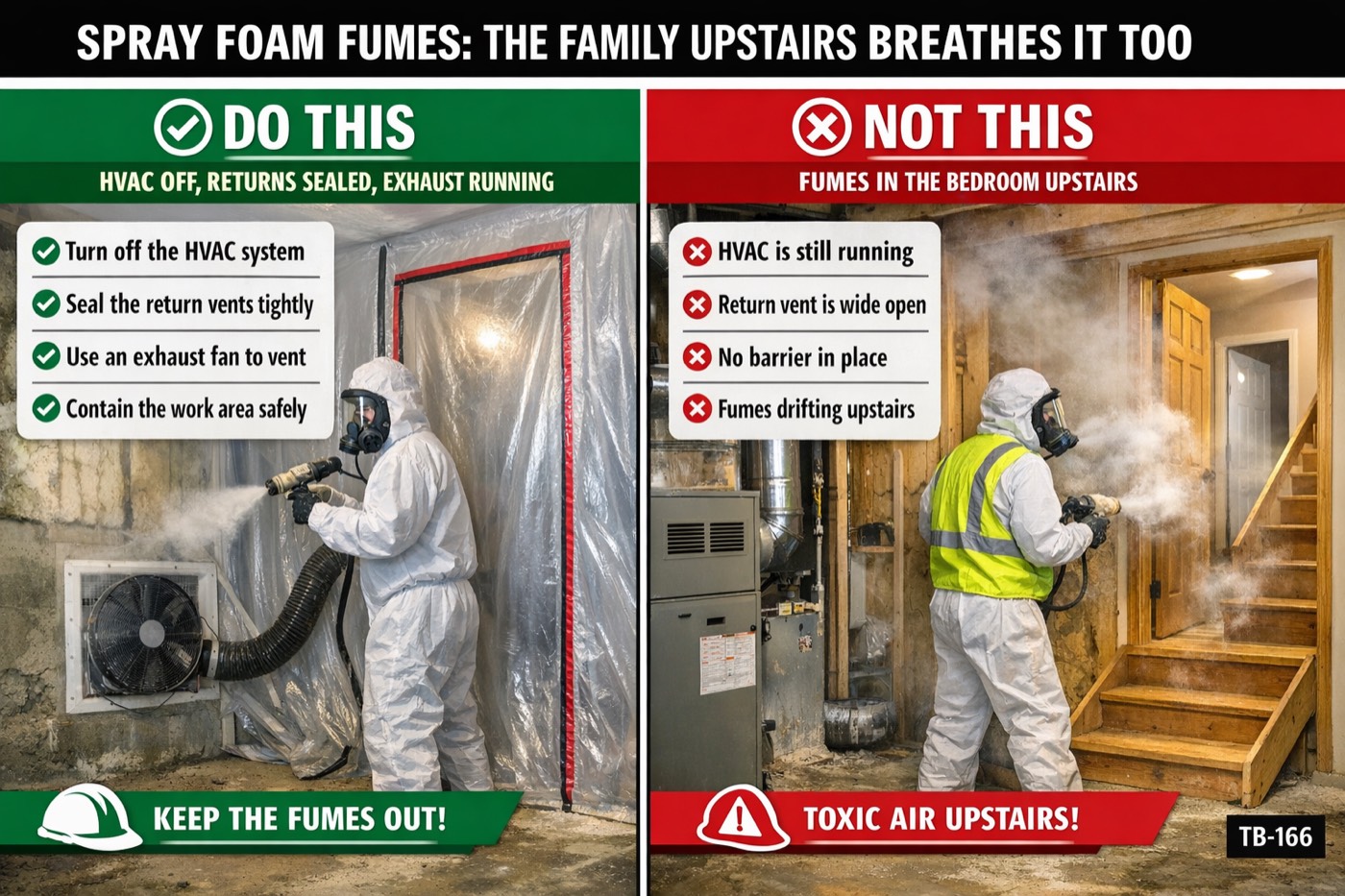
A bedroom two floors away from where you are spraying can be over the MDI ceiling in minutes if the furnace return is open. The house is one air system.
The points
- Fumes and aerosol go wherever air goes. A running furnace or air handler pulls the spray zone into every room on the return side, and the people there have no respirator.
- Before the first pass: HVAC off at the breaker, supply and return grilles in the zone sealed with poly and tape, and the zone closed off from the occupied part with a zipper wall.
- Exhaust the zone to outside with a fan and duct, so air flows from the clean side into the spray zone and out, never the other way. Aim for the zone at negative pressure: the poly bows toward you when you open the zipper.
- Occupants, pets and other trades stay out of the house for the reentry time on the product sheet: 24 hours is common, 72 hours in a tight house or a big job, and less is not your call.
- The customer gets the reentry time in writing before you start, with the time you finished spraying written on it. A phone call they did not understand is how a family sleeps in it.
Why it goes wrong
The limits in 29 CFR 1926.55 apply wherever an employee is breathing, and 1926.57 says that when ventilation is your control it has to be set up and run right. The family, the electrician and the dog are not covered by OSHA; they are covered by your name on the contract and the lawsuit that follows a kid with a cough.
A return grille pulls air, and ductwork is an open pipe even with the blower off. Sealing the returns in the zone stops the pull; shutting the system off at the breaker stops someone from bumping the thermostat. Supply registers get sealed too, so the overspray does not settle in the duct and blow into the nursery for the next month.
Size the exhaust to the space. An attic of 1,000 square feet with 4 feet of average height is about 4,000 cubic feet; ten air changes an hour is 40,000 cubic feet an hour, about 670 cfm, so a 1,500 cfm fan on 12-inch duct is not overkill. Check the flow with a smoke pencil at the zipper: smoke goes in, not out.
Where the exhaust duct ends matters as much as where it starts. Not under the neighbor's bedroom window, not next to the compressor intake for the breathing air, not into the garage where the water heater is. Downwind of everyone, into open air.
Foam keeps reacting and off-gassing for hours after the last pass, and a hot attic drives it faster. The exhaust fan keeps running through the reentry period, not just while you spray. The house is not clear when the rig is packed; it is clear when the clock on the product sheet runs out.
The common mistake is another trade or the homeowner walking in during the reentry window because nobody put it in writing. A sign on the door with the finish time and the reentry time, in English and Spanish, and a text to the GC and the customer with the same numbers.
Questions for the crew
- Where are the returns in this house, and who sealed them?
- Where does the exhaust duct end up, and what is near it?
- Who is telling the customer the reentry time, and how?
To close
The HVAC is off at the breaker, the returns are sealed and the exhaust is running before the first pass, and I check all three myself.
To hold this talk with your crew
1
Read it aloud. Five minutes, before the work starts.
2
Ask the questions. A crew that talks is a crew that remembers.
3
Have them sign on their own phones, and the record is sealed.