Attics at 140 °F: twenty minutes and out
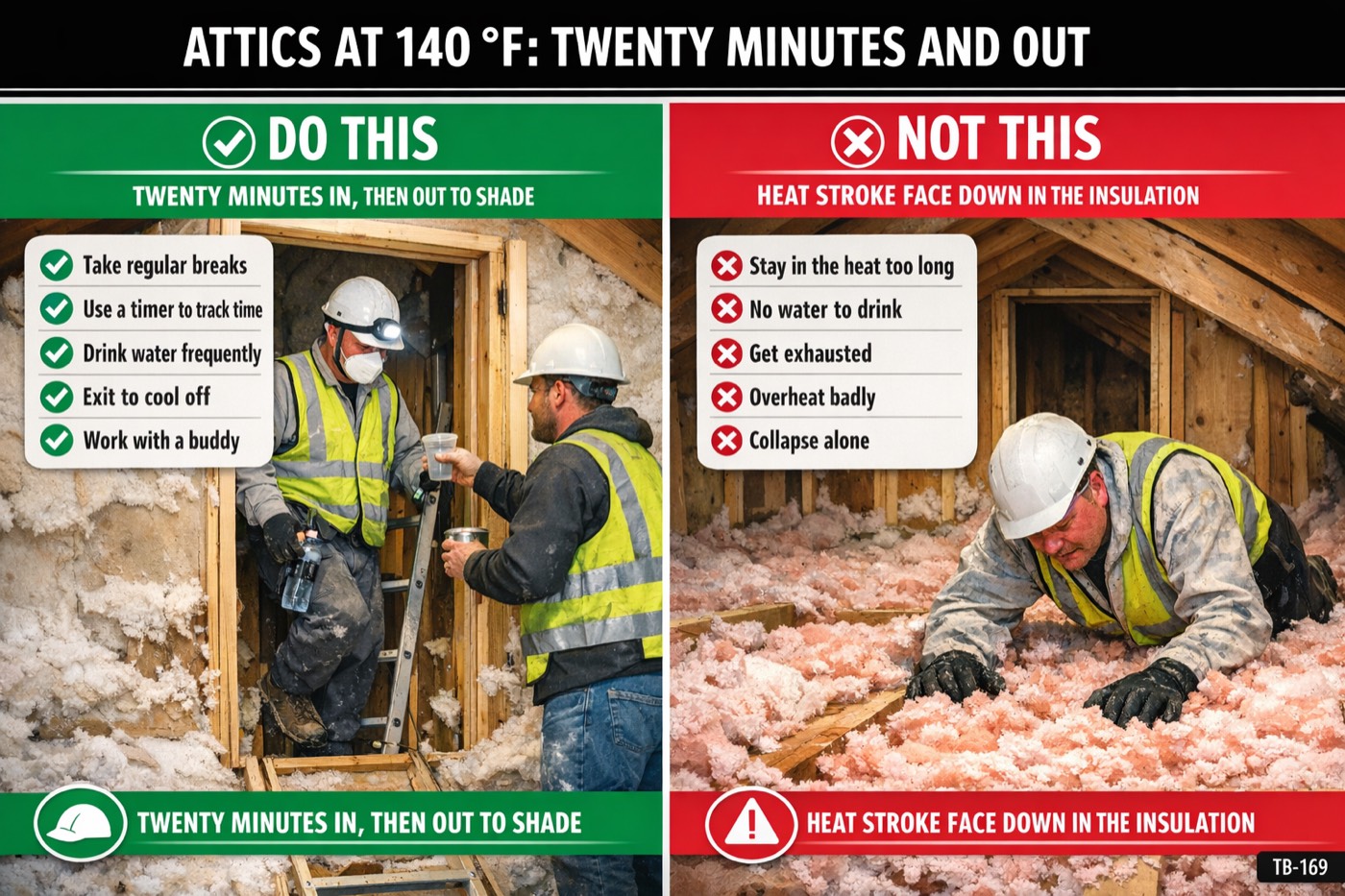
When it is 95 outside, the attic you are about to climb into is 140 or more. Your body cannot shed heat in air hotter than blood, so everything you burn stays inside you.
The points
- Heat stroke in an attic starts as a headache and ends face down in the insulation. Core temperature over 104 °F cooks the brain and kidneys, and it can go from fine to down in under half an hour.
- Twenty minutes in, then out to the shade or the truck AC for at least ten. Set a timer; the person inside will not notice the time.
- A cup of water every 15 to 20 minutes, cool not ice, and it goes up the ladder with you. Sports drink for anyone who has been up there for hours.
- Nobody in the attic alone. The person at the hatch talks to the person inside, and if the answers stop making sense or stop coming, they go in and get them out.
- Stops sweating, red and dry, confused, stumbling, or stops talking: that is heat stroke. Call 911 and cool them now, with water on the skin and air moving, and do not wait for the ambulance to start.
Why it goes wrong
The roof deck over your head is 160 to 170 °F in the sun and radiates down on you; the air is 130 to 150. Your body sheds heat by sweating into air cooler than skin, and up there the air is 40 degrees hotter than skin, so sweat does little and the heat from crawling, which is hard work, stays inside. Core temperature can climb fast.
Heat exhaustion is heavy sweating, nausea, weakness, a headache and a fast pulse: out of the attic, shade, water, wet towel, and not back up that day. Heat stroke is the next stage: hot skin that may be dry, confusion, slurred words, staggering, or collapse. That is 911 and cooling on the spot, water on skin and clothes and air moving over it, ice in the armpits and groin if you have it. Minutes matter; brain damage starts above 104 °F.
Schedule is the control. Attics between 6 and 10 in the morning, when the deck has cooled overnight; gables, walls and the shaded side in the afternoon. An exhaust fan in the hatch or a gable vent drops the attic 20 degrees in half an hour. Nobody goes up at 2 p.m. in July to finish one bay.
A quart of water an hour, taken as a cup every 15 to 20 minutes, up the ladder with you, not left in the truck. Thirst lags behind need by an hour. Urine the color of straw is fine; the color of tea means you are already behind, and coffee and energy drinks do not count.
The first week in the heat, and the first day back after a week off or a flu, is when people go down. Acclimatization takes 7 to 14 days and is lost in a week. New hires get half shifts in the attic the first week, and everyone watches them.
The common mistake is the sprayer in a coverall and a hood, with the respirator on, finishing the pass after the timer went off. The suit adds 10 degrees to what the body feels. A cooling vest or a vortex cooler on the supplied-air line is not a luxury for that person; it is the same as the timer.
Questions for the crew
- What time is the attic on the schedule today, and who is at the hatch?
- Where is the water going, and who has the timer?
- Who here is in their first week of heat, or just back from time off?
To close
Attics before ten, twenty minutes in, water up the ladder, and somebody at the hatch talking to whoever is inside, every time.
To hold this talk with your crew
1
Read it aloud. Five minutes, before the work starts.
2
Ask the questions. A crew that talks is a crew that remembers.
3
Have them sign on their own phones, and the record is sealed.