Foam on skin: the coverall, the gloves and no solvent
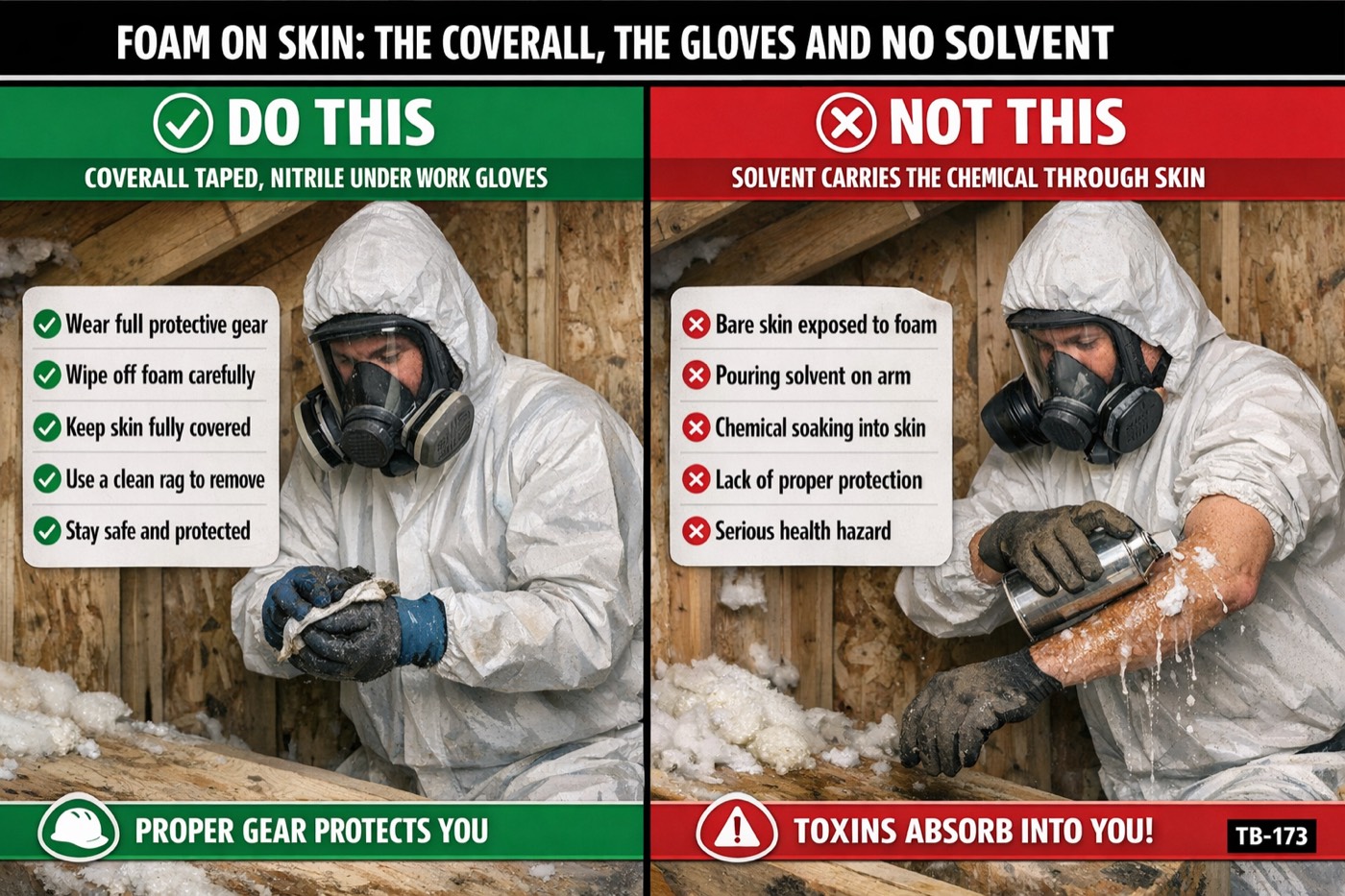
Solvent takes foam off skin the same way it takes it off the gun: by dissolving the top layer. On you, that top layer is skin, and the solvent carries the chemical through it.
The points
- MDI on skin does two things: it burns slowly, and it sensitizes you the same as breathing it, so a bare forearm in overspray can be what makes you asthmatic. The B-side amines burn eyes and give the blurred halo vision some people notice on the drive home.
- Coverall with a hood, boot covers, and nitrile gloves under the work gloves. Coverall is taped at the wrist, and it comes off at the door of the zone, not at the truck.
- Wet foam on skin: wipe it off with a dry rag right away, then soap and warm water. Never acetone, MEK or lacquer thinner on skin; they carry the isocyanate in and take your skin's oil with it.
- Cured foam on skin gets petroleum jelly or mineral oil and time. It flakes off in a day or two with the dead skin; picking and cutting it off takes skin with it.
- Chemical in the eye is 15 minutes at the eyewash or under a hose, lids held open, then a doctor the same day. The eyewash is in the truck, full, and everybody knows where.
Why it goes wrong
MDI is absorbed through skin, and skin exposure alone has produced respiratory sensitization in animal studies and in workers who never sprayed. It also causes contact dermatitis that looks like a chemical burn a day later. The bare forearm in overspray while holding the hose is not a small thing; it is the same exposure as breathing it, on a slower clock.
The B-side is polyol with amine catalysts, flame retardants and the blowing agent. The amines are corrosive to eyes and can cause a temporary blurred halo vision, called glaucopsia, that shows up on the drive home. It wears off in a day; it is also the sign that the goggles did not seal. Report it.
Nitrile is the glove for MDI; latex is not a barrier. Solvents for cleaning the gun need butyl or a laminate glove, because acetone and MEK go through nitrile in minutes. Gloves with cured foam on the fingers get changed, not picked at, and gloves come off before the phone, the water bottle or the truck door.
Wet foam on skin: a dry rag first to lift the bulk, then soap and warm water, twice. Never a solvent, because solvent thins the isocyanate, drives it into the skin and strips the oil that was your barrier. Cured foam gets petroleum jelly or mineral oil rubbed in and left; it lifts with the dead skin in a day or two. Cutting it off with a blade takes skin with it.
Chemical in the eye is 15 minutes of flushing with lids held open, at the eyewash or under a hose with gentle flow, then a doctor the same day even if it feels fine. Quick-drench eyewash within reach is a requirement wherever the eyes can meet a corrosive, and the B-side is one. The bottle in the truck is full, in date, and everyone knows which door it is behind.
The common mistake is the hood down and the coverall unzipped to the waist because it is 130 °F in the attic, and then a fresh pass of overspray lands on a wet neck and chest. The heat talk covers the timer; this one says the suit stays on until you are out of the zone, and comes off at the zone door into a bag, not in the truck seat.
Questions for the crew
- What gloves are on the truck today, and are they nitrile?
- Where is the eyewash, and when was it last checked?
- What have you been using to get foam off your hands this week?
To close
Coveralls taped, nitrile under the work gloves, and the acetone stays on the gun, never on anybody's skin.
To hold this talk with your crew
1
Read it aloud. Five minutes, before the work starts.
2
Ask the questions. A crew that talks is a crew that remembers.
3
Have them sign on their own phones, and the record is sealed.