Crawl spaces: the sewage, the droppings and the way out
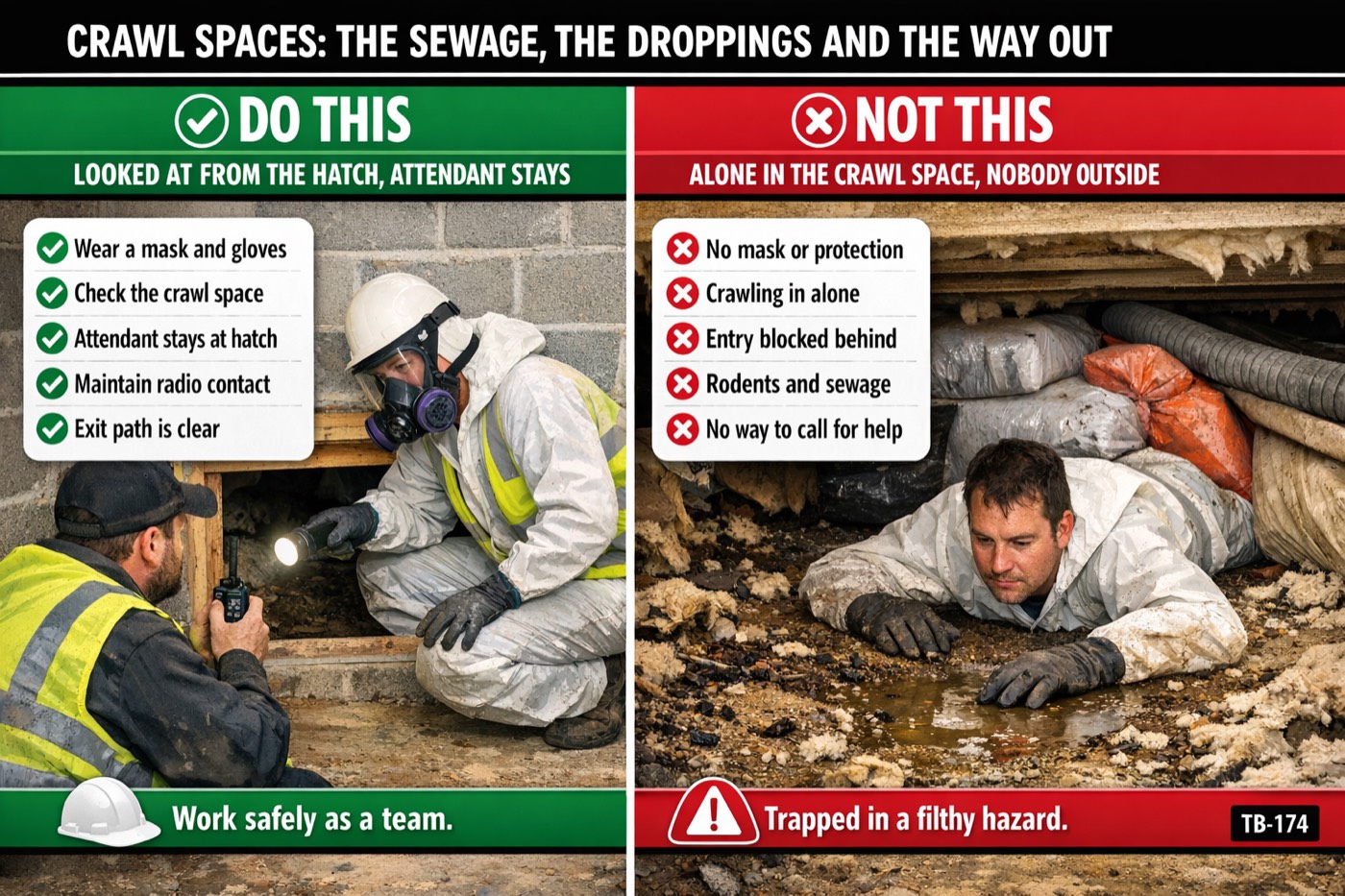
Hantavirus comes from the dust of dried mouse droppings, and the crawl space you are about to belly into is where the mice live. About one in three people who get it die.
The points
- The crawl space is 18 inches of wet dirt with a broken drain line, mouse droppings, and no air moving, and it has exactly the one opening you came in by. Everything wrong down there gets to you before you can get out.
- Before anyone goes in, the competent person looks with a light from the hatch: standing water, sewage smell, droppings, a gas line, a furnace flue. Sewage or a rotten-egg smell means nobody goes in until it is fixed and vented.
- Rodent droppings are a P100 half-mask, gloves and a coverall, not a paper mask. Never sweep or blow them dry; wet them down with a 1-to-10 bleach mix and bag them.
- Nobody in a crawl space alone. Somebody stays at the hatch, can see or hear you, and knows what to do if you stop answering, and the hatch is never blocked by the hose, the bags or the truck.
- Plan the way out before you go in. Crawl in feet first where you can turn, or know the spot where you can, because dragging an unconscious 200-pound worker 40 feet out of a crawl space is a fire department job.
Why it goes wrong
29 CFR 1926.1203 puts the first step on a competent person: before work starts, identify every confined space the crew may enter and decide which are permit spaces. A crawl space with a sewage leak, a gas smell, a furnace burning in it or foam being sprayed in it has an atmospheric hazard, and that is a permit space with all that means. The confined space talk covers the permit; this one is about what makes the call.
Hantavirus rides in the dust of deer mouse droppings and urine. You breathe it when droppings get disturbed dry, it incubates for 1 to 8 weeks, starts like the flu and then fills the lungs, and there is no treatment. Around 1 in 3 people who get it die. Wet droppings and nests down with a 1-to-10 bleach mix, let it sit 5 minutes, bag it, and wear a half-mask with P100 filters, because an N95 with a gap does nothing.
A broken drain line under a house means raw sewage in the dirt: hepatitis A, E. coli, and tetanus through any scrape on a knee. Sewage is a stop; the plumber fixes it, the space is limed and ventilated, and then you go in with gloves, a coverall and boot covers. Hepatitis A and B and tetanus shots are cheap for anyone who does crawl spaces for a living.
Air in a crawl space does not move. Rot uses up oxygen, a furnace or water heater down there puts out carbon monoxide, a sewer gas leak is hydrogen sulfide, and spray foam aerosol is heavier than air and settles in the low spot, which is where you are. A fan blowing fresh air in at the hatch is the minimum; a four-gas meter is the answer when anything smells wrong or an appliance is running down there.
Radon is a lung cancer risk over years, not over the hour you spend down there, but a crawl space in a radon zone can be many times the 4 picocuries per liter action level. If the house has a radon system, the pipe and fan intake stay clear of foam and plastic; if it does not, sealing the crawl can trap radon under the house. Tell the customer and put it in the notes.
The common mistake is the helper sent under the house at 3 p.m. with a phone light and nobody at the hatch. He crawls 40 feet head-first, meets a raccoon or a broken drain line, and cannot turn around. Somebody at the hatch, in contact, with a plan to get you out that does not start with them crawling in after you, and the hatch never blocked by the hose, the bags or the truck.
Questions for the crew
- Who looked into this crawl space with a light before we go in, and what did they see?
- Where is the hatch, is there a second way out, and who is staying at it?
- What is running under this house: a furnace, a water heater, a sump?
To close
Nobody goes under this house today until it has been looked at from the hatch, and somebody is staying there the whole time.
To hold this talk with your crew
1
Read it aloud. Five minutes, before the work starts.
2
Ask the questions. A crew that talks is a crew that remembers.
3
Have them sign on their own phones, and the record is sealed.