Mold: the spores and the kid with asthma upstairs
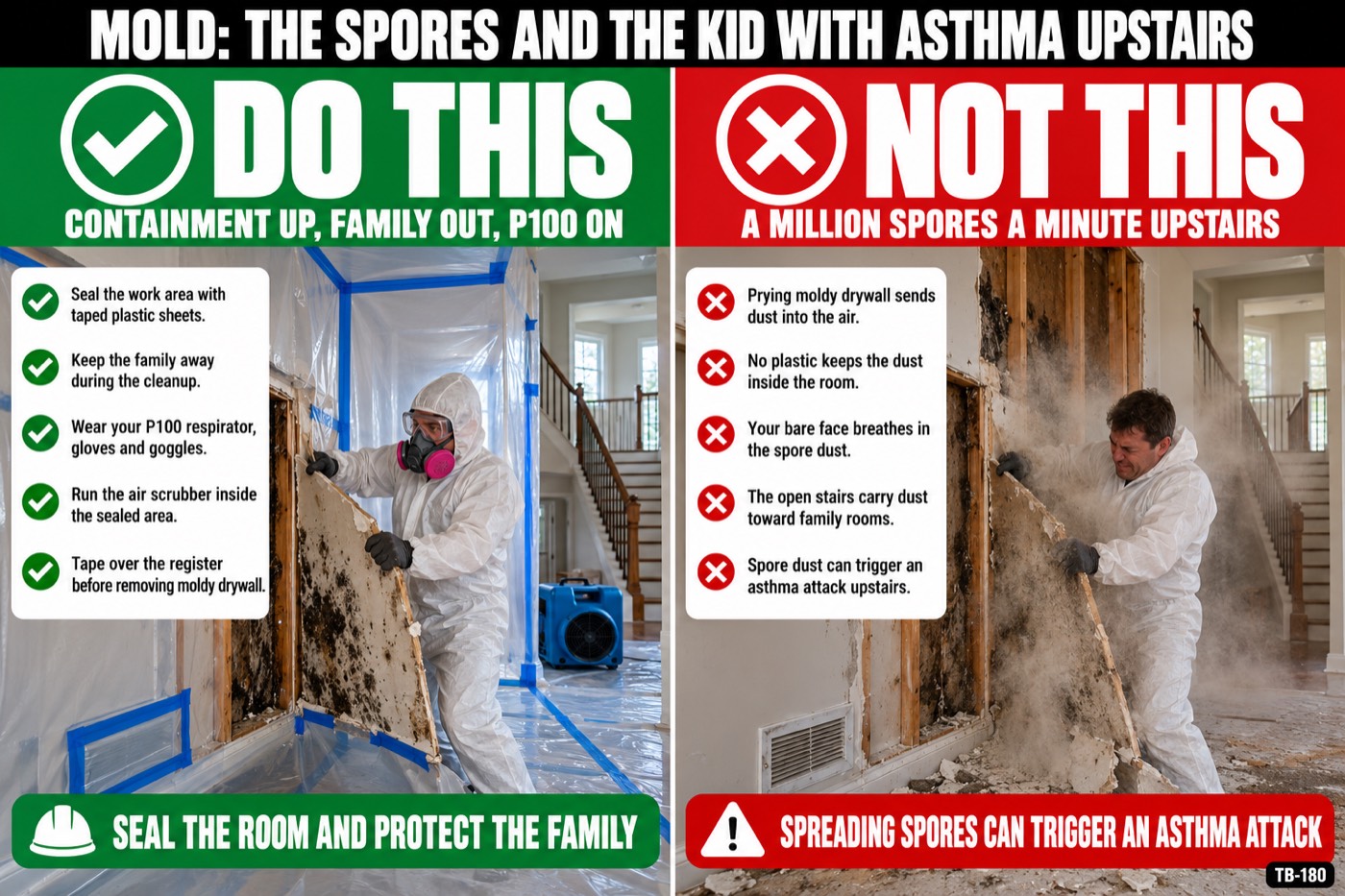
There is no OSHA mold standard. What there is, is a 12-year-old with asthma sleeping upstairs, and a crew about to put a million spores a minute into the air with a pry bar.
The points
- Mold spores are 2 to 10 microns, small enough to reach the deep lung. For most people it is a runny nose. For the person with asthma, a mold allergy or a weak immune system, a heavy dose is an emergency room visit, and the exposure limit is the one their body sets.
- No OSHA number for mold exists. The employer's duty under 1926.20(b) still applies: a plan, a competent person, and controls. Treat mold work like lead work: containment, negative air, a P100 respirator at minimum, gloves and eye protection.
- Remediation is removing the wet material and drying the structure. Spraying an antimicrobial on moldy drywall and leaving it is painting a problem. Fogging is a finish step at most, not the job.
- The family, the pets and the HVAC are out of the work area before the first piece of drywall comes down. Registers taped, system off, containment up, and the customer told which rooms are closed and why.
- Bag it at the point of removal, wipe the surfaces with a HEPA vacuum and a damp cloth, and do not reopen the containment until the air scrubber has run and the visual is clean. Dead mold still causes the same reaction as live mold.
Why it goes wrong
Mold needs water, and the job is moisture control. Drywall wet for 48 hours grows mold. Every talk about mold is really a talk about a leak, a flood or humidity, and if the water source is not fixed the mold is back in a month and the remediation was theater.
The health effect is mostly allergic and irritant: rhinitis, asthma attacks, hypersensitivity pneumonitis in the worst cases. Roughly one in twelve people has asthma. Some species, Stachybotrys among them, produce mycotoxins, but the spores and fragments of any species are enough to cause the reaction. This is why 'it is just a little mold' is not a plan.
The rule that governs is 29 CFR 1926.20(b): the employer starts and maintains a program, with inspections by a competent person. In practice you borrow the asbestos and lead setups: 6 mil poly, negative air at minus 0.02 inches of water, HEPA-filtered exhaust outside, and a P100 half-face for small jobs, full-face or PAPR for large or heavy ones. The industry standard is IICRC S520, which most insurance carriers expect you to follow.
Antimicrobials are EPA-registered pesticides, and the label is the law. Read the contact time; most need to stay wet on the surface for 10 minutes to do anything, and a light mist that dries in 90 seconds does nothing but expose your crew. Fogging with a biocide in an occupied house without telling the family is the fastest way to a claim against you.
Every mold job carries a lie waiting to be told: that you can kill it and leave the material. Porous material, drywall, insulation, carpet pad, that has grown mold gets removed and bagged. Solid framing gets cleaned, sanded or media-blasted and dried below 16 percent moisture content. Encapsulant goes on cleaned wood, not on visible growth.
Tell the customer the truth about the scope before you open the wall. The one-day job that finds mold behind the tile is a week-long job, and the family needs to hear it from you today, with the closed rooms marked, not from the smell tomorrow.
Questions for the crew
- Who lives in this house, and does anyone here have asthma, an allergy or a baby in the house?
- Where is the water coming from, and has that been fixed?
- Which rooms are closed to the family today, and who told them?
To close
Containment goes up and the family and pets are out of the work area before anybody pulls a piece of drywall today.
To hold this talk with your crew
1
Read it aloud. Five minutes, before the work starts.
2
Ask the questions. A crew that talks is a crew that remembers.
3
Have them sign on their own phones, and the record is sealed.