Trauma scenes: bloodborne pathogens and when to say no
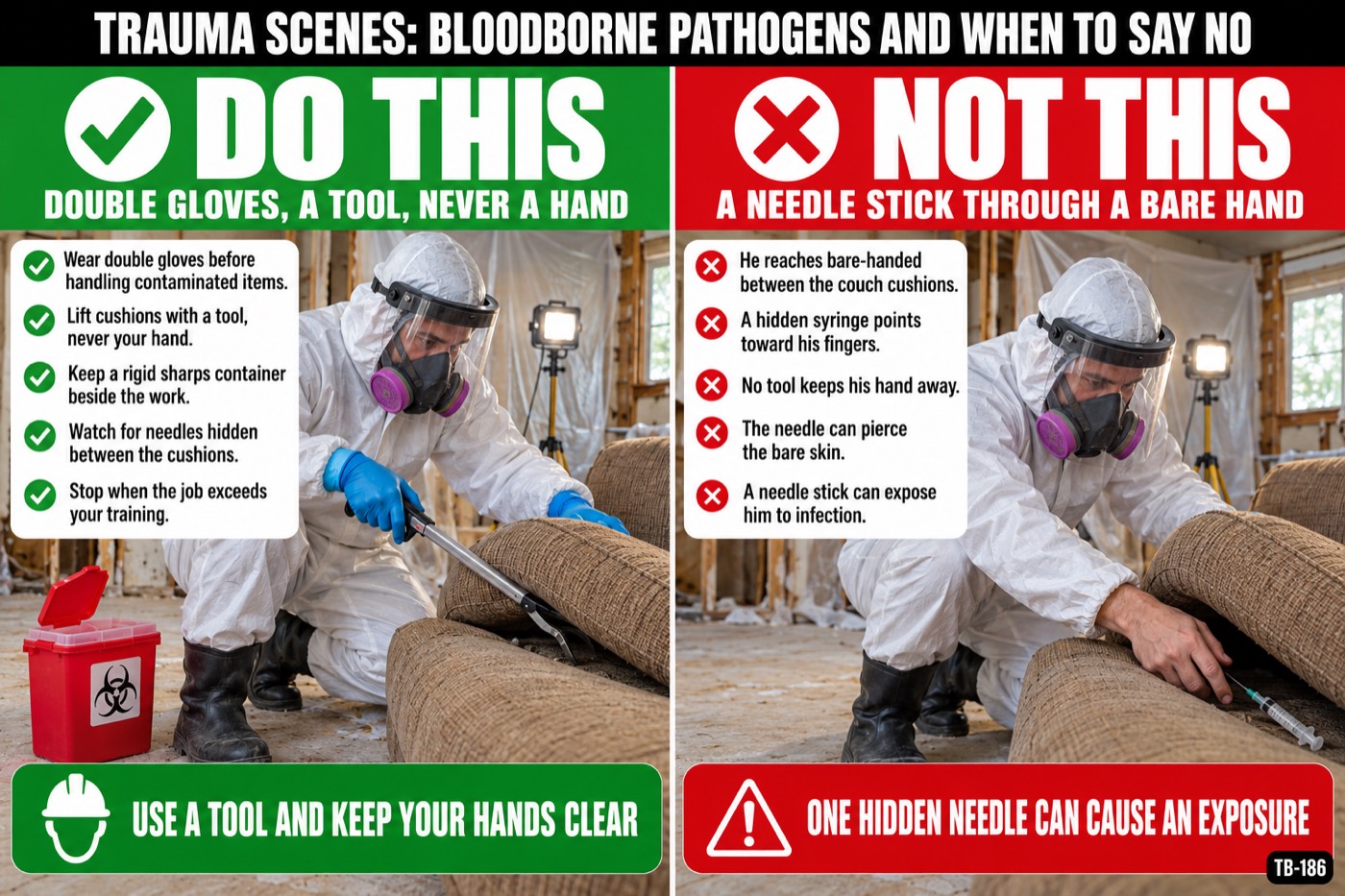
Hepatitis B lives in dried blood on a surface for at least seven days, and it takes a dose you cannot see to infect. That is the scene you were asked to clean, and there is a needle somewhere in the couch cushions.
The points
- A trauma scene or an unattended death can give you hepatitis B, hepatitis C or HIV through a needle stick, a cut or a splash in the eye. The exposure that infects is small, and the sharps are in the carpet, the bedding and the trash, not in a red box.
- The bloodborne pathogens rule, 29 CFR 1910.1030, applies to any job with reasonably anticipated exposure to blood, which includes restoration crews on these scenes. It requires a written exposure control plan, training, the hepatitis B vaccine offered free within 10 days, PPE and a post-exposure plan.
- Universal precautions: every drop is treated as infected. Double nitrile gloves, fluid-resistant suit and boot covers, a face shield with a respirator, and nothing gets picked up bare-handed.
- Sharps are never picked up by hand, never bent, never recapped. Tongs or a scoop into a puncture-resistant labeled container, and the container goes out as regulated waste.
- A needle stick or a splash gets washed right then, reported the same hour, and evaluated by a doctor the same day; post-exposure treatment for HIV works best inside two hours. And the mental load is real: anyone can say no to a scene, and that is a call the company backs.
Why it goes wrong
29 CFR 1910.1030 is a general industry standard, and OSHA applies it to cleanup and restoration crews wherever employees have occupational exposure. Occupational exposure means reasonably anticipated contact with blood or other potentially infectious materials from the job, which is exactly what a trauma cleanup is. A company that sends crews to these scenes without an exposure control plan is out of compliance before the truck leaves.
The plan at paragraph (c) is written, names who is exposed, says how you control it, and gets reviewed every year. The vaccine is offered within 10 working days of assignment; you can decline in writing and change your mind later. Hepatitis B is the one that matters most: it survives on surfaces for a week, it infects at a far lower dose than HIV, and the vaccine is over 90 percent effective.
Sharps at a scene are not where the rule imagines them. They are in a mattress, a couch, a trash bag that split, a drug scene's floor. Never sweep by hand or reach where you cannot see; use a tool to move bedding and cushions, and lift debris with a scoop. A puncture-resistant, leak-proof, biohazard-labeled container is at the doff area before anyone starts.
Decontamination is cleaning then disinfection with an EPA-registered product listed against HBV and HIV, wet contact time as the label says, usually 10 minutes. Porous material that held blood, carpet, pad, mattress, drywall, goes as regulated waste in red bags or labeled containers, through a licensed medical waste hauler. Bleach solution at 1 to 10 also works on hard surfaces, mixed fresh that day.
A needle stick or a splash to the eye, nose, mouth or broken skin is an exposure incident. Wash or flush for 15 minutes, tell the foreman in that hour, and the company gets you to a clinic for the post-exposure evaluation the rule requires, including testing, prophylaxis if indicated and follow-up. HIV post-exposure medication is most effective when started within hours and is not offered after 72.
The other exposure is what the scene does to you. Unattended deaths, suicides and violence leave a picture the mind keeps. Nobody on this crew is required to take a scene, nobody is teased for saying no, and the person who is quieter than usual in the truck after one gets a check-in and the 988 line if they want it. The company's job is to make saying no cost nothing.
Questions for the crew
- Who on this crew has had the hepatitis B series, and who has not been offered it?
- Where is the sharps container on this job, and what are we picking things up with?
- If somebody wants out of this scene, who do they tell, and what happens next?
To close
Nobody touches anything at this scene today without double gloves and a tool, and anyone who wants out says so with no explanation owed.
To hold this talk with your crew
1
Read it aloud. Five minutes, before the work starts.
2
Ask the questions. A crew that talks is a crew that remembers.
3
Have them sign on their own phones, and the record is sealed.