Drill stem: nobody within reach while it turns
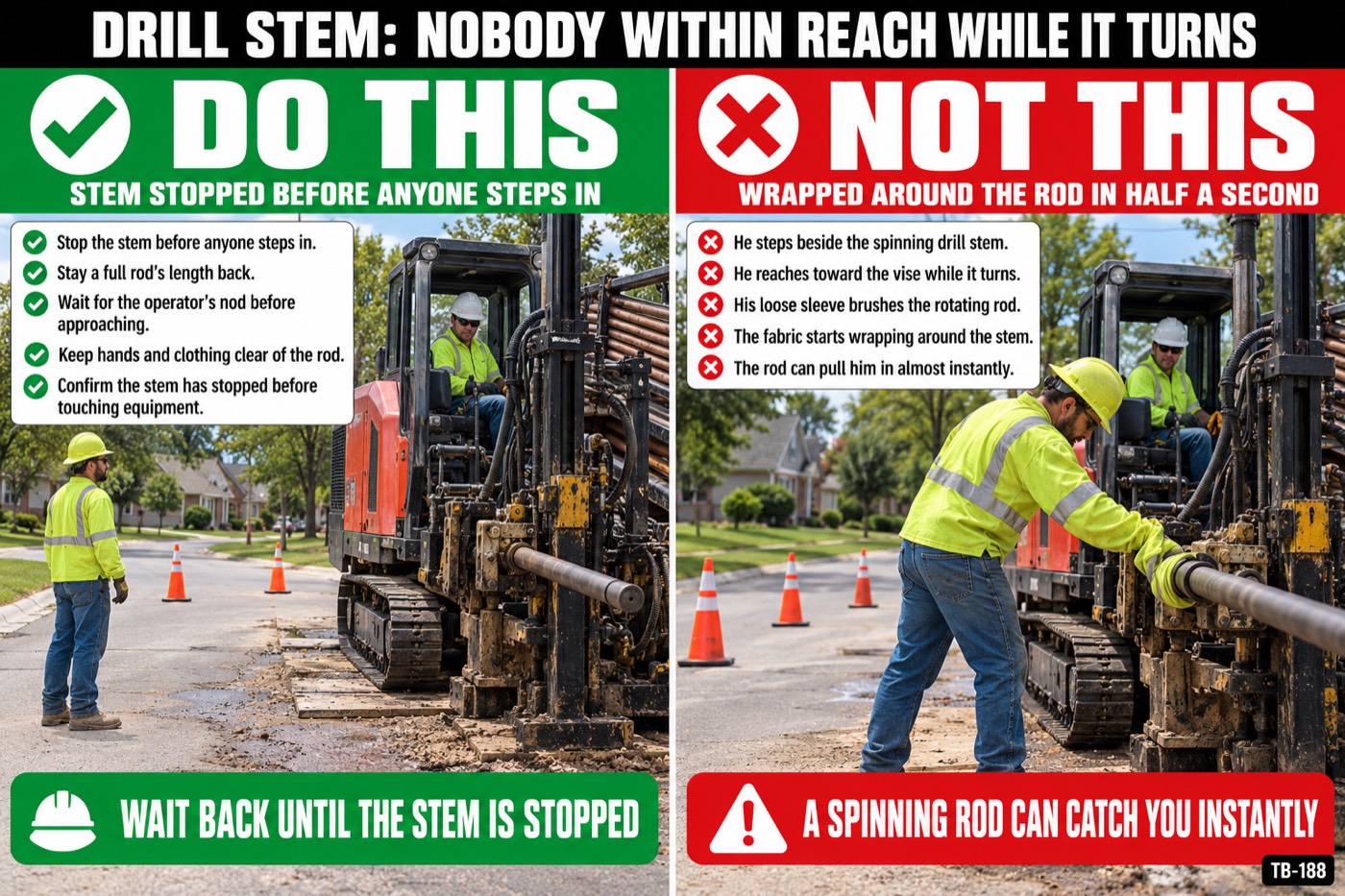
The drill stem on that rig turns at about 150 revolutions a minute with several thousand foot-pounds of torque behind it. A sleeve, a glove or a lanyard that touches it is wrapped around the rod before you can let go.
The points
- A rotating drill stem takes an arm or a whole person around it in less than one turn, and at 150 rpm one turn takes under half a second. Nobody standing within reach can react in time, and the rig does not feel the difference between a rod and a body.
- The zone around the stem, the vise and the rod loader belongs to the operator. If the operator cannot see you, the operator does not turn the stem, and you do not step in until the stem has stopped and the operator has said so.
- Hands never go near the vise or the breakout wrench while the rig is live. Adding a rod, changing a bit or clearing a jam happens with the rig locked out and the operator's hands off the controls.
- Every rod weighs 70 to 90 pounds and the loader arm moves it with no idea where your fingers are. Guide rods by the ends, never by reaching across the loader or between the rod box and the carriage.
- The remote and the lockout stay with the operator, and the operator stays at the controls while anyone is at the front of the rig. Nobody walks up to the drill head or the exit pit while the stem is turning.
Why it goes wrong
A 2-3/8 inch rod turning at 150 rpm wraps a sleeve in one rotation and pulls the arm in on the next. There is no reversing it in time: the operator's reaction is about a second, and by then the rod has turned two and a half times. Rotating shafts do not cut you; they wind you up, and what is inside the wrap breaks.
The rig has more moving parts than the stem. The rod loader swings a rod from the box to the carriage, the carriage travels the length of the rig, the vise and breakout clamp with thousands of pounds of force. Each of those is a pinch point that closes on a hand in silence, with the operator looking somewhere else.
Draw the line and mean it. A good rule is that nobody stands inside a rod's length of the front of the rig while the stem turns or the carriage moves. Entry is by signal: the helper signals, the operator stops the stem, takes hands off the controls and signals back, and only then does the helper step in.
Most rigs have an operator presence system, and many have a remote lockout that kills rotation when the helper is at the front. A rig with the presence system bypassed, the guard removed or the remote taped over is not in compliance, and 29 CFR 1926.20(b) says equipment out of compliance is not used. The same rule limits the seat to people trained on that rig.
The common mistake is the helper cleaning threads or adding the next rod by hand while the stem is idling to save thirty seconds. Idling is turning. Threads get wiped with the stem stopped and the vise closed, and the thirty seconds is the cheapest thing on the job.
The drill head at the exit pit is the same stem, and it turns while the tracker is calling it in. Nobody is in the pit or over the head while it is rotated or advanced. The pipe, the reamer and the pullback have their own talk.
Questions for the crew
- Where is the line on this rig that nobody crosses while the stem is turning, and can the operator actually see it from the seat?
- Who is adding rods today, and how do they tell the operator they are stepping in?
- Has anyone on this crew ever seen a sleeve, a glove or a lanyard catch on a turning rod? What happened?
To close
Today the stem does not turn while anyone is inside a rod's length of the front of the rig, and nobody steps in until the operator has stopped it and said so.
To hold this talk with your crew
1
Read it aloud. Five minutes, before the work starts.
2
Ask the questions. A crew that talks is a crew that remembers.
3
Have them sign on their own phones, and the record is sealed.