Strike alert: when the alarm sounds, nobody moves
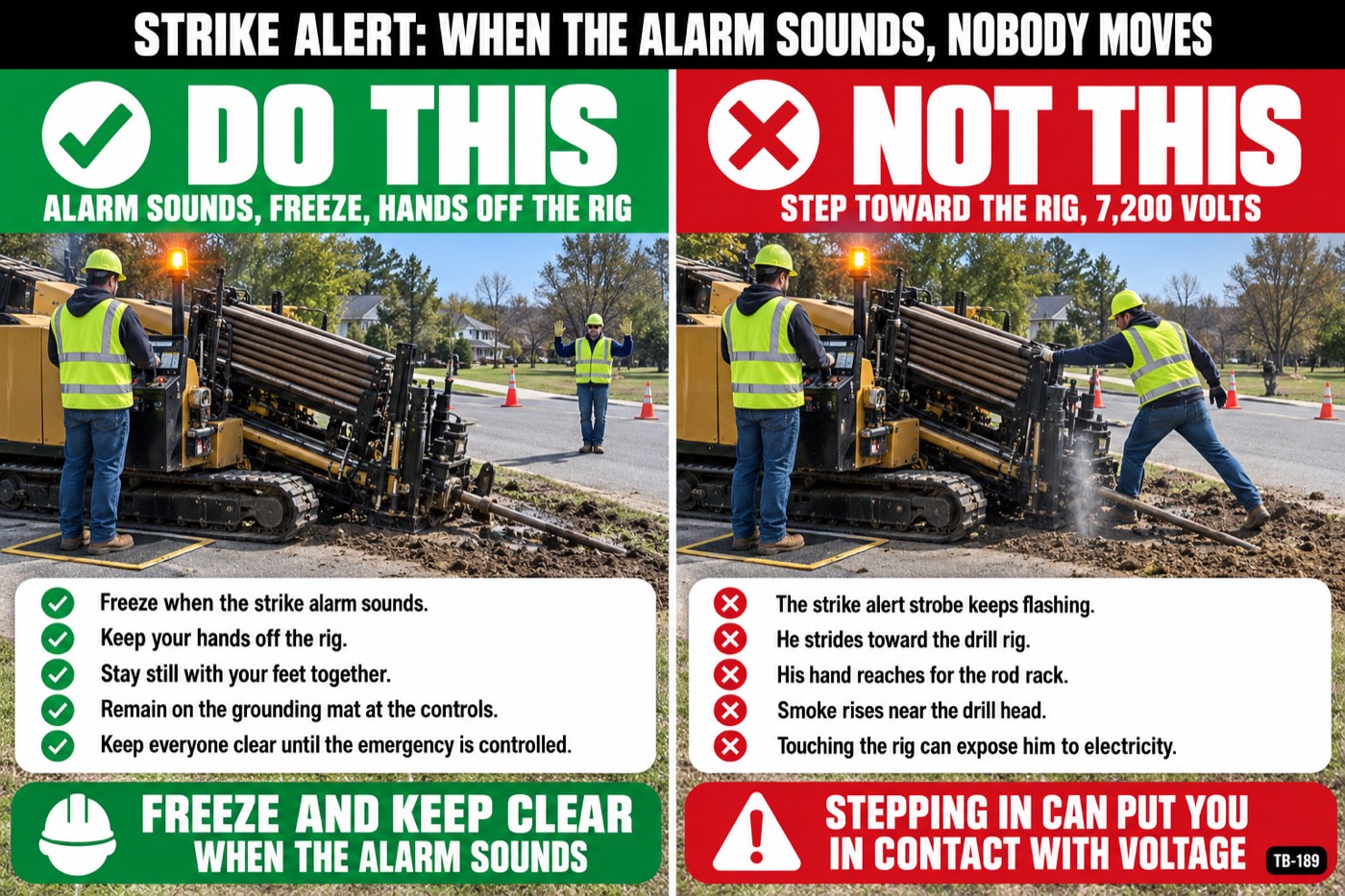
A neighborhood distribution line carries 7,200 volts to ground. If the drill head touches it, the rig, every rod, and the dirt around the rig are at that voltage, and the only warning you get is the alarm.
The points
- When the drill head hits an energized cable, the current comes back up the stem, through the rig and out into the ground. Anyone touching the rig, and anyone standing with their feet apart within about 20 feet of it, can be killed without ever seeing the cable.
- The strike alert sounds and flashes. The operator stays on the grounding mat, everyone else freezes where they stand, and nobody touches the rig, the rods, the mud hose, the rod trailer or anything else hooked to it.
- If you have to move, shuffle with your feet together or hop. The ground around the rig has a voltage gradient, and a normal stride puts one foot at a higher voltage than the other. That is step potential, and it goes through your legs.
- The operator shuts the rig down from the mat, calls the utility, and stays put until the utility says the line is dead. The rig is not touched until then, even if the alarm stops, because reclosers put the line back on within seconds.
- Before drilling starts, the locates are checked against the bore plan and every electric crossing is potholed and seen. The rule says the employer finds out where the circuit is before the work begins, not when the drill head does.
Why it goes wrong
The strike alert senses current or voltage on the drill stem and trips an audible and visual alarm on the rig and on the tracker's locator. The operator's mat is bonded to the rig, so the operator and the rig sit at the same voltage and no current flows through the operator as long as both feet stay on the mat and the operator touches nothing else. Step off with one foot and the mat has done nothing.
Voltage in the ground drops off with distance from the rig. Near the rig a 3-foot stride can span hundreds of volts, and current flows leg to leg. Touch potential is worse: a hand on the rig and feet on the ground puts the current through the chest. That is why the helper who runs to the rig to shut it down is the person who dies in these events.
Everything metal attached to the rig is the rig: the rod trailer, the mixing tank hose, the water truck plumbed into the mixer, a trailer tongue on the hitch. Nobody unhooks anything, and the truck driver does not climb down onto the ground from a cab that is connected to the rig.
Test the strike alert every morning before the first rod goes in; the system has a test function for exactly that. A rig whose alert fails its test does not drill that day. Many systems also alarm on gas at the head, and that alarm means the same thing: stop, stay put, and call.
29 CFR 1926.416(a)(3) says the employer, before work begins, finds out by inquiry, observation or instruments whether any energized circuit is where a person, tool or machine could contact it, posts the warning and tells the crew. 1926.416(a)(1) says the protection is deenergizing and grounding, or guarding. On a bore that means the locates, the potholes at every crossing and the depth in the bore plan, not the alarm.
When the alarm quits, the line may have tripped, and the utility's recloser will try to put it back on two or three times within a minute. A rig that was live thirty seconds ago is live again. Nobody moves until the utility crew on the scene says the line is dead and grounded.
Questions for the crew
- Where does every electric line cross the bore path today, and have those crossings been potholed and seen or only painted?
- If the alarm goes off right now, where is each of you standing and what are you touching?
- When was the strike alert tested on this rig, and who watched it pass?
To close
Today the strike alert gets tested before the first rod goes in, and if it sounds, nobody touches the rig or moves toward it until the utility says the line is dead.
To hold this talk with your crew
1
Read it aloud. Five minutes, before the work starts.
2
Ask the questions. A crew that talks is a crew that remembers.
3
Have them sign on their own phones, and the record is sealed.