GFCI protection on temporary power
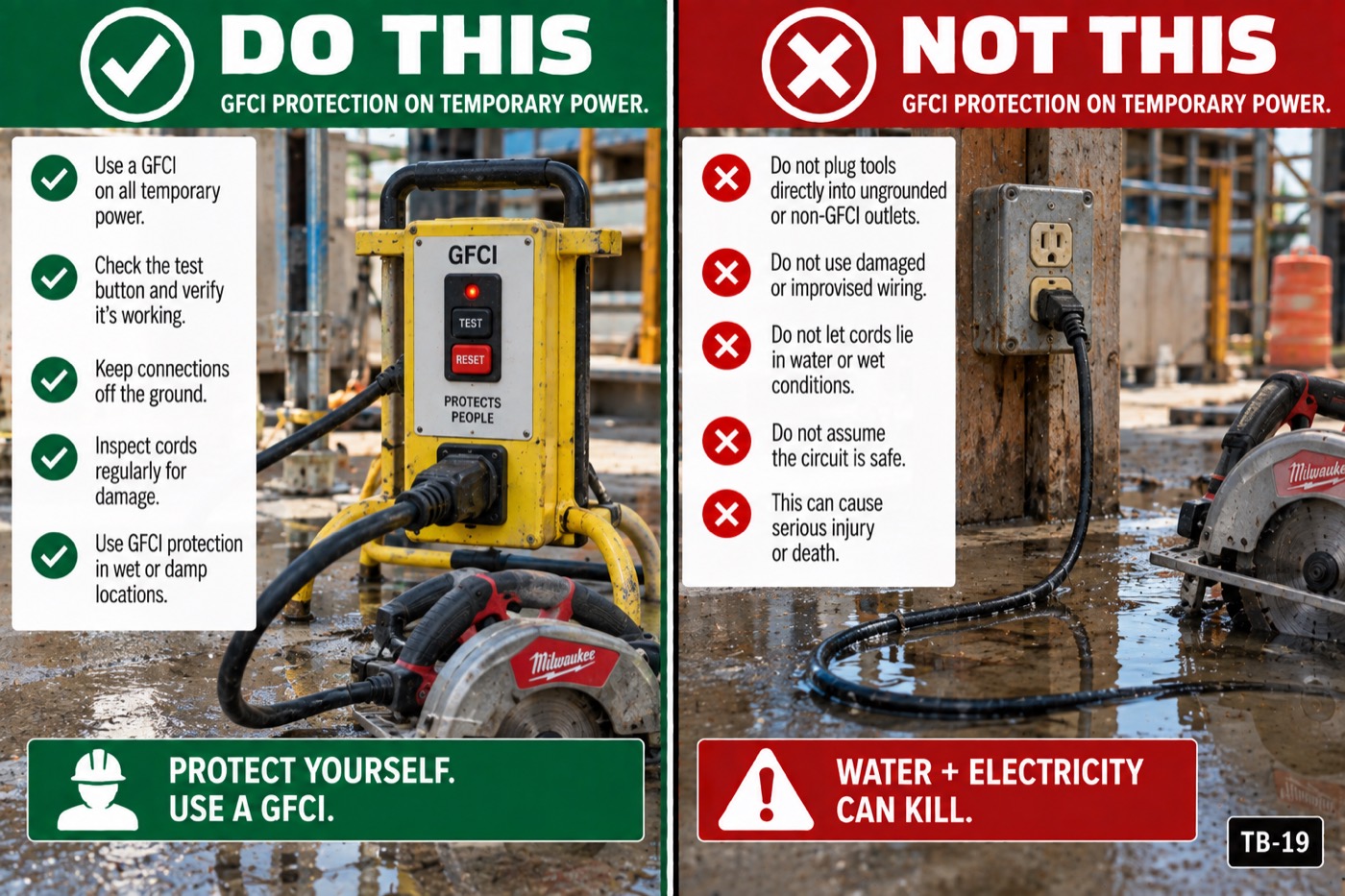
That little button on the GFCI is the only part of this system anybody ever tests. Push it this morning.
The points
- Every 120-volt, 15, 20, and 30 amp receptacle on a construction site that isn't part of the permanent wiring needs GFCI protection.
- That includes generators, temporary poles, and extension cords plugged into anything.
- Test the GFCI before each shift with the test button. A device that won't trip on test won't trip on you.
- GFCI protects against shock. It does not protect against overload or arc flash.
- Wet conditions make everything worse. Water and damaged insulation are how many shocks from tools and cords start.
Why it goes wrong
A GFCI compares the current going out with the current coming back. When some of it is going somewhere else, through a person, for instance, it trips in milliseconds. That speed is the whole point.
The alternative OSHA allows is an assured equipment grounding conductor program, which requires documented inspections and testing of every cord and tool on a schedule. Most contractors find GFCI simpler and more reliable.
It is worth being clear about what a GFCI does not do. It does not protect against overload - that is the breaker's job - and it does nothing about arc flash. It also does not protect you from contact between two conductors, because current going out and coming back still balances. It is a shock-to-ground device, and it is very good at that one thing.
Testing matters because a GFCI is an electronic device that can fail, sometimes while still passing power. The test button is the only way to find out, and a device that will not trip on the button will not trip for a person either. Four seconds at the start of the shift.
Repeated tripping is almost always real. A tool with degraded insulation, moisture in a connection, or a damaged cord leaks a small amount of current to ground - not enough to be obvious, exactly enough to trip the device. That is the GFCI reporting a fault, and bypassing it removes the only thing standing between that fault and whoever picks the tool up next.
Wet conditions raise the stakes on all of it, because water lowers the resistance of everything, including the person.
Questions for the crew
- Are all our temporary circuits GFCI protected right now?
- Who tested them this morning?
- What do we do with a GFCI that keeps tripping? Bypass it or find out why?
To close
A GFCI that keeps tripping is telling you something. Find out what, do not bypass it.
To hold this talk with your crew
1
Read it aloud. Five minutes, before the work starts.
2
Ask the questions. A crew that talks is a crew that remembers.
3
Have them sign on their own phones, and the record is sealed.