Pullback: nobody in line with the pipe
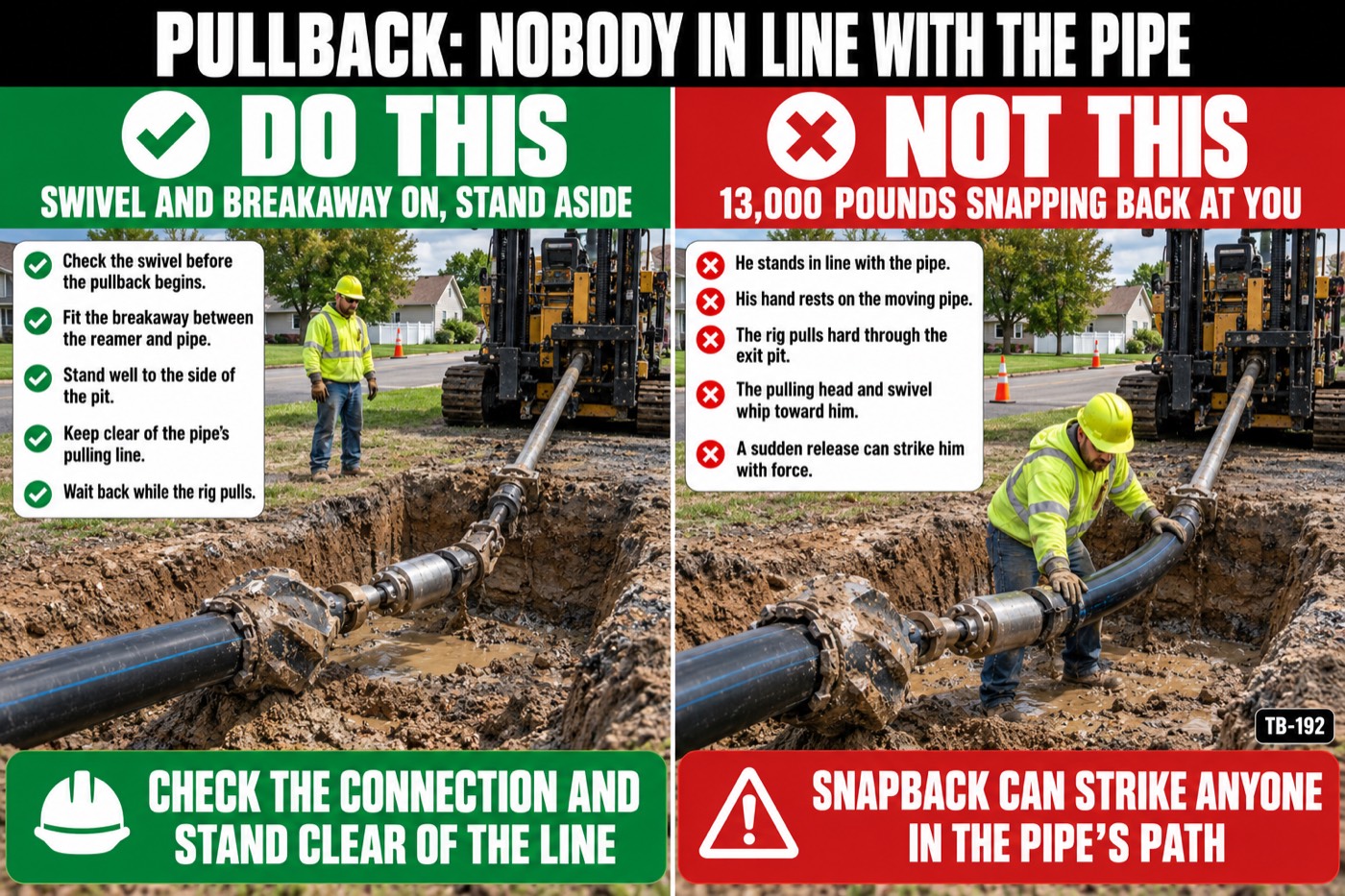
A 6-inch HDPE line can take about 13,000 pounds of pull before it stretches for good, and the rig can pull more than that. If something lets go under that load, the pipe, the swivel and the shackle come back at whoever is standing in line.
The points
- Product pipe under pullback is a stretched spring. If the pipe, the pulling head, the swivel or a shackle fails, the stored energy comes out along the line of the pipe, and the person standing in line at the exit pit gets hit with steel moving faster than they can see.
- A swivel goes between the reamer and the pipe so the pipe does not spin, and a breakaway rated below the pipe's safe pull goes in the string so the rig cannot overload the pipe. Neither is optional and both get checked before the first rod pulls.
- Nobody stands in line with the pipe, in the exit pit, or on the pipe while the rig is pulling. Watch it from the side, well back from the pit, and keep the public even further.
- The operator watches the pull force gauge. A pull that climbs and does not fall back means something is hung. The answer is to stop, swab the hole or back off, not to pull harder.
- The pipe rides on rollers and is not dragged over the pit edge or bent tighter than the manufacturer's minimum radius. Hands stay off the pipe and the rollers while it is moving.
Why it goes wrong
HDPE stretches under load and stores the energy. A 500-foot string strained 1 percent has 5 feet of stretch in it, and when the pulling head lets go that 5 feet comes back through the pit in a fraction of a second. The safe pull stress for PE4710 is about 1,330 PSI on the pipe wall's cross-section; for 6-inch DR11 that is about 11 square inches and 15,000 pounds. Past that the pipe necks and never recovers.
The swivel keeps the reamer's rotation out of the pipe. If the swivel seizes, the pipe twists as it comes in, and twisted HDPE stores torque the way a wound rope does. It unwinds violently when the pulling head is unhooked. Check that the swivel turns freely by hand before it goes in the hole, and check it again when it comes out.
The breakaway is a fuse. It is rated below the pipe's allowable pull, so when the rig overloads, the breakaway parts in the bore and the pipe survives. Then the reamer comes out the entry side and the pipe is recovered. Pulling without a breakaway means the fuse is the pipe itself, or the shackle, and both fail at the pit.
The exit pit is where the reamer and swivel come up out of the ground and where the pipe is hooked on. The person in the pit hooking up works with the rig shut down and the stem stopped, and is out of the pit before the operator is told to pull. A pit 5 feet deep is an excavation with a wall, and the trenching talk applies.
Fused HDPE lies along the roadside in strings of 500 to 1,000 feet. It rolls, it gets driven over, and it moves sideways at the pit as the pull starts. Set it on rollers on a straight line into the bore, and give the fusion joints their full cooling time before they see load. A joint pulled warm is a joint that fails in the hole.
The common mistakes are all the same mistake: someone standing on the pipe near the pit to keep it centered, straddling it, or watching the reamer from inside the pit. Add to that a chain or a rope choker on the pulling head instead of a rated shackle, and people at the entry side lying in line with the stem while it pulls.
Questions for the crew
- What is the safe pull for the pipe going in today, what is the breakaway rated at, and who checked both against the rig?
- Where exactly is in line with the pipe at the exit pit, and how do we keep people and the public out of it?
- When the reamer comes into the pit, who is in there, and how does the operator know it?
To close
Today the swivel and the breakaway go on before the first rod pulls, and nobody is in the pit or in line with the pipe while the rig is pulling.
To hold this talk with your crew
1
Read it aloud. Five minutes, before the work starts.
2
Ask the questions. A crew that talks is a crew that remembers.
3
Have them sign on their own phones, and the record is sealed.