Water main: the pipe in the sling and the flooded trench
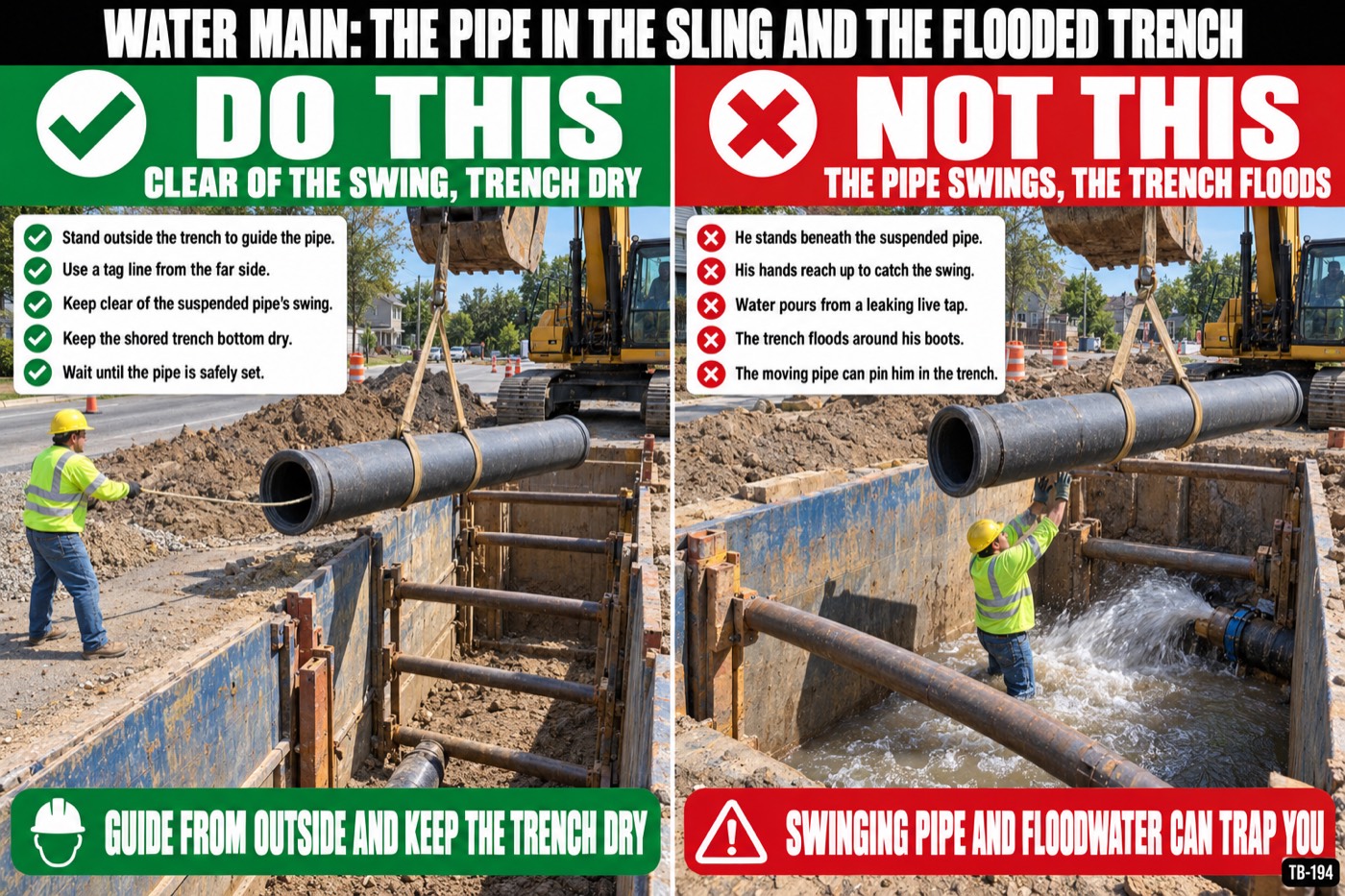
An 18-foot stick of 12-inch ductile iron weighs about 1,000 pounds, and the main you are tying into has 60 to 100 PSI behind it. Both of them are trying to get into the trench with you.
The points
- Water main work kills two ways: the pipe in the sling swings or drops onto the person guiding it, and the trench floods when a valve, a plug or a live tap lets go. A flooded trench is a collapsing trench, and it collapses on someone who is already stuck in the mud.
- Nobody works under a suspended pipe. The pipe comes down with the crew clear of the swing, guided with a tag line from outside, and hands go on it only when it is resting on the bedding.
- A trench with water in it, or water coming into it, is off limits until it is pumped and the competent person says the walls are still good. Water changes the soil type, and shoring or a box sized for dry ground is not rated for wet.
- The tapping machine cuts into a live main. The sleeve and valve are pressure tested before the cutter goes through, everyone else is out of the trench, and the person on the machine knows the pressure and where the shutoff is.
- Thrust blocks and restrained joints are how the pipe stays put when the water comes on. An unrestrained fitting on a 12-inch line at 100 PSI pushes with over 11,000 pounds, and that is what moves a bend into the person standing behind it.
Why it goes wrong
Ductile iron runs about 34 pounds a foot at 8 inches and 55 at 12; an 18-foot stick is 600 to 1,000 pounds. It is rigged with a sling rated for it, hitched at the balance point, and a wet pipe walks out of a basket hitch. The bell end is heavier. The rigging talk covers slings and angles; the point here is that the pipe is never over a person.
29 CFR 1926.651(h) says nobody works in an excavation with accumulated water, or where water is accumulating, unless precautions are in place: water removal equipment, monitored by a competent person, surface water diverted, and an inspection after every rain. On a main tie-in that means a trench pump on site and running, and someone who knows how to run it, before the tap is cut.
A trench dug through the saturated backfill of an old main is previously disturbed and wet, which is Type C soil at best. When a leak starts, the water does not need to fill the trench to bring the wall down; it needs to soften the toe. Thirty gallons a minute for an hour is mud to the knees and a wall that sloughs. Get out first, then pump.
A hot tap puts a sleeve around the live main, a valve on the sleeve and the tapping machine on the valve. The sleeve is pressure tested at the utility's test pressure before the cutter starts, because a sleeve that fails with the cutter through the main is an open main at full pressure. The machine weighs 100 to 300 pounds and is rigged into the trench, not carried down a ladder.
Thrust is pressure times area. At 100 PSI on a 12-inch line the end thrust is about 11,300 pounds, and it acts at every bend, tee, cap and dead end. Thrust blocks are poured against undisturbed soil, not against backfill, and the line is not pressurized until the concrete has the strength the spec calls for. Restrained joints do the same job without the wait, if they are actually restrained.
Pressure testing is done with water, never air, at the spec pressure, usually 150 PSI or 1.5 times working. A cap that blows in a trench is a projectile. Nobody is in the trench while the line is coming up to pressure or on test, and the test is watched from outside the trench.
Questions for the crew
- What does the stick of pipe going in today weigh, what is it rigged with, and who is on the tag line?
- If the main lets go while we are in the trench, where does the water come from, where is the shutoff, and who runs the pump?
- What is the pressure on the main we are tapping, and has the sleeve been tested against it?
To close
Today nobody stands under the pipe, nobody works in water, and the trench is empty of people when the tap is cut and when the line comes up to pressure.
To hold this talk with your crew
1
Read it aloud. Five minutes, before the work starts.
2
Ask the questions. A crew that talks is a crew that remembers.
3
Have them sign on their own phones, and the record is sealed.