Manholes: the lid, the air and the ladder that rusted
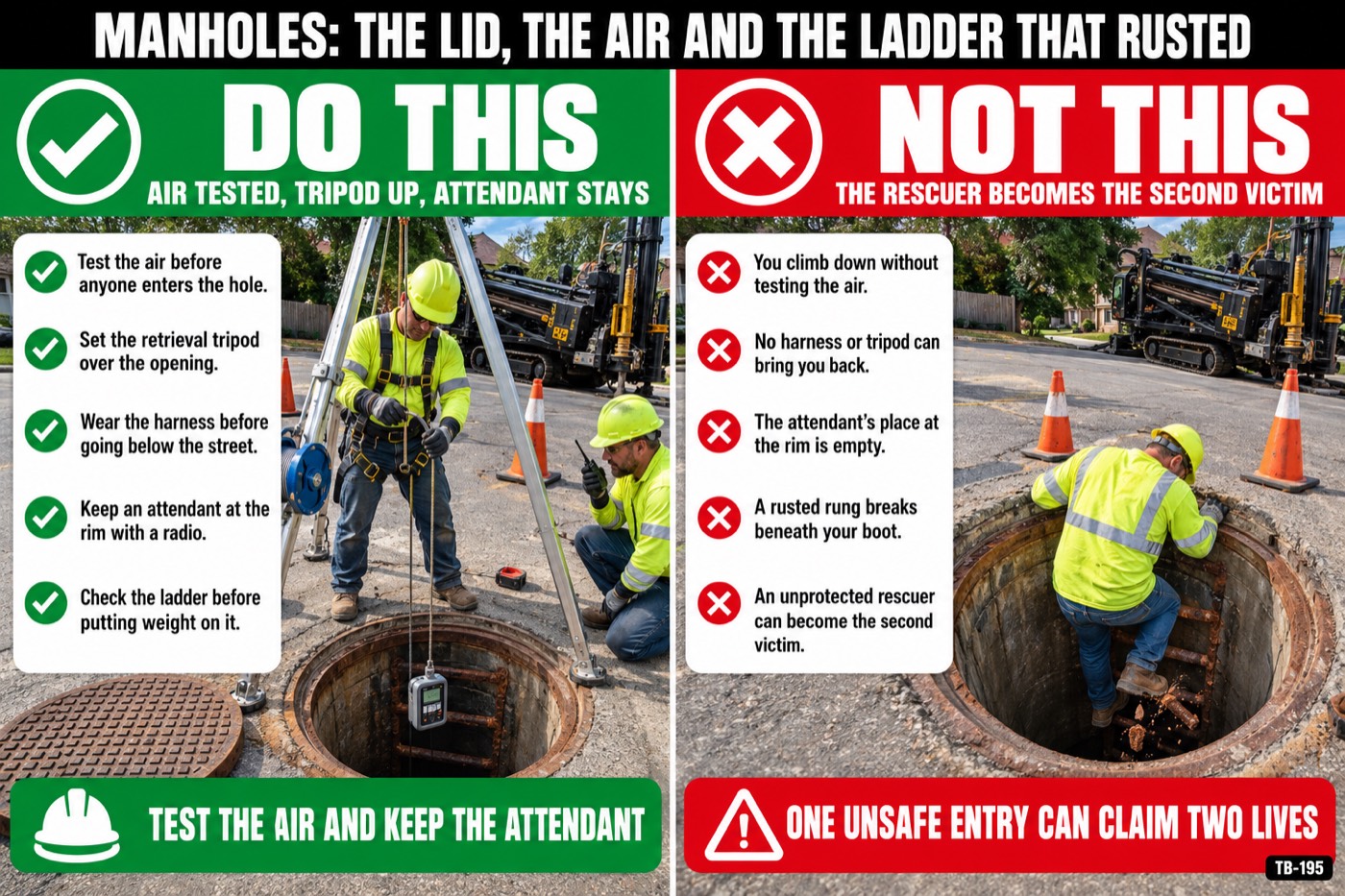
A cast iron manhole cover weighs 100 to 300 pounds, and what is under it has killed crews three at a time: the first drops at the bottom, the second goes down after him, the third goes down after them both.
The points
- A manhole or vault is a permit-required confined space until a competent person has proven otherwise. Sewer gas, low oxygen, a rusted rung and traffic six feet from the hole all kill in the same place, and the rescue reflex is what makes it three bodies.
- The air gets tested before anyone leans over the open hole, and again before anyone goes down: oxygen, LEL, hydrogen sulfide and carbon monoxide, at the top, the middle and the bottom. Below 19.5 percent oxygen or over 10 percent LEL nobody enters.
- The lid comes off with a lid lifter, a hook or a magnet, with your back straight and your fingers off the rim. A lid that drops back into the ring takes fingers, and a lid that slides takes toes.
- An attendant stays at the hole, not at the truck, with a radio or phone and no plan to go in. A tripod and a harness on the entrant is how the attendant gets them out without becoming the second body.
- The hole is in the road. Cones and a barrier around the open hole, a vest on everyone, and the lid goes back on when the crew walks away, even for a minute.
Why it goes wrong
29 CFR 1926.1203(a) says a competent person identifies every confined space where the crew may work and decides which are permit spaces, before work begins. A sewer manhole, a storm manhole after a rain, and an electrical vault with cable in it are permit spaces by default. 1926.1203(d) says that if the crew is going in, there is a written program on site, and 1926.1206 says what the permit has to cover.
Iron rungs in a sewer manhole corrode from the inside, and a rung that looks fine breaks under 200 pounds. Test rungs with a pole before trusting them, or lower a ladder and use the tripod winch as the second line. Three points of contact does not help when the point you are holding leaves the wall.
The lid is where backs get hurt. A 24-inch cover is 100 to 150 pounds and it has to be broken loose from a ring it has rusted into. Use the lifter, not a screwdriver and a boot. When it goes back, it is lowered onto the ring and seated, never dropped, and the ring gets swept so the lid sits flat for the next car.
Sewer gas has its own talk and hydrogen sulfide is the reason the meter goes down first. Vaults add their own hazards: energized cable, a splice under water, an arc flash in a box the size of a closet. A storm manhole in a low spot fills in minutes during a rain, and the person at the bottom is under the water before they reach the ladder.
The hole is opened in a lane, and the person climbing out pops up at bumper height. The taper and the cones from the lane closure talk apply, and a car turning into the cone line is the reason the attendant faces traffic. The lid goes back on at lunch and at the end of the day; a cone in an open manhole is not a cover.
The three-body pattern happens because someone drops and the next person goes in to help, in the same air. The attendant does not enter, ever. The attendant calls 911, runs the winch, and keeps everyone else out until the rescue crew with air arrives.
Questions for the crew
- Which holes are we opening today, and which of them has our competent person identified as permit spaces?
- Who is the attendant at each hole, what does their meter read right now, and how do they pull someone out without going in?
- Where is traffic around this hole, and what is between the cars and the person climbing out?
To close
Today every hole is tested before anyone leans over it, an attendant with a tripod stays at the hole while anyone is down, and nobody goes in after a person who dropped.
To hold this talk with your crew
1
Read it aloud. Five minutes, before the work starts.
2
Ask the questions. A crew that talks is a crew that remembers.
3
Have them sign on their own phones, and the record is sealed.