Potholing: only a shovel or vac inside the tolerance zone
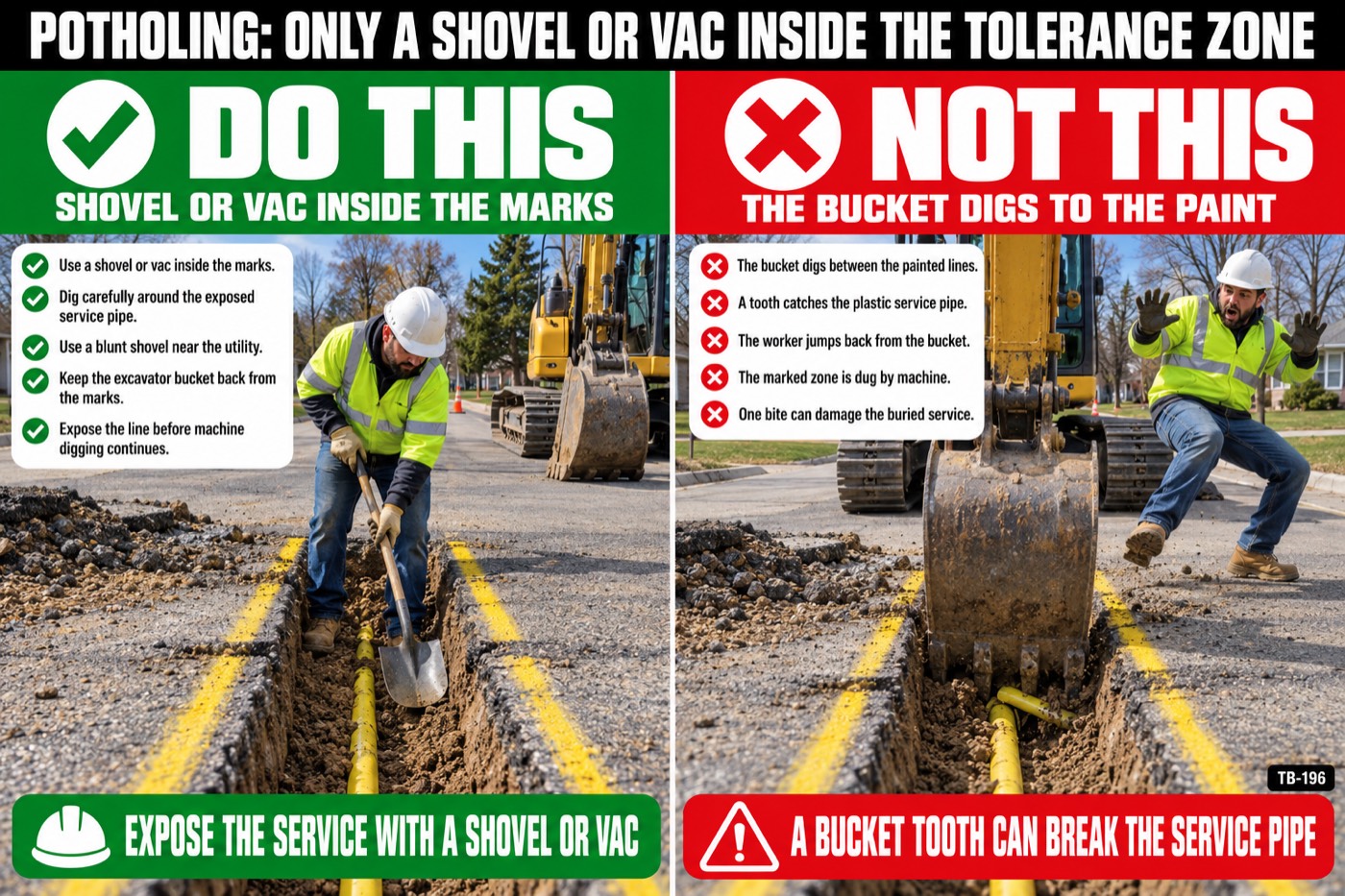
The paint can be off by as much as the tolerance zone, 18 to 24 inches each side of the mark depending on the state. Inside that band the bucket does not dig, because the bucket is how a gas service gets cut.
The points
- A bucket tooth through a gas service, a fiber duct or a 12 kV cable is the most common serious event in utility work, and it happens when the operator digs to the paint instead of to the pipe.
- The rule says that when digging approaches the estimated location, the exact location is found by safe and acceptable means. That is a hand shovel or a vac, and the line is exposed and seen before the machine gets within two feet of it.
- Hand dig with a blunt-nose shovel and probe with a fiberglass or wood-handled bar. No picks, no digging bars driven down, no sharp spades. Push and pry, do not chop.
- The vac truck does this faster and safer, but 3,000 PSI of water cuts pipe and skin, and the hydro-vac wand talk covers it. Keep the wand moving and the pressure at what the utility allows near its line.
- A pothole is a hole. At 4 feet it is an excavation with a wall, and at 5 it needs protection before anyone stands in it. Every pothole gets a plate or a cover before the crew leaves it.
Why it goes wrong
Every state sets a tolerance zone, usually 18 inches and in some states 24, measured from the outside edge of the line on each side of the mark. A 24-inch main with an 18-inch zone is a 5-foot band where power digging is not allowed. The paint is the locator's best estimate of the center; it is not the pipe, and it says nothing about depth. The locates talk covers the marks themselves.
A shovel finds the line by what is around it: the warning tape if there is one, the tracer wire, the sand bedding, a change in the color of the fill. A hand feels the pipe before a blade cuts it. A sharp spade chopped downward goes through a PE gas service, which is soft, and a nick that is not reported is a leak next spring.
A steel probe bar driven down finds a cable the hard way. 29 CFR 1926.416(a)(2) says that where the exact location of underground electric lines is unknown, people using jackhammers, bars or hand tools that may contact a line are provided insulated gloves. Use a fiberglass probe and wear the gloves.
Vac excavation, air or water, is the preferred way to expose a line, and it is how the tolerance zone gets cleared on frozen ground and under pavement. Once the line is exposed, 29 CFR 1926.651(b) says it is protected, supported or removed while the excavation is open. An exposed service left hanging over a weekend is a broken service on Monday.
The common mistake is potholing one crossing and assuming the line runs straight to the next. Lines bend, dip around old obstacles and get spliced. Every crossing gets a hole, parallel runs get holes at the spacing the plan calls for, and marks that are faded or older than the state's window get requested again before digging.
Questions for the crew
- What is the tolerance zone in this state, and which marked lines does today's dig come inside it?
- Who is doing the hand digging, with what, and what do they expect to find first: tape, sand, wire or the pipe?
- If the shovel scrapes a line, who do we tell, even if it looks fine?
To close
Today every line inside the tolerance zone is exposed by hand or vac and seen with our own eyes before the bucket gets within two feet of it.
To hold this talk with your crew
1
Read it aloud. Five minutes, before the work starts.
2
Ask the questions. A crew that talks is a crew that remembers.
3
Have them sign on their own phones, and the record is sealed.