Backfill: nobody in the trench while the bucket dumps
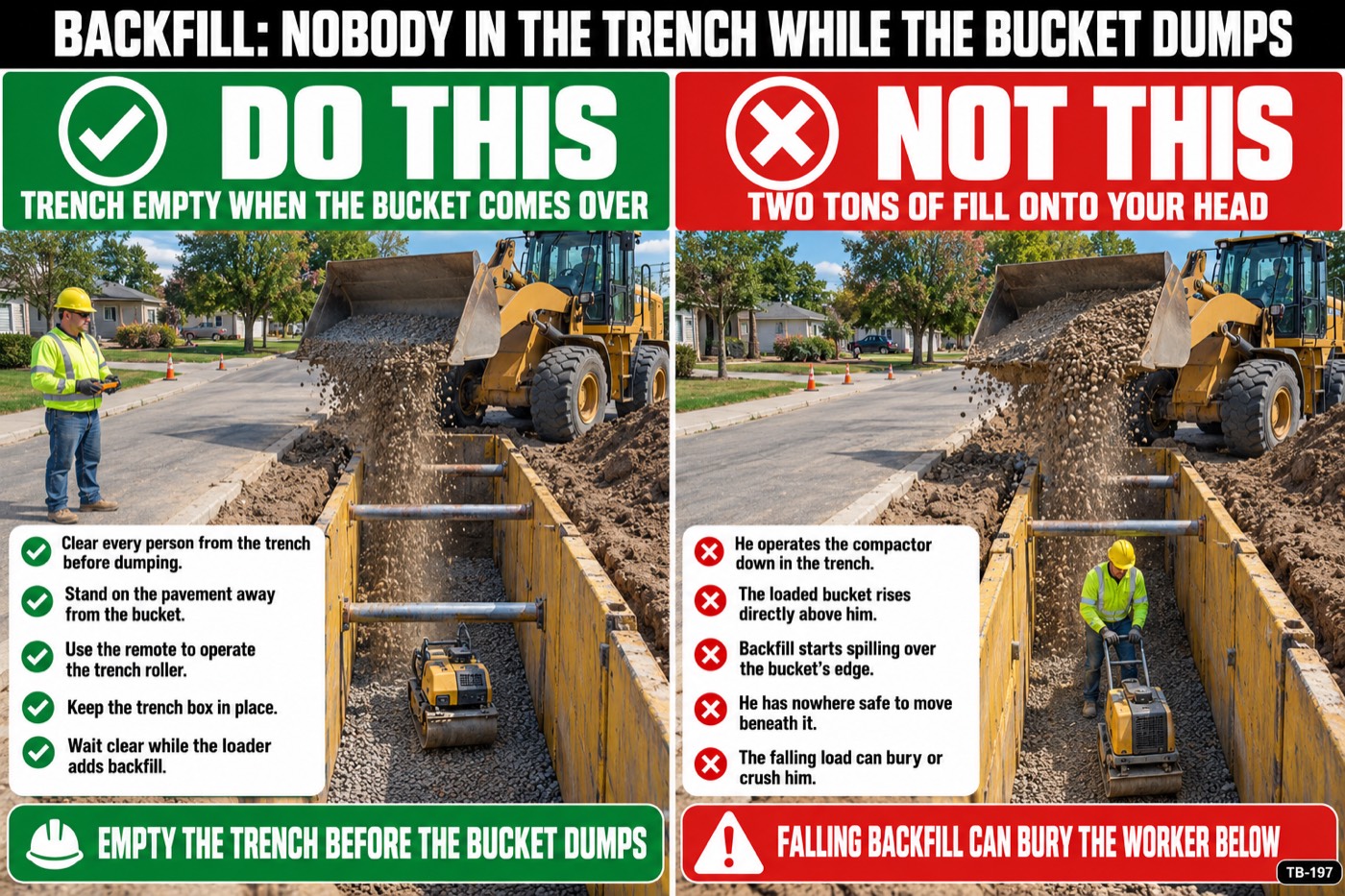
A loader bucket of backfill weighs about 2 tons and it comes over the edge from 8 feet up. The compactor running down in the trench is putting out carbon monoxide at a level that would empty a garage.
The points
- Backfill is when people get buried on purpose: the person in the trench running the compactor is under the loader bucket, standing in a box that is about to be pulled, breathing engine exhaust in a hole with no wind.
- No employee is permitted under a load handled by digging or lifting equipment, and a bucket of backfill is a load. The trench is empty of people while the bucket is over it, and the operator does not swing until they can see that.
- A gas compactor in a trench is exhaust in a confined hole. A walk-behind plate at idle can put a 5-foot trench over 200 ppm of carbon monoxide in minutes. Test the air or blow air in, and use the remote trench roller where the job has one.
- The box stays in until the backfill is at the height that lets it come out. Nobody is in a box while it is being pulled, and nobody works in the trench beyond the box while fill is dumped behind them.
- Compaction goes in lifts of the thickness the spec calls for, usually 6 to 12 inches, so the person in the trench is standing on compacted ground, not on loose fill they sink into.
Why it goes wrong
29 CFR 1926.651(e) says nobody works under loads handled by lifting or digging equipment, and that employees stand clear of any vehicle being loaded or unloaded. The loader operator cannot see the bottom of the trench from the seat, and the person in the trench cannot hear the loader over the compactor. The only system that works is the trench empty before the bucket moves, confirmed by eye or radio.
Carbon monoxide is what a small gasoline engine makes when it runs in a hole. 29 CFR 1926.651(g) says the air gets tested in an excavation over 4 feet where a hazardous atmosphere could reasonably be expected, and an engine in a trench is exactly that. A remote-controlled trench roller keeps the person out of the trench entirely, and electric or propane plates make less of it. The jumping jack talk covers the vibration.
The box is moved by its lifting eyes with the excavator, and a box being pulled tips, drops and moves sideways. Nobody is inside it when the hook goes on. Backfill outside the box before pulling it, in lifts, so the walls behind the box are held by fill and not by nothing.
The first lifts over the pipe are bedding, and a plate compactor running directly on a new PE gas line or a PVC water line crushes or ovals it. Hand tamp the haunches and the first 12 inches over the pipe, then bring the machine in. Warning tape goes in at the depth the utility specifies, usually 12 inches above the line.
Rocks and frozen chunks in the backfill over an exposed line break the line after the trench is closed. What goes in over the pipe is what the spec says, usually sand or screened material, and the exposed service that was supported during the dig is bedded before the fill goes over it.
The common mistake is the person in the trench spotting the bucket from below, ducking as it dumps. The bucket edge is at head height, the fill comes off it in a slab, and the operator is looking at the bucket, not the person under it. Spot from the top, from the far side of the trench.
Questions for the crew
- Who is in the trench today during backfill, and how does the loader operator know they are out before the bucket comes over?
- What is running in the trench that makes exhaust, and what does the air read down there?
- When does the box come out today, and who confirms it is empty before the excavator hooks on?
To close
Today the trench is empty of people every time the bucket comes over it, and nobody rides a box while it is being pulled.
To hold this talk with your crew
1
Read it aloud. Five minutes, before the work starts.
2
Ask the questions. A crew that talks is a crew that remembers.
3
Have them sign on their own phones, and the record is sealed.