The bore rig on the shoulder and the plate in the road
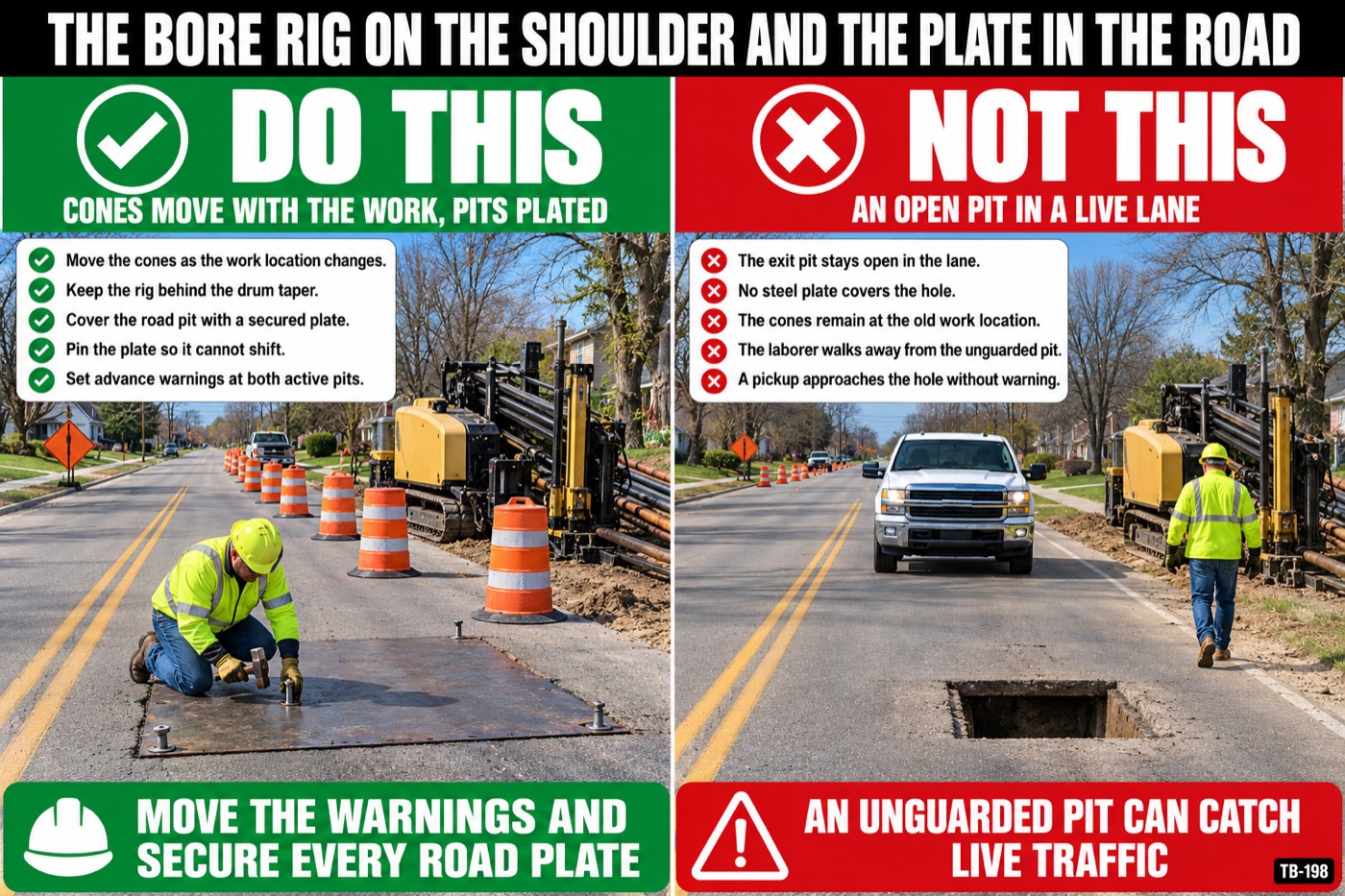
A 1-inch steel plate, 8 by 10 feet, weighs about 3,300 pounds, and a pickup at 30 mph still moves it if it is not pinned. The pit under it is 5 feet deep and has water in it.
The points
- A bore crew works in a moving work zone: the rig on the shoulder, the exit pit 400 feet down the street, the tracker in between, the truck moving from one to the other. The public drives through all of it, and the crew that gets hit is the crew that moved and did not move the cones.
- Traffic control on this job follows Part 6 of the MUTCD: advance signs, a taper, cones or drums at the rig and at every pit, and a flagger wherever the crew or the tracker uses a live lane.
- When the work moves, the signs and cones move with it. The advance warning sign is not 500 feet ahead of where you were this morning, and the taper is not protecting a pit you finished.
- Open pits in the street get plated or fenced before the crew leaves them, even for lunch. Plates are pinned, recessed or wedged so they do not walk, and a plate that rocks gets fixed before a car finds it.
- Overnight: plates down, a lighted barricade around anything still open, cones that are still standing at 5 a.m., and a fence, not cones, around any pit a kid could reach.
Why it goes wrong
29 CFR 1926.200(g) says construction areas are posted with traffic control signs at points of hazard and protected by traffic control devices, and that the design and use of those devices conforms to Part 6 of the MUTCD. Part 6 has layouts for exactly this: short-duration and mobile operations, work on the shoulder, work in a lane. The lane closure talk covers the taper and the second truck; for a 12-foot lane at 30 mph the taper is about 180 feet.
The rig itself sits on the shoulder with its anchors driven, the rod trailer behind it, the mixing tank and water truck alongside. Its tail and the trailer tongue are in the lane more often than the operator thinks. Cones go around the whole footprint, including the mixer, and the tracker's crossing gets its own flagger when the path goes across the road.
Steel weighs about 41 pounds per square foot per inch of thickness. A plate has to bear on at least a foot of pavement on each side of the pit, be pinned or recessed so it does not creep under braking, and get a cold-patch ramp on the edges so it does not launch a motorcycle. A plate that is slick in the rain or has ice on it in the morning is its own hazard, and some states require a sign ahead of it.
Pedestrians are part of the traffic. A pit on a sidewalk gets a closed-sidewalk sign and a detour, not a cone in front of it, and a pit in a yard gets a fence. The after-hours talk covers the kid and the open trench; on a bore job the kid finds the returns pit full of mud.
The crew is spread over 400 feet with the rig running, so nobody hears anybody. Radios on the rig, the tracker and the truck. The truck moving rods and plates between the pits is backing in a work zone with people looking at the ground; the backing talk applies to every move it makes.
Questions for the crew
- Where does today's work zone start and end, and who moves the signs and cones when the rig moves?
- Which pits are open when we leave for lunch and tonight, and what covers each of them?
- Where do people walk on this block, and where are we sending them around the pits?
To close
Today the cones move when the work moves, and no pit is left open in the street for a minute without a plate on it or a fence around it.
To hold this talk with your crew
1
Read it aloud. Five minutes, before the work starts.
2
Ask the questions. A crew that talks is a crew that remembers.
3
Have them sign on their own phones, and the record is sealed.