Hydraulics: the pinhole leak that goes into your hand
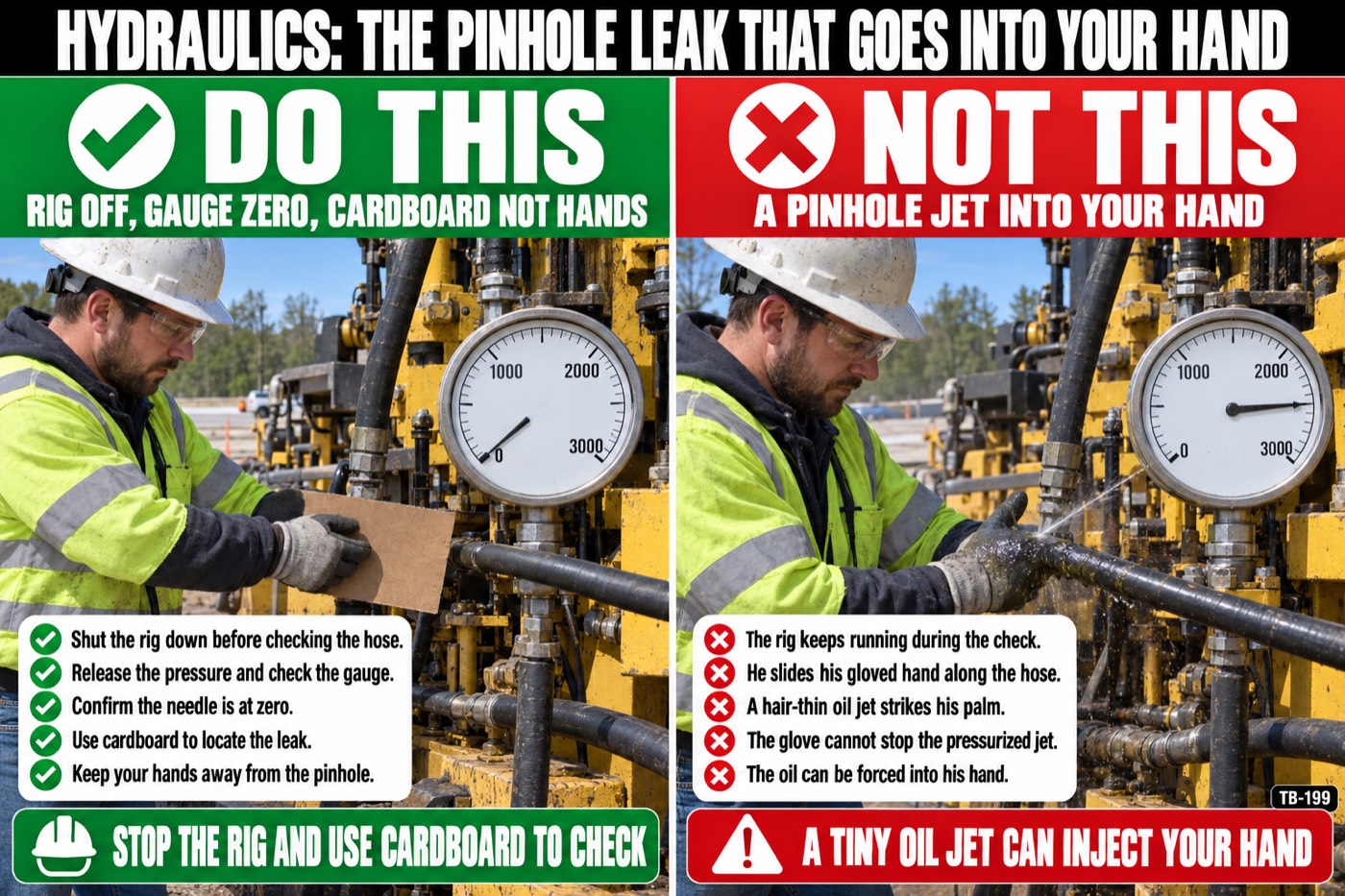
The hydraulic system on the rig runs at 3,000 to 5,000 PSI. Fluid needs about 100 PSI to go through skin, so a pinhole leak is a needle of hot oil that goes into your hand with less feeling than a bee sting and does not come back out.
The points
- An injection injury feels like a sting or a splinter. Within hours the hand swells, the oil kills the tissue along the tendons, and people who wait more than about 6 hours for surgery lose fingers, and often the hand.
- Never feel for a leak with a hand, a glove or a rag. Run a piece of cardboard along the hose and look for the stain. A pinhole jet is invisible; you hear it hiss before you see it.
- Hoses that are chafed, bulged, weeping at a fitting or cracked at the crimp get replaced, not wrapped. The hose, the fittings and the valves are rated at or above the pump, and the replacement is the rated part, not the one that was on the truck.
- Before opening any line, shut the rig down, relieve the pressure and check the gauge at zero. The accumulator, the carriage cylinders and the raised rod loader hold pressure after the engine is off.
- If fluid goes into anyone, it is an emergency room trip with the SDS right then, and you tell them at the door that it is a high-pressure injection injury. Do not wait to see how it looks in the morning.
Why it goes wrong
At 3,000 PSI, fluid through a 1/16-inch hole leaves at several hundred feet per second and penetrates skin from 4 inches away. It follows the tendon sheaths up the finger and the hand, and the oil is toxic to tissue, so the damage spreads for hours after the hole is closed. Grease guns at 6,000 to 10,000 PSI do the same. The entry wound is a dot; the surgery is the whole hand laid open.
29 CFR 1926.302(d) says the manufacturer's safe operating pressures for hoses, valves, pipes, filters and other fittings are not exceeded, and that the fluid is what the tool is rated for. A hose from the hardware store rated at 2,500 PSI on a 4,000 PSI circuit violates it, and it bursts on the first hard pull.
A hose that bursts whips, and the oil in it is 150 to 180 °F. It sprays onto the exhaust and starts a fire, or onto the operator and burns. Hose sleeves and guards on the rig stay on, and a routed hose that rubs on the frame is the one that fails next month.
Diagnosing a leak: pump off, engine off, then cardboard, then eyes. If the rig has to run to find the leak, you look from a distance, and nobody's hand is near the fitting. Stored energy is the rest of it: the loader arm up, the carriage under load, the accumulator charged. Lower it, park it and bleed it before you loosen anything.
The common mistake is snugging a weeping fitting while the system is live. The fitting spits as it moves, straight into the hand on the wrench. Fittings are tightened at zero pressure, then the system is brought up and checked with cardboard again.
The high-pressure hose talk covers the water side on the vac truck. This one is oil, and the difference is that oil does not wash off the inside of your hand. Both end with the same habit: cardboard, not a hand.
Questions for the crew
- What on this rig is leaking or weeping today, and how did you check it?
- Which cylinders and accumulators on this rig hold pressure after shutdown, and how do you bleed them before you open a line?
- If a jet gets someone in the hand right now, where is the nearest emergency room, and what do we tell them at the door?
To close
Today nobody touches a hydraulic line until the rig is shut down and the gauge reads zero, and leaks get found with cardboard, not a hand.
To hold this talk with your crew
1
Read it aloud. Five minutes, before the work starts.
2
Ask the questions. A crew that talks is a crew that remembers.
3
Have them sign on their own phones, and the record is sealed.