Silica dust when you are cutting concrete
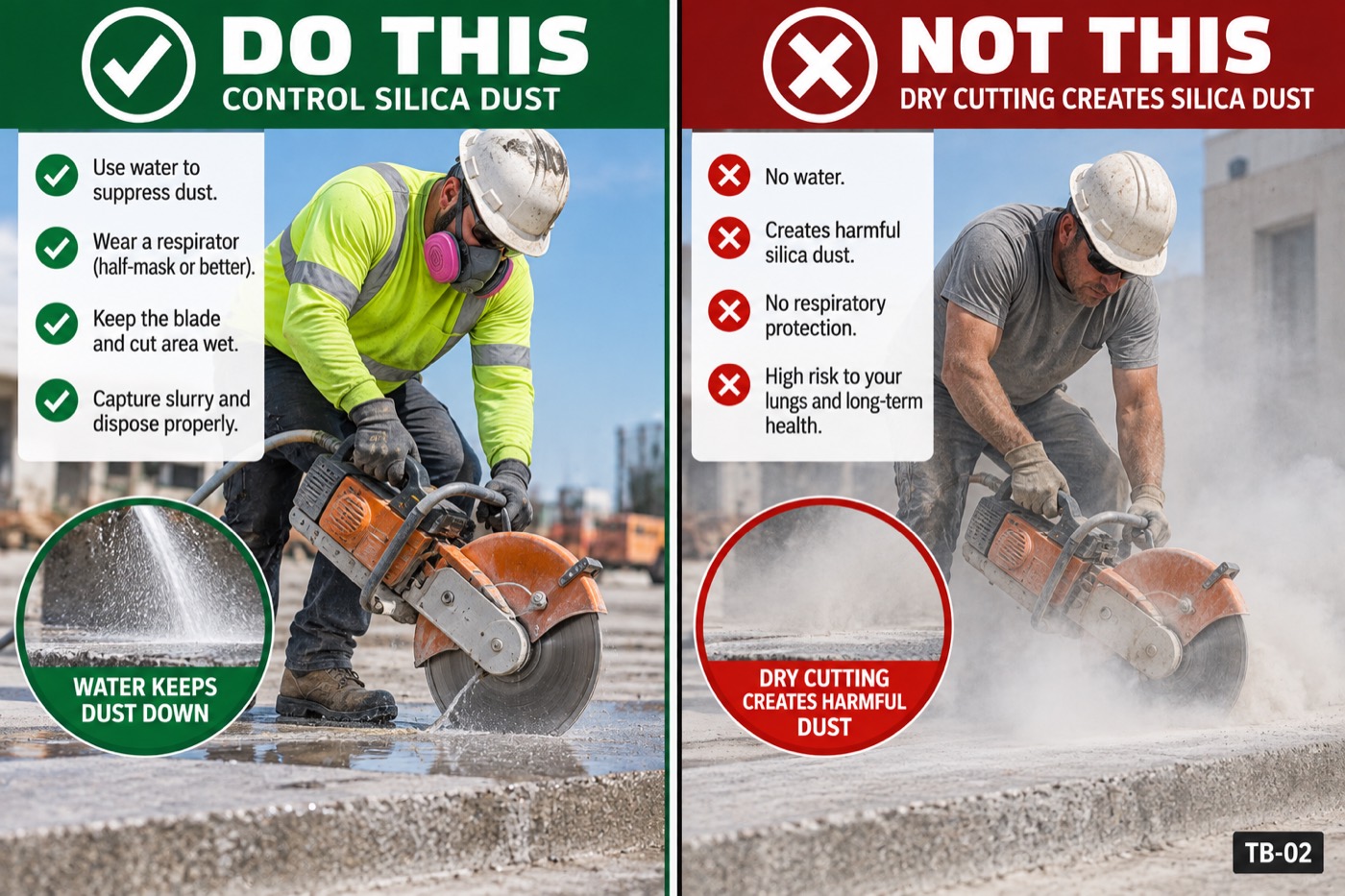
The dust off a dry cut does not make you cough much. That is the part that fools people.
The points
- Dry-cutting masonry throws respirable crystalline silica, which scars lungs permanently and shows up years later.
- Use the water feed or the vacuum shroud the saw came with. A saw without either one is the wrong tool for the cut.
- Do not sweep the dust. Wet it down or vacuum it with a HEPA unit.
- If you are wearing a respirator, you need a fit test and a clean shave where it seals.
- Keep people who are not doing the cutting out of the dust cloud.
Why it goes wrong
Silica is in concrete, block, brick, mortar, stone and engineered countertop. Cutting, grinding or drilling it breaks it into particles small enough to reach the deepest part of the lung, where the body has no way to clear them. The scarring that follows is permanent, it keeps progressing after the exposure stops, and there is no treatment that reverses it.
The delay is what makes this hard to take seriously. Silicosis shows up years or decades later, so the crew cutting dry today feels fine and concludes the warnings are overblown. The people who are short of breath now were the ones who felt fine twenty years ago.
The saw was sold with the control. A water feed or a vacuum shroud is not an accessory; it is the control the rule's Table 1 lists for that task, and the rule lists specific tasks with specific controls precisely so nobody has to argue about it. A saw with the shroud removed or the water tank empty is the wrong tool for the cut, not a slightly worse one.
Dry sweeping undoes everything. It puts the dust that settled back into the air, at breathing height, for everyone in the building rather than just the person who made the cut. Wet it down or use a HEPA vacuum.
A respirator only works if it seals. That means a fit test and a clean shave along the sealing surface - stubble breaks the seal, and a mask that leaks gives you the confidence of protection without the protection.
Questions for the crew
- What are we cutting today, and does the saw have working water or a working vacuum?
- Who else is going to be in that space while the cut is happening?
- How are we cleaning up the dust afterward?
To close
If you are cutting today, the water or the vacuum runs. If neither one works, come find me before you start.
To hold this talk with your crew
1
Read it aloud. Five minutes, before the work starts.
2
Ask the questions. A crew that talks is a crew that remembers.
3
Have them sign on their own phones, and the record is sealed.