Ladders on a lawn: the foot that sinks an inch
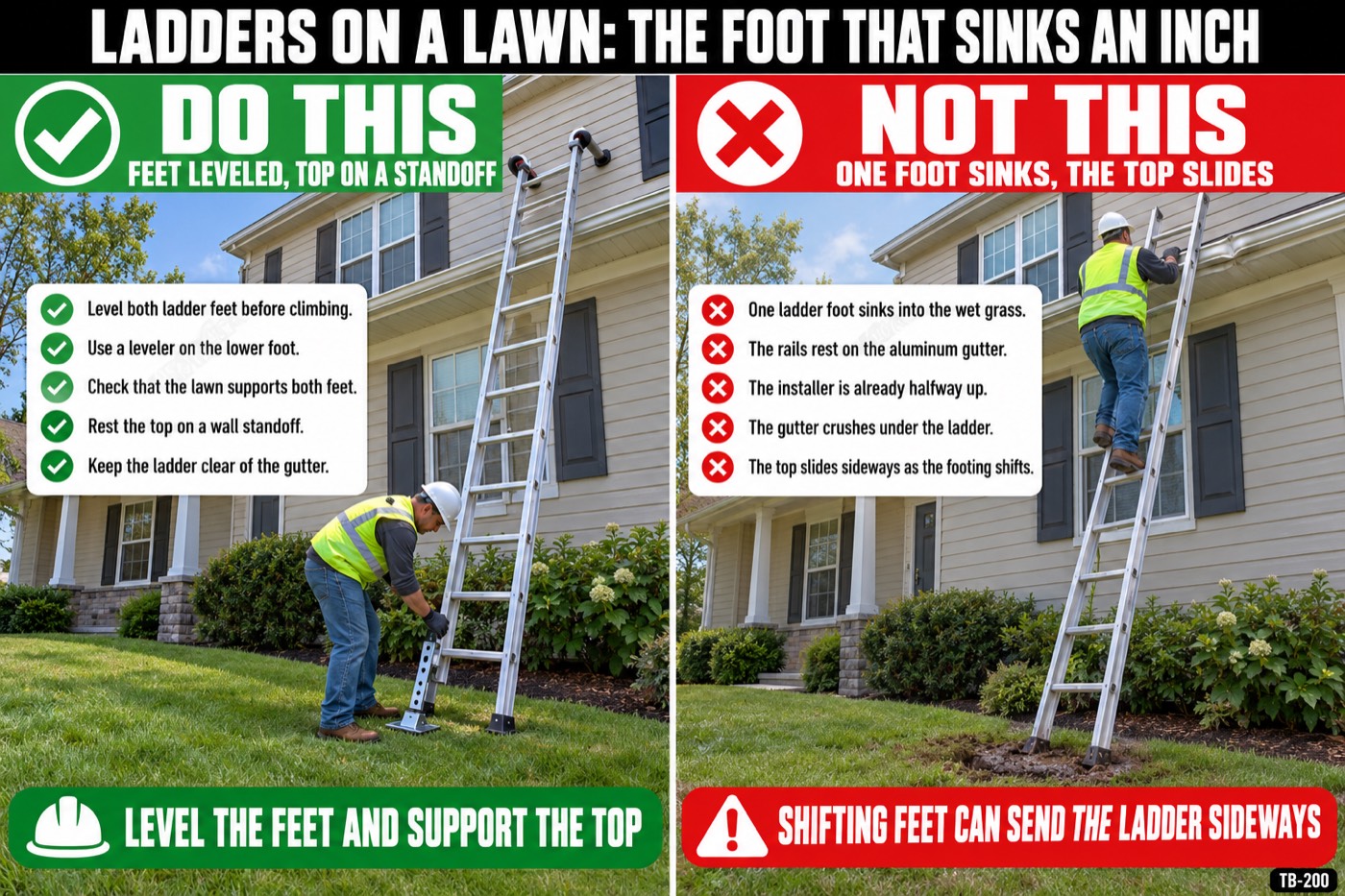
On a 28-foot ladder, one foot sinking an inch into wet grass moves the top about 18 inches sideways. That is the whole width of your body.
The points
- Most ladder falls on siding work start when the base moves, not when the person does. The foot sinks, the top slides along the gutter, and you ride it down onto the driveway.
- The rule says a ladder goes only on stable, level ground unless it is secured. A lawn after rain, a flower bed, or a foot on a sprinkler head is none of those.
- Level with a leveler made for the ladder, not a paver, a scrap of 2x4 or a rock. Dig the high side down before you build the low side up.
- Do not rest the rails on the gutter. Aluminum gutter is thinner than a dime, it crushes, and the ladder rolls off it. Use a standoff so the load goes to the wall or the fascia.
- Never lean a ladder rail on glass or across a window opening without a standoff that spans it. Both rails have to bear equally on something that will hold.
Why it goes wrong
The math is simple. A ladder base is about 16 to 18 inches wide between the feet. If one foot drops an inch, the whole ladder tilts about 3.5 degrees, and at 24 feet up that is roughly 18 inches of sideways lean. Your weight is now outside the rails, and the other foot is what is holding you.
Lawns lie. The top looks flat and firm, but the soil under it is soft after rain or watering, and a sprinkler line or a mole run is a void. Push each foot in with your heel before you climb. If the ground gives under your boot, it will give under the ladder with 200 pounds on it.
Levelers are cheap next to a broken hip. A ladder leveler bolts to the rail and adjusts each leg on its own. Bricks, pavers and blocks are what the rule means by unstable: they tip, they slide on wet grass, and they are the first thing found under the ladder after a fall.
Gutter is 0.027-inch aluminum on most houses. It was made to carry rainwater, not the point load of a ladder rail with a person on it. It dents, the rail slips into the dent or off the lip, and the ladder walks. A standoff puts the load on the fascia or the wall and keeps the rails off the gutter and off the glass.
Three feet above the landing, one-quarter of the working length out from the wall, and the rule says the top of a leaning ladder rests with both rails supported equally. A rail on a corner of trim and a rail on air is a pivot. Tie off the top when you are going to be on it for more than a few minutes, and have someone foot it while you tie it.
Wet grass and wet rungs together are the slippery surface the rule names. Slip-resistant feet swivel down onto their rubber pads on hard ground and dig in with their spurs on soft ground. If the feet are worn or missing, that ladder stays on the truck.
Questions for the crew
- Where are the sprinkler heads and the soft spots in this yard, and who checked before setting the first ladder?
- What are we resting the top of the ladder on at the windows and along the gutter line today?
- Which ladders here have levelers, and which ones have been sitting on a chunk of wood?
To close
Every ladder set today gets its feet pushed in and its top on something solid before anyone puts a boot on the first rung.
To hold this talk with your crew
1
Read it aloud. Five minutes, before the work starts.
2
Ask the questions. A crew that talks is a crew that remembers.
3
Have them sign on their own phones, and the record is sealed.