Tearing off pre-1978 siding: the lead lands in the yard
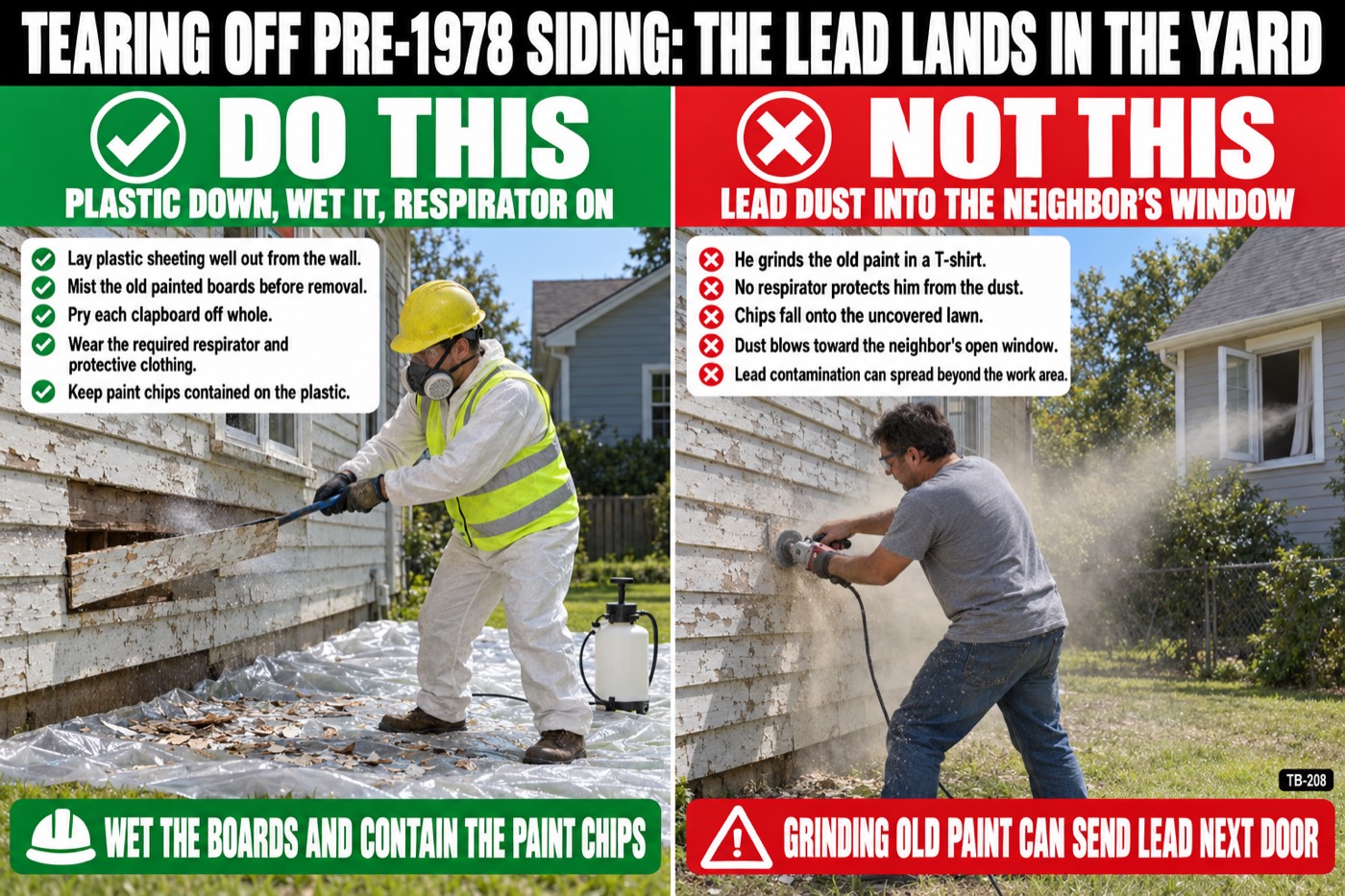
Paint made before 1978 can be up to half lead by weight. When you pry old clapboard off a wall the paint comes off as chips and dust, and the wind takes it into the neighbor's open window.
The points
- Lead does not hurt today. It builds up in blood and bone, wrecks kidneys and nerves, and in a child it takes IQ points that never come back. The dust on your shirt is the dose your kid gets.
- Manual demolition, scraping, sanding and heat gun work on lead paint are trigger tasks. Until the employer has air samples, anyone doing them wears a respirator and gets the protective clothing and washing facilities the rule requires.
- The limit is 50 micrograms per cubic meter over the shift, and the action level is 30. Dry tear-off of painted siding goes over that without anyone noticing.
- Pre-1978 house means the EPA renovation rule applies too: a certified renovator on site, plastic on the ground 10 feet out from the wall or to the property line, and the windows within 20 feet closed.
- No torching, no heat gun at 1,100 degrees or above, no power sanding or grinding without a HEPA vacuum on the tool. Wet it down, pry it off whole, bag it, and wash before you eat.
Why it goes wrong
Lead is a cumulative poison. Adults get high blood pressure, kidney damage, nerve damage in the hands, and fertility problems. Children under six get developmental damage at blood levels that would not make an adult feel a thing. The main route is hand to mouth: dust on the hands, then a sandwich, a cigarette or the steering wheel.
The construction lead rule lists tasks that are presumed to put you over the limit until proven otherwise. Manual demolition of structures, manual scraping, manual sanding, heat gun applications and power tool cleaning with dust collection are in the first group. For those the interim protection is a respirator, protective clothing, hand washing facilities and training while the employer does the sampling. That is the floor, not the ceiling.
The EPA rule at 40 CFR 745 is the part the homeowner will have heard of. Any firm disturbing paint on housing built before 1978 has to be EPA certified with a certified renovator on the job. For exterior work: signs marking the work area, ground covering extending 10 feet from the wall or as far as the debris lands, vertical containment when the work is within 10 feet of the property line, and doors and windows within 20 feet of the work closed. It also bans open-flame burning, heat guns at or above 1,100 degrees Fahrenheit, and power sanding, grinding or blasting without HEPA dust collection.
Tear-off that respects the rule is slow and cheap. Mist the wall with a sprayer, pry the boards off in whole pieces, hand them down to the plastic, and bag or wrap the pile the same day. Do not break boards over your knee, do not stack them on bare grass, do not throw them off the plank. The wind is the thing you cannot control; on a windy day the tear-off waits.
Hygiene is part of the rule, not a suggestion. Hand washing water at the job, no eating or smoking in the work area, coveralls or a change of shirt before you get in the truck. Lead in the cab means lead in the driveway at home. The employer owes a blood lead test to anyone exposed at or over the action level on even one day, and regular testing once it is more than 30 days in a year.
The cleanup is what the inspector checks. Pick up the chips, HEPA vacuum the plastic before you fold it, fold it inward, and the certified renovator does a visual pass of the ground below the work before the signs come down. A yard with paint chips in it is a lead hazard for the family for years, and the company that left it is the one on the paperwork.
Questions for the crew
- What year was this house built, and who is the certified renovator on this job?
- How close is the neighbor's house and their windows, and who is asking them to close them?
- Where are we washing hands, and where do the dusty clothes go at the end of the day?
To close
Plastic down 10 feet out, respirators on for the tear-off, and nobody eats today without washing first.
To hold this talk with your crew
1
Read it aloud. Five minutes, before the work starts.
2
Ask the questions. A crew that talks is a crew that remembers.
3
Have them sign on their own phones, and the record is sealed.