The broken spring: 300 pounds with nothing holding it
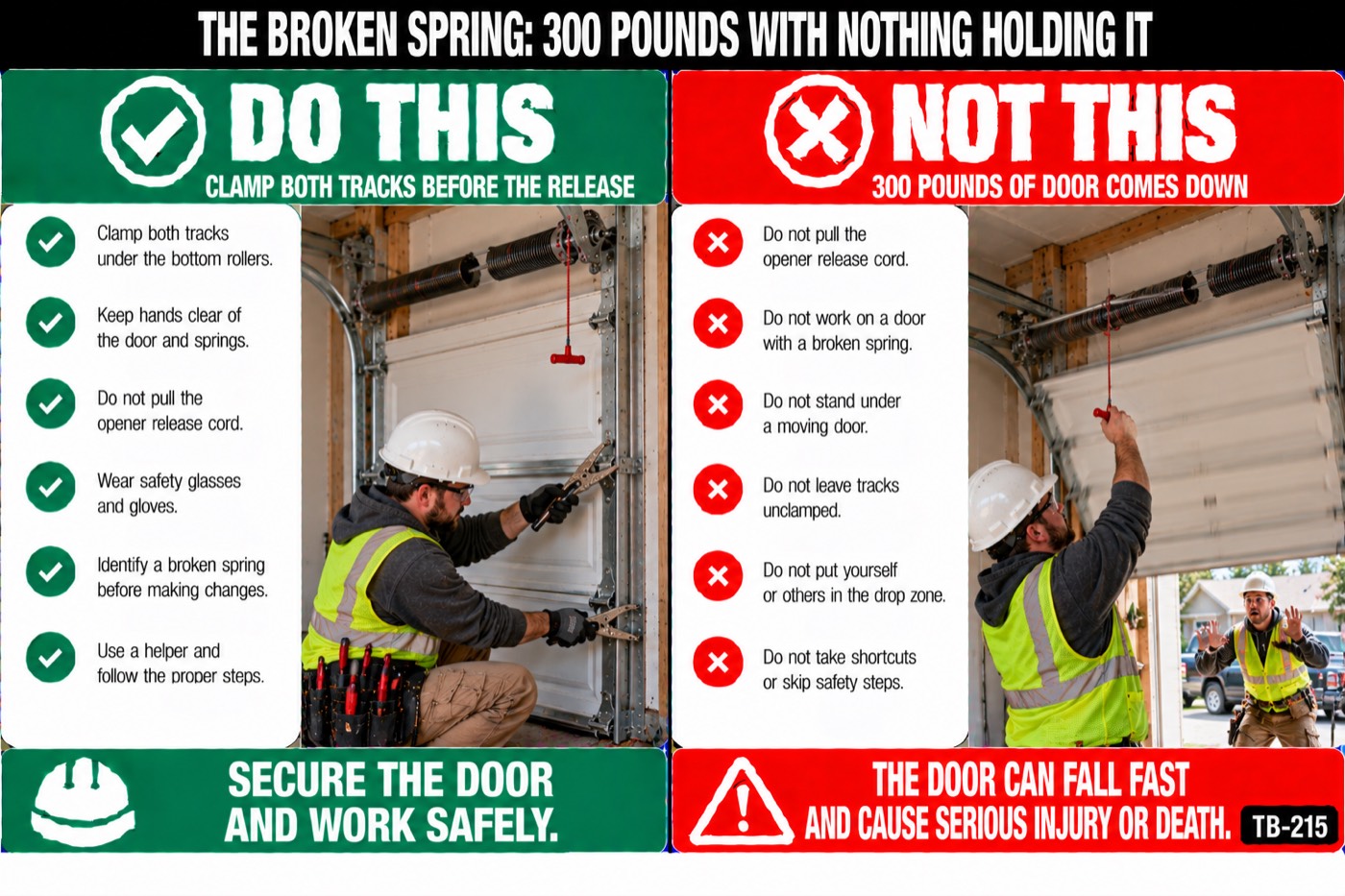
A 16-by-7 insulated steel door weighs 250 to 350 pounds. With the springs working it lifts like 10 pounds. With the spring broken, it weighs 300, and it is a wall of steel waiting to come down.
The points
- A broken-spring door released from the opener is a 300-pound guillotine. People have been crushed under one, and backs, shoulders and hands have been wrecked trying to lift one.
- Never lift a broken-spring door by hand. Two guys at 150 pounds each, on a door that jams halfway and comes back down on them, is how the hands get caught.
- Never pull the red release with the door up and a spring broken. The trolley is the only thing holding the door, and the release lets go of the trolley.
- Vise grips on both tracks: below the bottom rollers to hold the door up, above them to hold it down. Clamp before you release, and clamp before you wind.
- Springs go on in pairs. The other spring has the same cycles on it and it breaks the week after, on a door somebody else is under.
Why it goes wrong
A torsion spring breaks with a bang the homeowner hears from inside the house, and then the door sits. The next thing that usually happens is they press the opener button. The opener lifts the door 6 inches, strips its gear or bends the top section, and the door slams back down. By the time you arrive the door may already be racked, the top section bowed, and the opener dead.
Door weight is what the spring was hiding. A balanced door feels light because the spring is carrying it, not because it is light. Steel single doors run 130 to 180 pounds, insulated doubles 250 to 350, and a wood double can pass 400. That weight is on the trolley, the cables and whatever hand is under it the moment the spring quits.
The body cannot do this lift. The back injury rate climbs at 50 pounds per person, and a door that jams in the track partway up drops back against fingers gripping the section joint. If the car has to come out before the repair, the fix is a second technician with bars and the door clamped at each step, or a lift, and the customer waits.
Locking pliers on the track are the anchor for everything else. Set them on both tracks, tight against the roller, so the door cannot travel in the direction you do not want. With the springs down and the door clamped, the door is a static wall; with either one missing it is a load in motion.
The manual release is built for a working door: pull the cord, the trolley lets go, and a balanced door stays where it is. With a broken spring and the door up, pulling that cord drops the door at free fall. Before you pull it, look at the spring and know what is holding the door.
Springs are rated in cycles, 10,000 on a standard spring, so both springs on a door are the same age and the same distance from breaking. Replacing only the broken one leaves the customer with a door that fails again within months and leaves the next technician the same lift. The employer's duty under 1926.20(b) is what governs: hazardous equipment stays out of untrained hands, and the person on this repair has done it before under someone who knew.
Questions for the crew
- What does this door weigh, and what is holding it right now?
- If the customer's car has to come out before we start, how does the door go up?
- Where are the vise grips going, and who sets them before the release gets pulled?
To close
No broken-spring door goes up by hand today, and nothing gets released until both tracks are clamped.
To hold this talk with your crew
1
Read it aloud. Five minutes, before the work starts.
2
Ask the questions. A crew that talks is a crew that remembers.
3
Have them sign on their own phones, and the record is sealed.