Commercial headers: the ladder on the track, 14 feet up
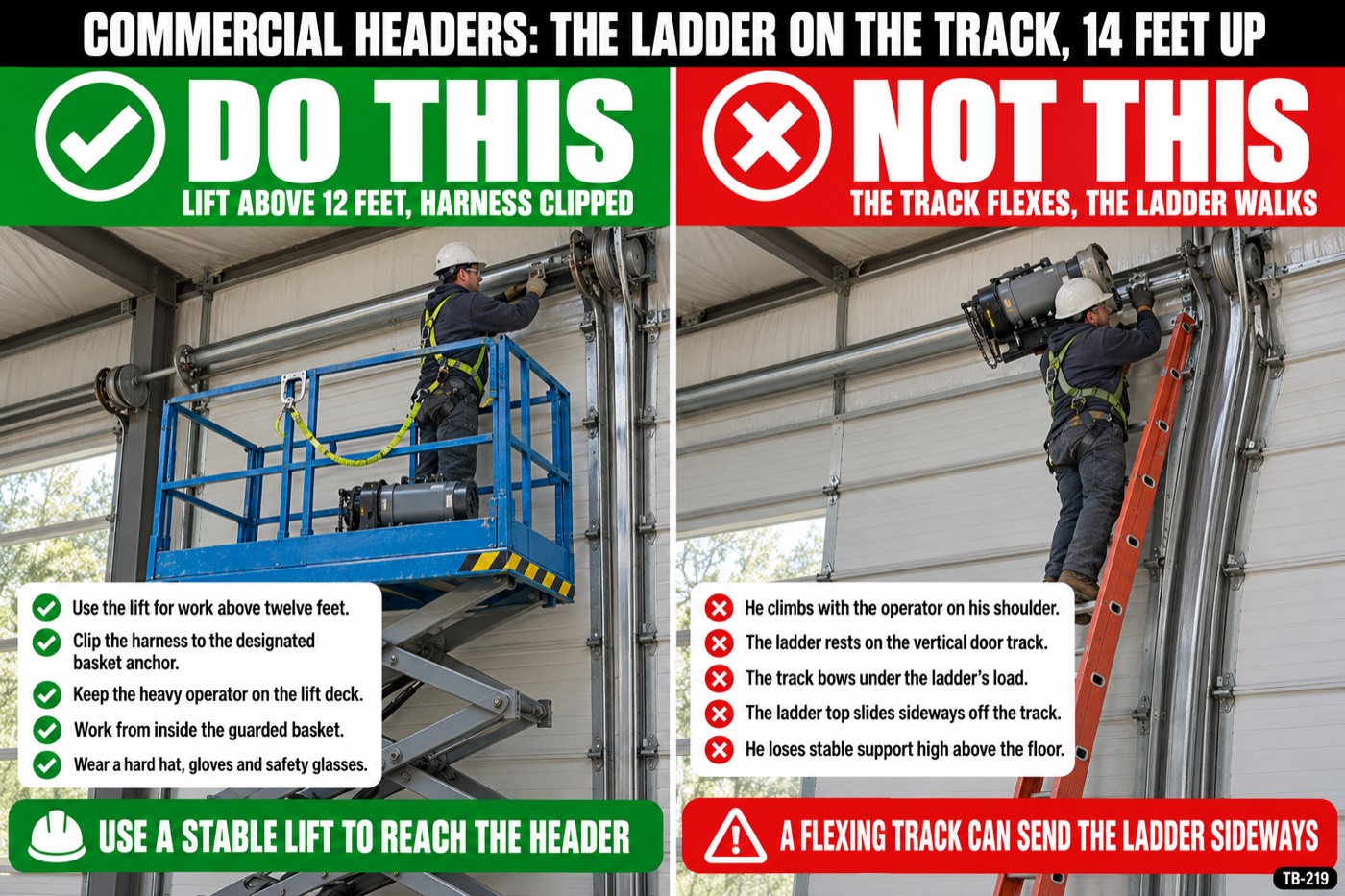
The header on a commercial door is 14 to 20 feet up, the floor under it is concrete, and a ladder leaning on the vertical track is leaning on 16-gauge sheet steel held to the jamb by a few lags.
The points
- Falls from ladders onto shop floors kill door technicians. The track flexes, the ladder walks sideways off it, and 14 feet onto concrete is a broken skull or a broken back.
- A ladder leans on the wall or the jamb, never on the track, the door or the operator. One foot out for every four feet up, 3 feet past the landing, footed or tied.
- Above 12 feet the work goes up on the scissor lift or the bucket, harness clipped to the anchor in the basket, both feet on the basket floor. The rail is not a step and the top section of the door is not a platform.
- The operator, the shaft and the header bracket go up from the lift. Nobody climbs a ladder with a 60-pound jackshaft operator on his shoulder.
- The floor under the work is the landing zone: parts, the drum, the boxes and the truck are out of it, and nobody walks under the ladder while someone is on it.
Why it goes wrong
The vertical track is a roller guide, 2 or 3 inches wide, screwed to the jamb with lags every couple of feet. It is not built to take a side load from a ladder with a man and a tool bag on it. The track flexes, the ladder's top slides along it, and the fall is sideways and sudden. The same goes for the door itself and for the operator rail.
1926.1053 gives the numbers: a non-self-supporting ladder set with the base out one quarter of the working length, the rails extending 3 feet above the landing when you step off, and the ladder secured against displacement when it is in a doorway or a driveway, which is exactly where a door installer works. A ladder in a traffic door opening gets a barricade or a person at the foot.
1926.501 requires fall protection at 6 feet from a walking-working surface, and 1926.453 puts you in a harness tied to the basket on an aerial lift. A scissor lift's rails are the fall protection, which is why standing on the mid-rail to reach the header can send a technician over the rail head first. Raise the platform, or get the right lift.
The loads at the header are real: a commercial jackshaft operator weighs 40 to 80 pounds, a 3-inch shaft with drums is another 50, and a spring assembly more. That is why the pieces go up on the lift or on a hoist, and why two people are on the header work. Carrying an operator up a ladder puts the weight above your center and your hands off the rails.
A common mistake on a commercial job is the 20-minute one: the ladder is already out, the lift is across the yard, and the header bracket needs one more lag. That one lag is the fall. The lift moves, or the job waits.
Questions for the crew
- How high is this header, and what is going under it, a ladder or a lift?
- Where is the ladder's top resting, and who is at the foot?
- What are we carrying up today, and how does it get to the header?
To close
No ladder leans on a track today, and anything above 12 feet gets done from the lift with the harness on.
To hold this talk with your crew
1
Read it aloud. Five minutes, before the work starts.
2
Ask the questions. A crew that talks is a crew that remembers.
3
Have them sign on their own phones, and the record is sealed.